
2019 Ethical Fashion Report

Baptist Fashion Report 2019

For the sixth year running, Baptist World Aid Australia – in partnership with Tearfund New Zealand – has released its β€˜The Truth Behind the Barcode’ Ethical Fashion Report.

The 2019 report, published on April 10, is broader in scope than ever before. This time around, researchers examined 130 companies representing 480 brands, including 50 newcomers. The research methodology was also expanded to include data about brands’ environmental impact, bringing the total number of criteria companies are assessed against to 44. Allocating each brand a grade from A+ to F based on the robustness of its policies, the Ethical Fashion Report is designed to empower consumers to make ethical shopping choices and also apply positive pressure to industry players. Although the report has received criticism for focusing on policies and procedures rather than practises, it does paint a picture of the current state of fashion.

How brands measured up in 2019

This year, the 480 brands examined received a median grade of C+, which is unchanged since 2017. Seven brands received the highest possible grade of A+ (up from six brands last year), including Etiko, Outland Denim, Icebreaker and Mighty Good Group. Liminal Apparel and Freeset T-Shirts (who recently partnered with Peppermint to create our Flora tee) also received an A+. Another familiar face, New Zealand-based Kowtow, shot to top position for the first time this year, thanks in no small part to strong environmental policies. An additional 24 companies representing 74 brands also fell in the A or A- range. Encouragingly, 38 percent of companies assessed in 2018 and 2019 managed to improve their overall grade in the interim.

A total of 35 brands – all of which either refused to participate in the study or were unresponsive to requests – were given a score of F in 2019. But they were in the minority: Three-quarters of companies approached actively engaged with researchers, an indication of the value brands place on transparency. As part of the methodology, all brands are given a chance to respond to preliminary results, issue feedback and offer researchers additional materials. For the 34 companies that didn’t participate, some still received a grade as high as C+ based on information made publicly available through their website and social media.

Compared with 2018, the number of companies with policies to address gender inequality is up by almost a quarter

When the first edition of the Ethical Fashion Report was released in 2013, just 18 percent of the 41 companies examined published their full supplier list. Now, in 2019, that number has risen to 37 percent. More than double the number of companies are now working to trace their fabrics, and almost half of all companies surveyed are working to trace their raw materials, up from just 17 percent six years ago. The latest report also reveals some year-on-year gains. Compared with 2018, the number of companies with policies to address gender inequality is up by almost a quarter. Given that this is only the second year the report has considered gender inequality as a key metric, the fact that 61 percent of companies have some measures in place is optimistic. Researchers also highlight other internal and external influences that could come to bear on future research, including the Modern Slavery Act, which came into effect in Australia on January 1.

Slow progress on living wages

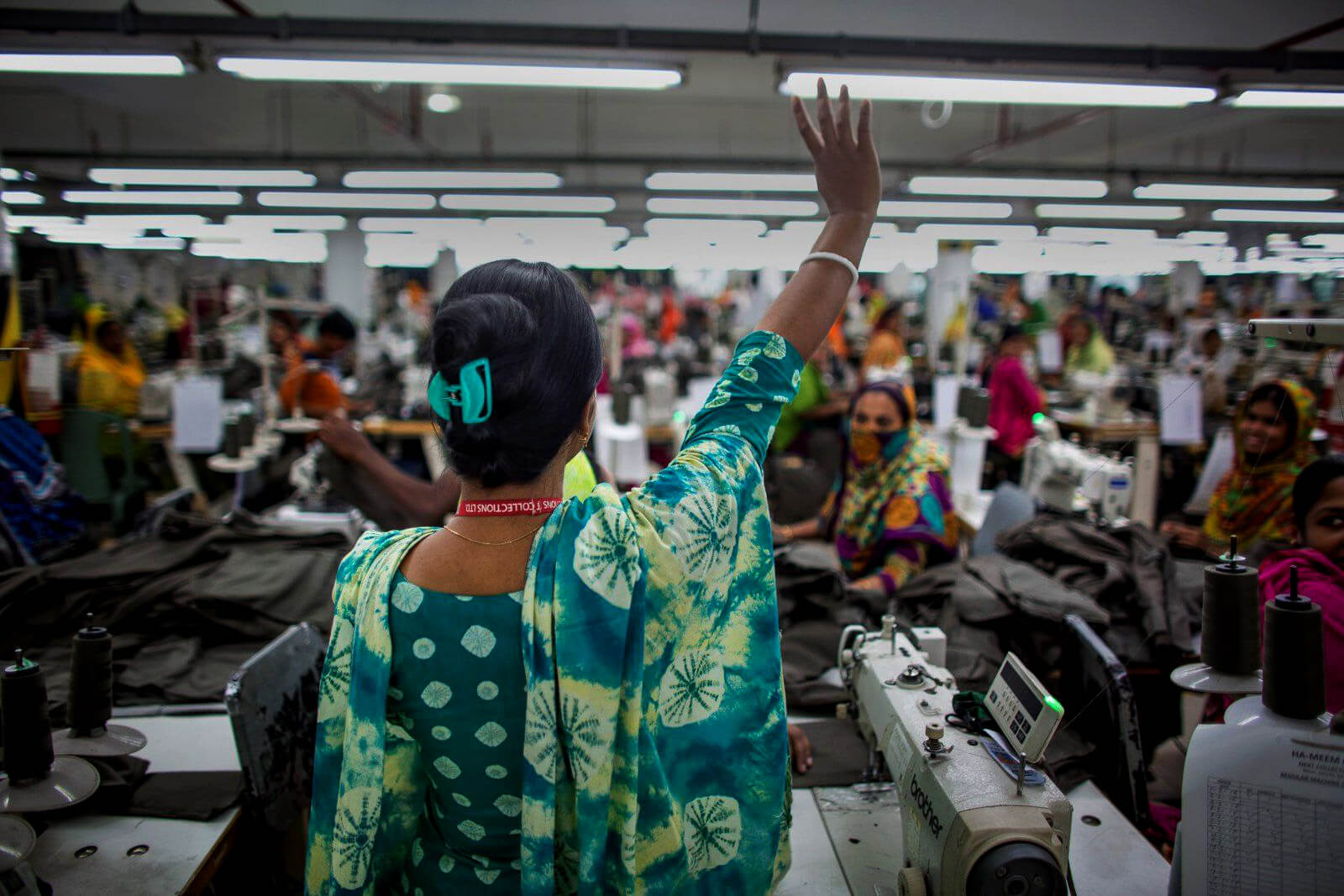
As in past years, the report’s most disturbing results concern workers at the second and third levels of the fashion supply chain: Raw materials and inputs production. Unlike more β€˜visible’ workers in final stage production (garment workers, for example), those who grow, spin, dye, tan, knit, embroider and otherwise produce fashion’s constituent parts are largely being left behind. Where these workers are concerned, D and F grades for brands were almost universal across every metric. The Ethical Fashion Report also sheds light on the gap between policy and practise when it comes to wages. Even though almost half of companies employ a living wage methodology, only 14 percent have implemented living wage projects in their factories, and a measly 5 percent could prove they pay a living wage to workers in the final stages of production. This comes on the heels of research published by Oxfam in February of this year which confirms the vast majority of garment workers in Bangladesh still aren’t being paid a living wage. For worker empowerment, another important standard when gauging labour rights, the median grade was a dismal D.

Environmental policies in focus

The single biggest change to the reporting process in 2019 is the inclusion of environmental metrics in the grading criteria. In the past, the Ethical Fashion Report has focused exclusively on the industry’s human cost and issues such as living wages, forced exploitation and child labour. Last year, researchers moved to investigate brands’ environmental policies, but this data was not reflected in the final results. In 2019, a brand’s environmental efforts account for 10 percent of its overall grade, acknowledging the relationship between how a company treats its workers and the impact it has on the planet. Brands were asked 11 questions related to carbon emissions, chemical management strategies, use of sustainable fibres, water consumption, and take-back and repair programs designed to curb textile waste. The results were not exactly reassuring. Just 12 percent of companies surveyed have a policy in place to collect data on their water usage. The same proportion, 12 percent, monitor wastewater from their production facilities. Given how well-publicised the resource-intensive and polluting nature of the fashion industry is, one might have expected that a culture of environmental responsibility would be more ingrained.

Only a handful of companies demonstrate a firm commitment to reaching a carbon emissions target by 2050

On this topic, the report includes mini case studies of four brands, spotlighting Gorman for its pioneering use of organic cotton and take up of recycled wool and PET fibres. Jeanswest also gets a shout out for its innovative water policies (the brand benchmarks water use at most of its production facilities). On the issue of carbon emissions, fashion appears to be flagging. Only a handful of companies (24 fall in the A range) demonstrate a firm commitment to reaching a carbon emissions target by 2050. On the flipside, 35 percent of companies (an increase of 14 percent on 2018) are now taking active measures to ensure workers in their supply chains aren’t exposed to hazardous chemicals, and 61 percent of companies are investing in sustainable fibres, including organic cotton.

Spotlight on textile waste

The 2019 Ethical Fashion Report also reviews brands’ efforts to curb textile waste, an issue that’s been under increasing scrutiny in recent months. Again, the results indicate plenty of room for improvement: Less than a third of brands surveyed (27 percent) currently offer customers a take-back and/or repair program. An additional 11 percent are taking steps towards implementing a system in the future. More competition, more consumption, more waste – these are the trends we can expect to see unfold over the coming years. According to a March 2019 study by IBISWorld, fast fashion is expected to grow by 6.2 percent over the next five years. Scrutinising brands and holding companies accountable for their actions has never been more important. Last year’s edition of the Ethical Fashion Report was downloaded more than 50,000 times – a good indicator of the appetite among consumers to keep asking questions of the people who make their clothes. The 2019 report is expected to reach an even bigger audience, as for the first time ever, the report is also available to read on the go via Baptist World Aid’s mobile app, β€˜End Poverty’.

Download a PDF copy of the report here or download the app here.


WORDS: EMILY LUSH

You might also like

JOIN OUR MAILING LIST

Brighten up your inbox with our not-too-frequent emails featuring Peppermint-related news, events, competitions and more!

explore

MoreΒ articles

When you hang a painting on a wall, the story stays put. But when you wear a beautifully made garment that may as well be a piece of art? The story travels. It moves through the world with you –…

We all do it: fire up the car for a 5-minute drive to pick up groceries, drop off sewing supplies, or run a quick errand…

Here’s a question: who decided that natural fibres aren’t a great fit in activewear? For Geraldton mum-of-four Jade Payne, that question became paramount after a…

Fancy a getaway in a heritage building that was once a hospital, an orphanage AND a school in a previous life? Despite what your initial…

When the algorithm gods reward dance trends over hand-thrown ceramics, and building a website feels more stressful than a tax return, where’s a maker to…

Time-travelling lungfish floating in a mosaic of glass tiles, a four-breasted female empowerment goddess cast in bronze, and a striking botanical sculpture spanning 15 metres,…

Hang out with us on Instagram

Our hearts go out to everyone impacted by the Bondi Beach violence, especially the Jewish community. Also to the beachgoers, those who bravely helped and the first responders.⁠
⁠
While it's easy – and understandable – to get caught up in the horror of it all and direct anger at certain groups, remember this quote from teacher and author Erin Gruwell: "Don't let the actions of a few determine the way you feel about an entire group."⁠
⁠
β€œYou don't fight racism with racism. You fight racism with solidarity," said Bobby Seale of the Black Panthers. And solidarity is exactly what we need right now.⁠
⁠
If you are feeling overwhelmed, you are not alone. Remember there is much more kindness in the world than hate. β€οΈβ€πŸ©Ήβ 
⁠
@LifelineAustralia has created a Bondi Beach Incident: Wellbeing support guide, where you’ll find information about common reactions, reassurance that what you’re feeling is valid, and ideas for taking care of your wellbeing.⁠
⁠
https://lifeline.org.au/bondi-incident⁠
⁠
You can also call Lifeline on 13 11 14, text on 0477 13 11 14 or chat at lifeline.org.au/crisis-chat anytime, no matter how this has impacted you.⁠
⁠
@BeyondBlueOfficial is also available with free 24/7 support by phone on 1300 22 4636 or webchat at https://www.beyondblue.org.au/⁠
⁠
Register.Find.Reunite. has been activated by @RedCrossAu to help people reconnect with family and friends. Visit redcross.org.au to access the service.⁠
⁠
@NSWPolice Public Information and Inquiry Centre (PIIC) is operating 24/7 on 1800 227 228 for information relating to people impacted.⁠
⁠
@LifeBloodAu is supporting Sydney hospitals. O- and O+ blood are always in high demand in emergencies. To donate (from anywhere in Australia – all states are welcome and helpful!) call 13 14 95 or use the Lifeblood app.
Just a reminder… from @SugarHouseCeramicCo

This holiday season be kind, patient and shop local!

#ShopSmall #ShopLocal #SupportSmallBusiness
✨️ Our website is getting a glow-up! ✨️⁠
⁠
Sorry for the inconvenience but it will be offline for a few days. You can still purchase subscriptions (perfect for chrissy presents!) via the links on the holding page.⁠
⁠
Last year we were extremely excited to receive funding from the Meta Australian News Fund, in partnership with the Walkley Foundation. The result of this is a fabulous new website, with a sustainable fashion and sewing directory that will follow early next year. We've worked with the lovely Amy and Jenny at @CrumpetClubHouse who have been making the magic happen – we can't wait to show you the outcome! ✨️⁠
⁠
In the meantime, please get in touch if you need help with anything – hello@peppermintmag.com ⁠
⁠
We'll see you on the other side! 🌈
πŸŽ€ 12 DAYS OF XMAS GIVEAWAYS πŸŽ€β 
⁠
πŸŽ„On the 12th day of Christmas, we’re giving away… a GREENPAN FROST ICE CREAM & FROZEN DRINK MAKER! πŸŽ„β 
⁠
Ice, ice, baby! Calling all kitchen magicians and dessert devotees: it’s time to churn, blend and devour your way to frozen heaven. It’s our final giveaway – and hoo girl, it’s a goodie! Thanks to the clever folks at @TheOriginalGreenPan.Anz, one reader will cool their mitts on the Frost Ice Cream & Frozen Drink Maker – perfect for conjuring up home-made gelato, sorbet, smoothies, slushies and more!

Valued at $599, the Frost Ice Cream & Frozen Drink Maker is designed with GreenPan’s signature Thermolonβ„’ ceramic non-stick coating, so you can whip up summer-ready sweet treats free of PFAS, PFOA, lead and cadmium.

To snag this frosty prize, follow @TheOriginalGreenPan.Anz and tag a friend in the comments below before midday AEST 15 December! (Australian and New Zealand addresses only, please.) Good luck!

Update: The lucky winner of our final giveaway is @just__for__van - congrats! We'll dm to get your details. Well done! πŸŽ‰
⁠
#PeppermintMagazine #12DaysOfChristmas #12DaysOfGiveaways #GreenPan
Oh hey πŸ‘‹πŸΌ Just a little reminder that our subscriptions are sent in paper envelopes, which is a bit of a rarity in our industry. πŸ’…πŸΌβ 
⁠
If you need more reasons to subscribe, how about these:⁠
⁠
πŸ’Œ Enjoy a new issue arriving in your letterbox every six months.⁠
πŸ’Œ  Subscribers exclusively receive FOUR digital sewing patterns per year!⁠
πŸ’Œ  You’ll be the first to get your hands (and needles) on our patterns with early access.⁠
πŸ’Œ  Get a 20% discount code on back issues of Peppermint so you can start your collection today!⁠
πŸ’Œ Automatically go in the draw to win amazing prizes each issue.⁠
πŸ’Œ Feel good about your subscription arriving in plastic-free postage.⁠
πŸ’Œ Support a small, women-led Australian business.⁠
πŸ’Œ Help us make the world a better place!⁠
⁠
And... it's a perfect Christmas present! We have a downloadable card you can print to go with your gift. ⁠
⁠
πŸ’Œ Link in bio!⁠
⁠
#PeppermintMagazine #SupportSmallBusiness #ShopLocal #ShopSustainable #PlasticFree β