We could barely contain our joy when we stumbled upon The Fruitful Kitchen – beautifully designed little cookbooks printed in small quantities in Melbourne, using only recycled and FSC papers. With each book containing 13 eclectic, mostly vegetarian recipes featuring seasonal produce, the aim of their delicious game is to get people excited about each season. Written and photographed by Rachel Pitts and designed and illustrated by Nicole Stewart, you can snap the books up here – and in the meantime, have a taster with this traditional South American Easter recipe that’ll jazz up any entertainer’s table.
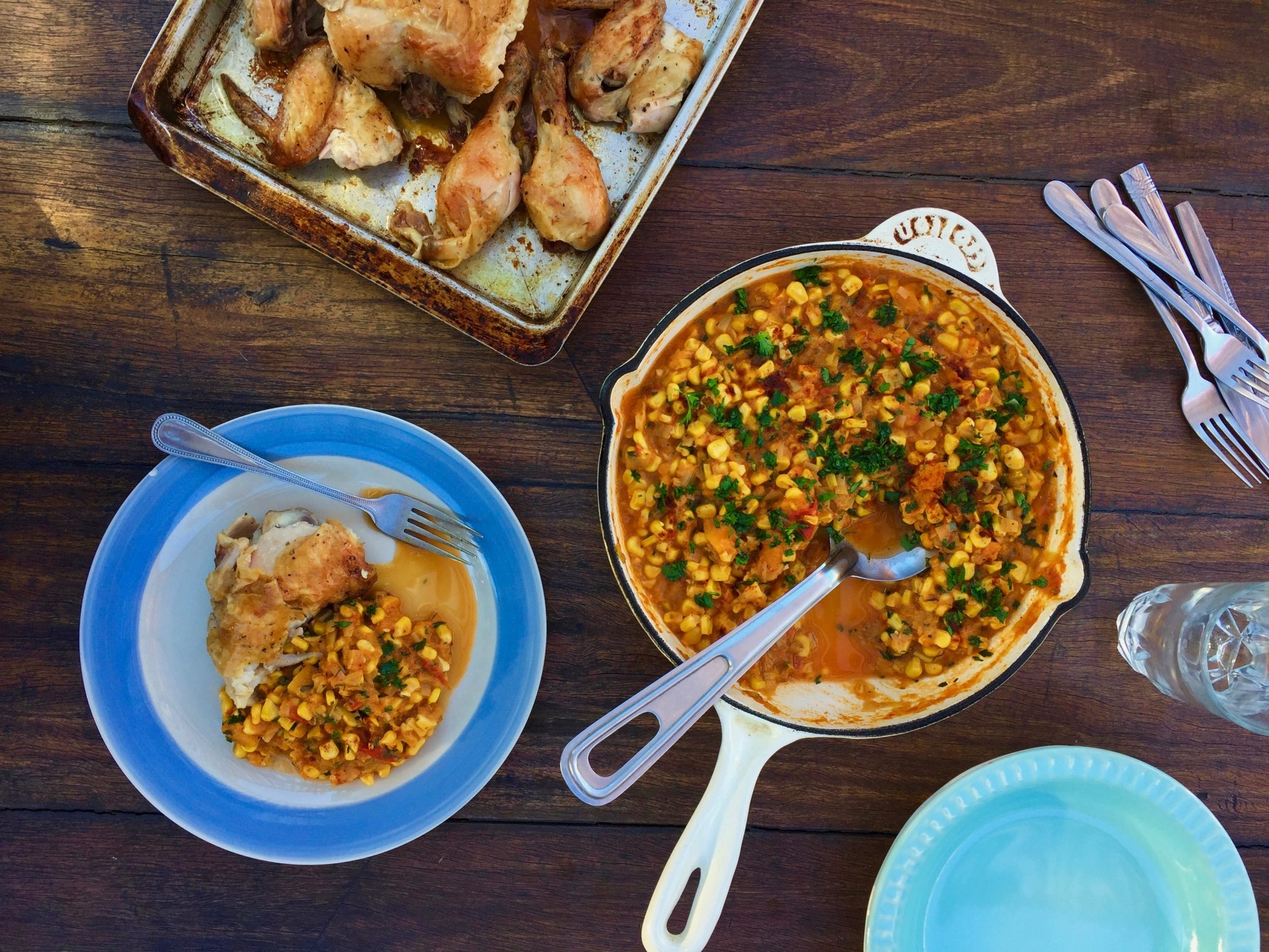
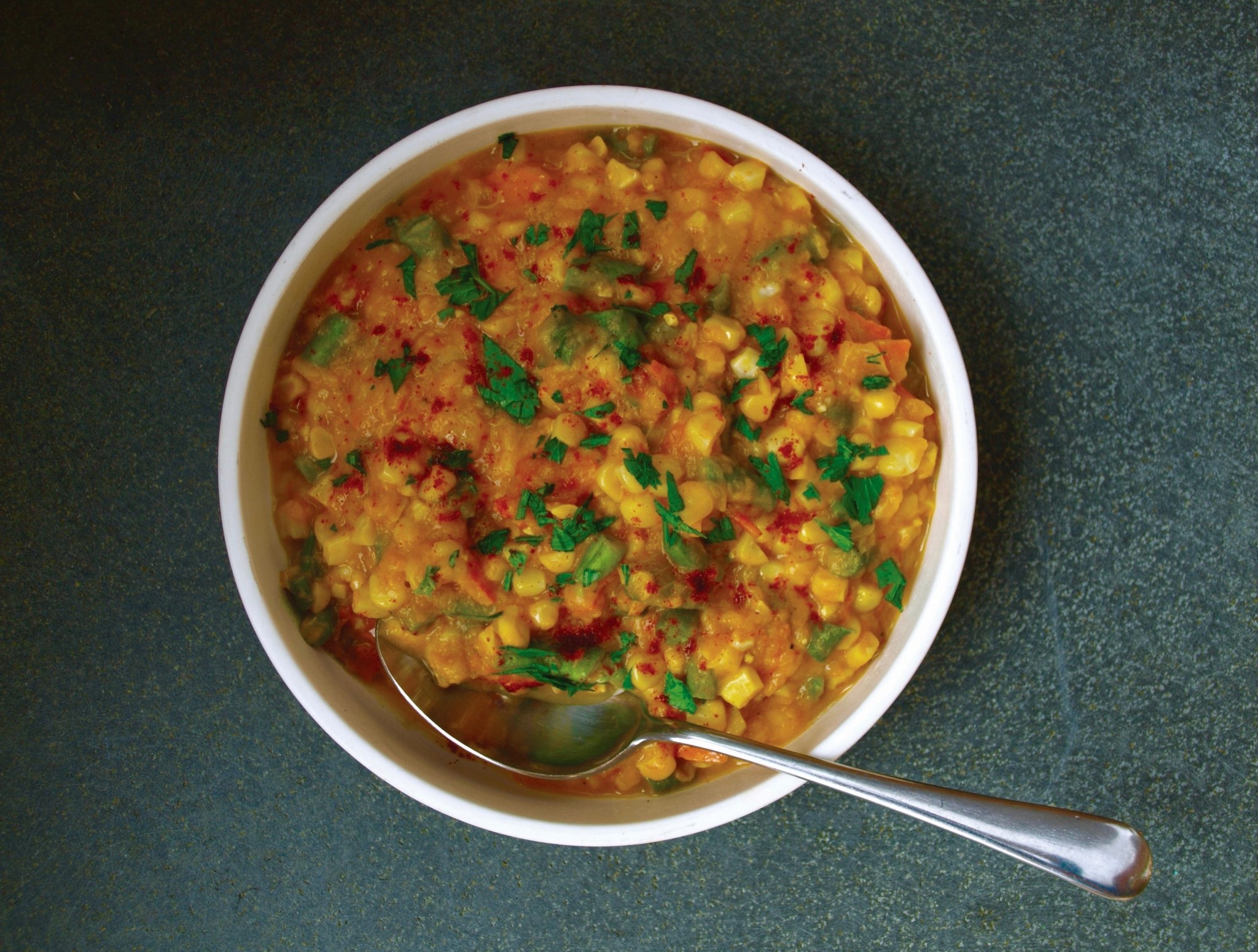
After trying this dish at a local Argentinean restaurant, I vowed to recreate it. Humitas is the name for South American corn cakes steamed inside corn husks (similar to Mexican tamales), but in Argentina it can also be a vegetable stew, and is traditionally served at Easter. The dish always has corn; sometimes pumpkin. I made it true to the original the first time, and then the second time I couldn’t help myself, I slipped in some beans too (and made a few other small changes, such as adding lime juice). The beans weren’t at all offensive – another texture like the corn kernels suspended in the creamy pumpkin. You can serve humitas just on its own with bread to mop it up, or it makes a brilliant side dish.
Ingredients (serves 6)
2 tablespoons of butter
1 onion, chopped
2 garlic cloves, finely chopped
500g pumpkin, skinned, seeded and chopped
2 medium tomatoes, chopped
½ teaspoon smoked or sweet paprika, plus extra to serve
½ teaspoon ground cumin
Generous pinch of chilli powder
1 teaspoon salt
3–4 corn cobs, kernels sliced off
190 ml (¾ cup) milk
Large handful of green beans, cut into 1–2 cm pieces (optional)
Juice of ½ lime (or equivalent lemon)
Chopped basil or parsley
Method
Heat the butter in a large saucepan and add the onion. Saute until lightly golden, then add the garlic and fry for another minute or so. Add the pumpkin, tomato, spices and salt, plus enough water to just cover. Cover with a lid and simmer for around 20 minutes, or until the pumpkin is soft and starting to break up.
Add the corn kernels and milk and continue to cook for another 10–15 minutes, by which time the pumpkin will almost be a puree. If using beans, add them for the last 5–10 minutes.
Remove from the heat and stir in the lime juice. Taste for seasoning, adding more salt (and pepper) if desired. Stir in most of the basil or parsley. Serve hot or warm, sprinkled with the remaining basil or parsley, and with a little extra paprika.
EXTRACT TAKEN FROM ‘THE FRUITFUL KITCHEN – AUTUMN’, AVAILABLE ONLINE AND FROM SELECT BOOKSHOPS.