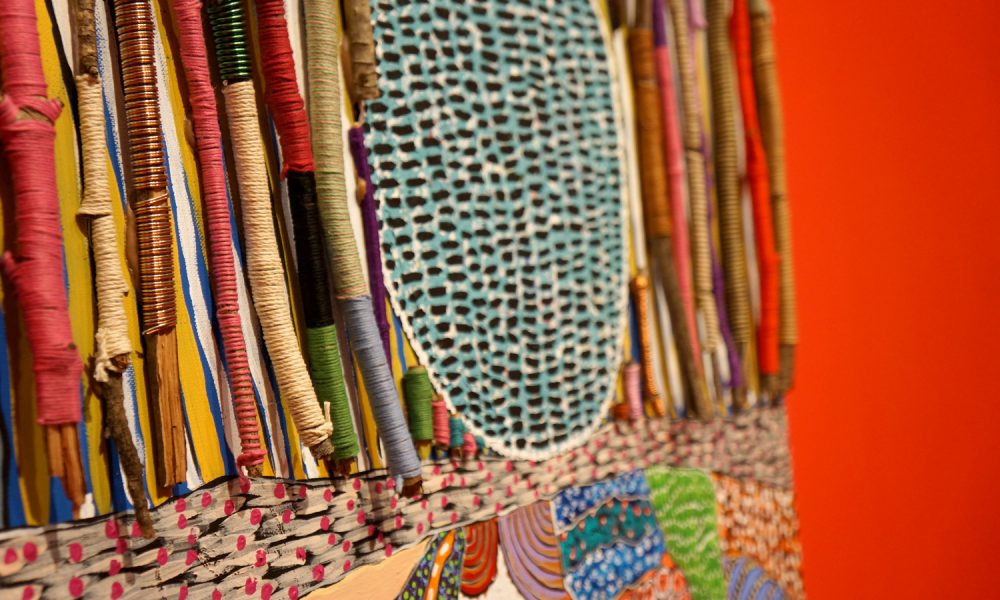
Culture, connection, community and country – while the artistic mediums and diversity of style at the recent Cairns Indigenous Art Fair were wildly varied and sometimes surprising, the stories and subjects threaded through the works were often similar. The theme of this year’s CIAF was ‘Cultural Bliss: An Artistic Response To Happiness’, where artists were asked to express the concept of happiness through their practice.
According to the programme curated by Hetti Perkins and Janina Harding: “Aboriginal and Torres Strait Islander people are rarely portrayed or even asked the question – what makes you happy? Instead we are portrayed through the negative stereotypes as victims or perpetrators, and only rarely as victors. Cultural Bliss seeks to change the lens and celebrate Aboriginal and Torres Strait Islander community life as artists reveal their inspirations and reflections on life.”
[tweet_box design=”default”]Aboriginal and Torres Strait Islander people are rarely portrayed or even asked the question – what makes you happy? Instead we are portrayed through the negative stereotypes as victims or perpetrators, and only rarely as victors.[/tweet_box]
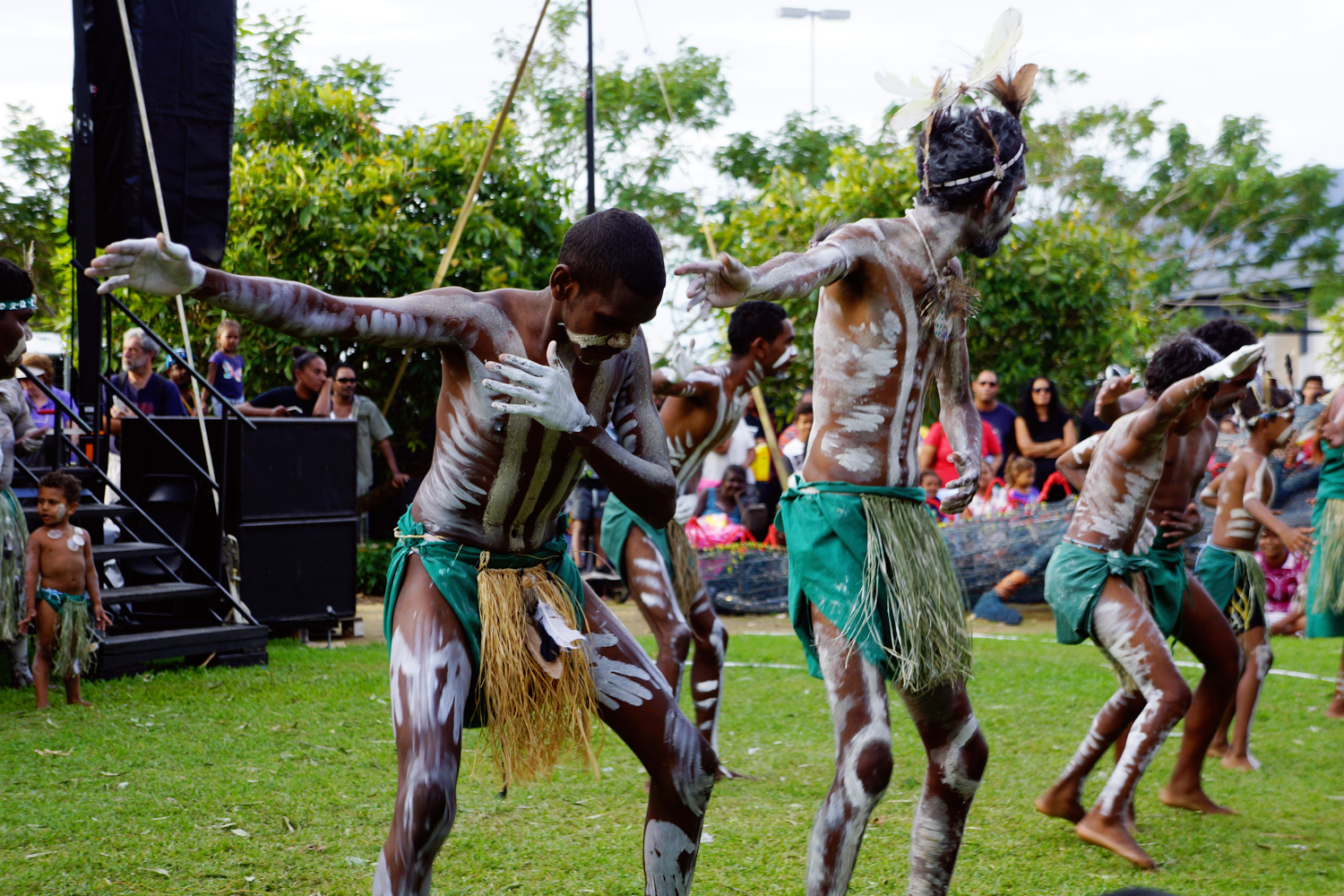
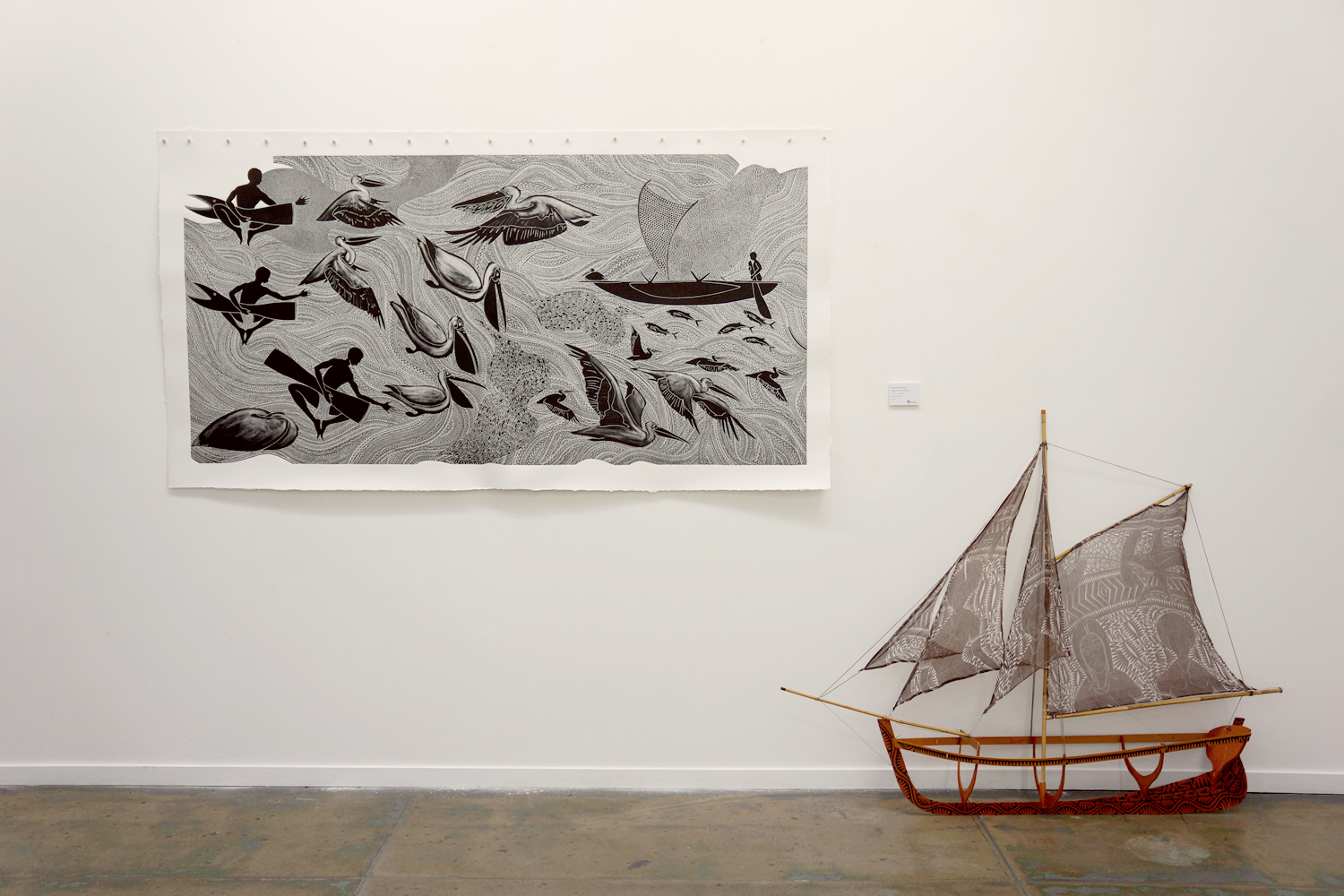
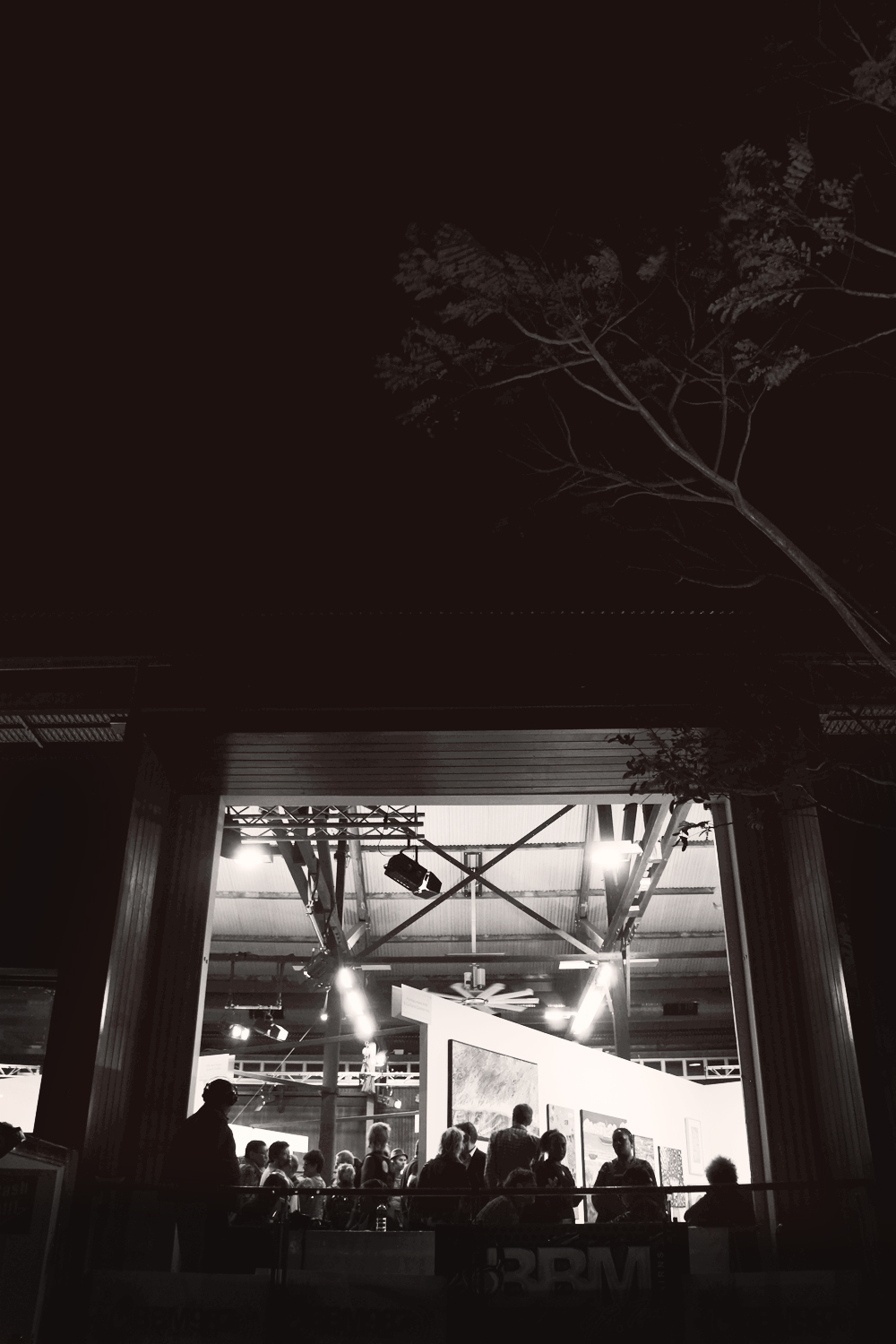
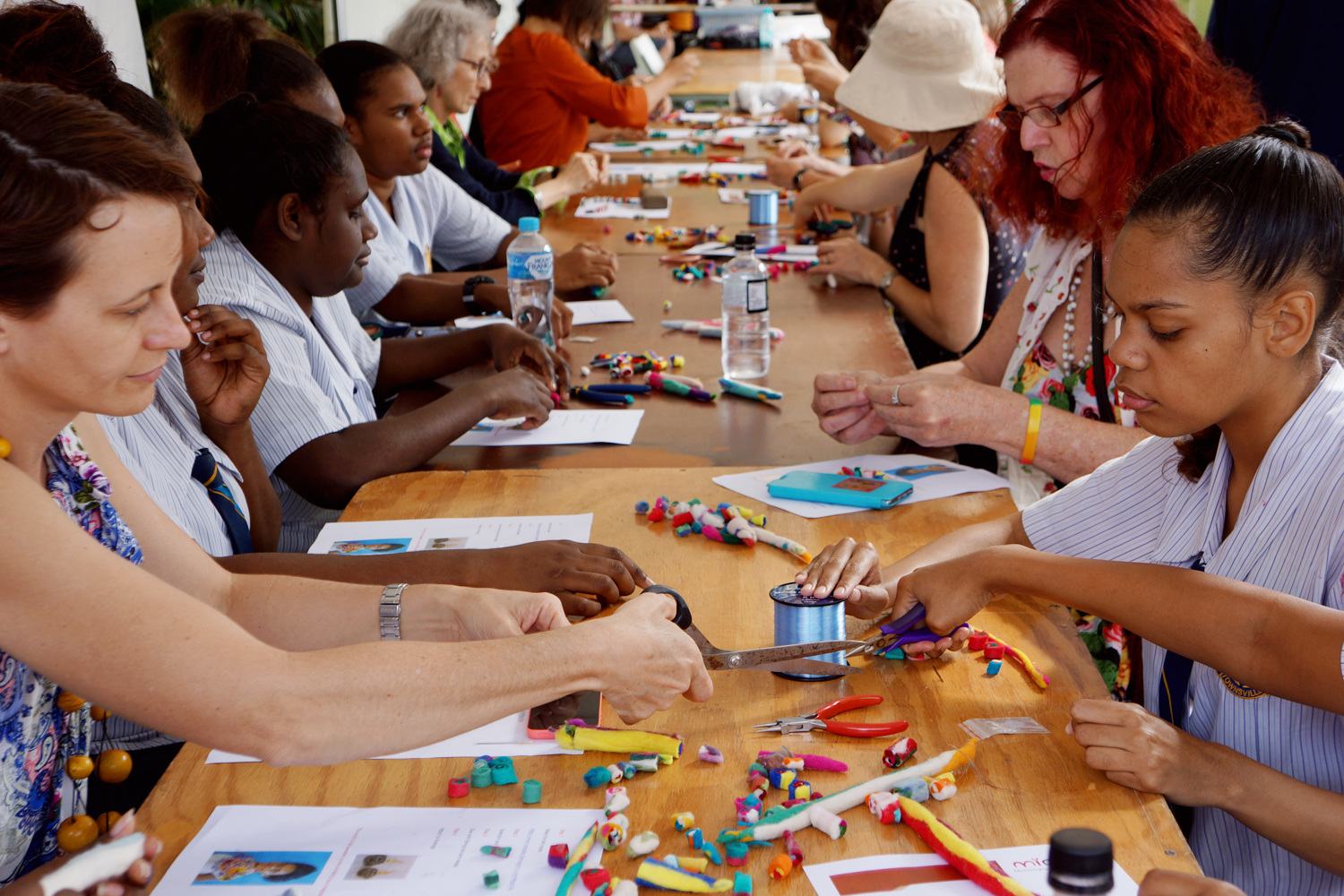
The often deeply moving results on display throughout the Art Fair and participating local galleries showcased stunning contemporary masterpieces alongside traditional skills. Intricate lino-cut prints, immense sculptures crafted from ghost nets, cartoon-esque wood carvings and modern mixed media – the incredible and eclectic show, which has been growing annually, is putting Indigenous artists firmly on the world stage and showing that Aboriginal art is certainly more than just dots. The four-day celebration of Indigenous arts included traditional Corroboree dance ceremonies, musical performances, art and craft workshops with established artists, satellite exhibitions at local galleries, market stalls and the Gimuy Fish Festival – promoting sustainable seafood harvesting, Indigenous health and environmental protection and awareness.
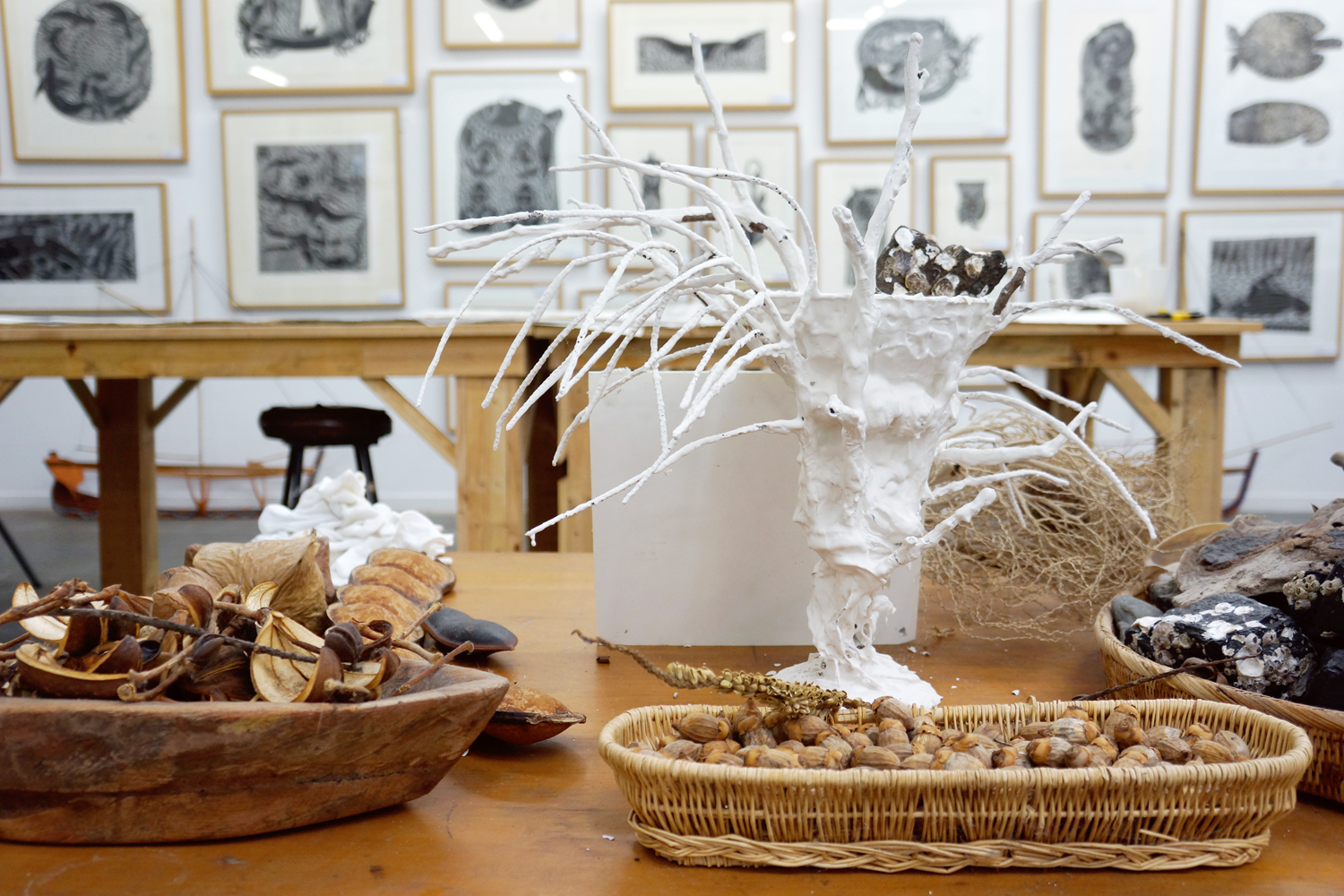
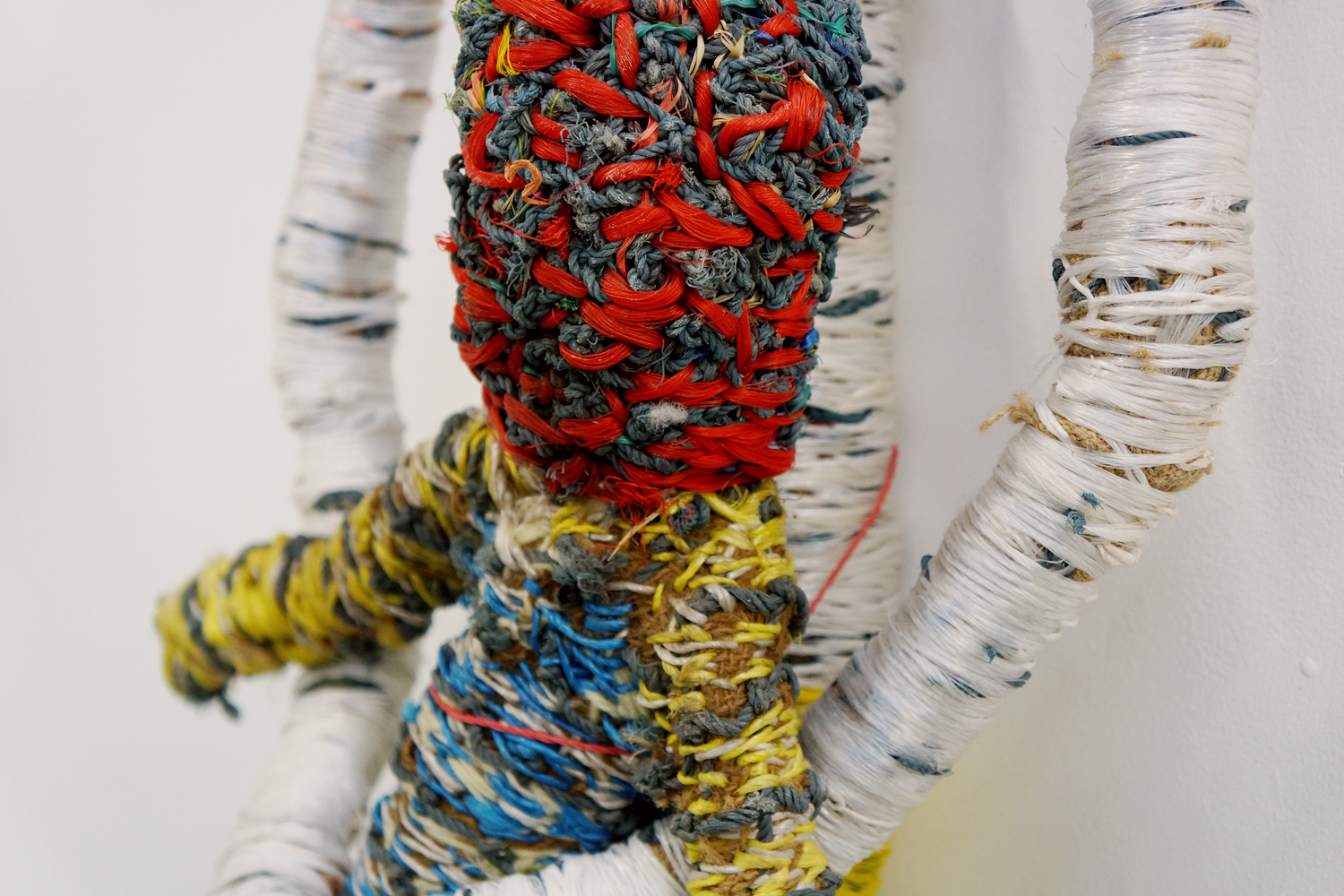
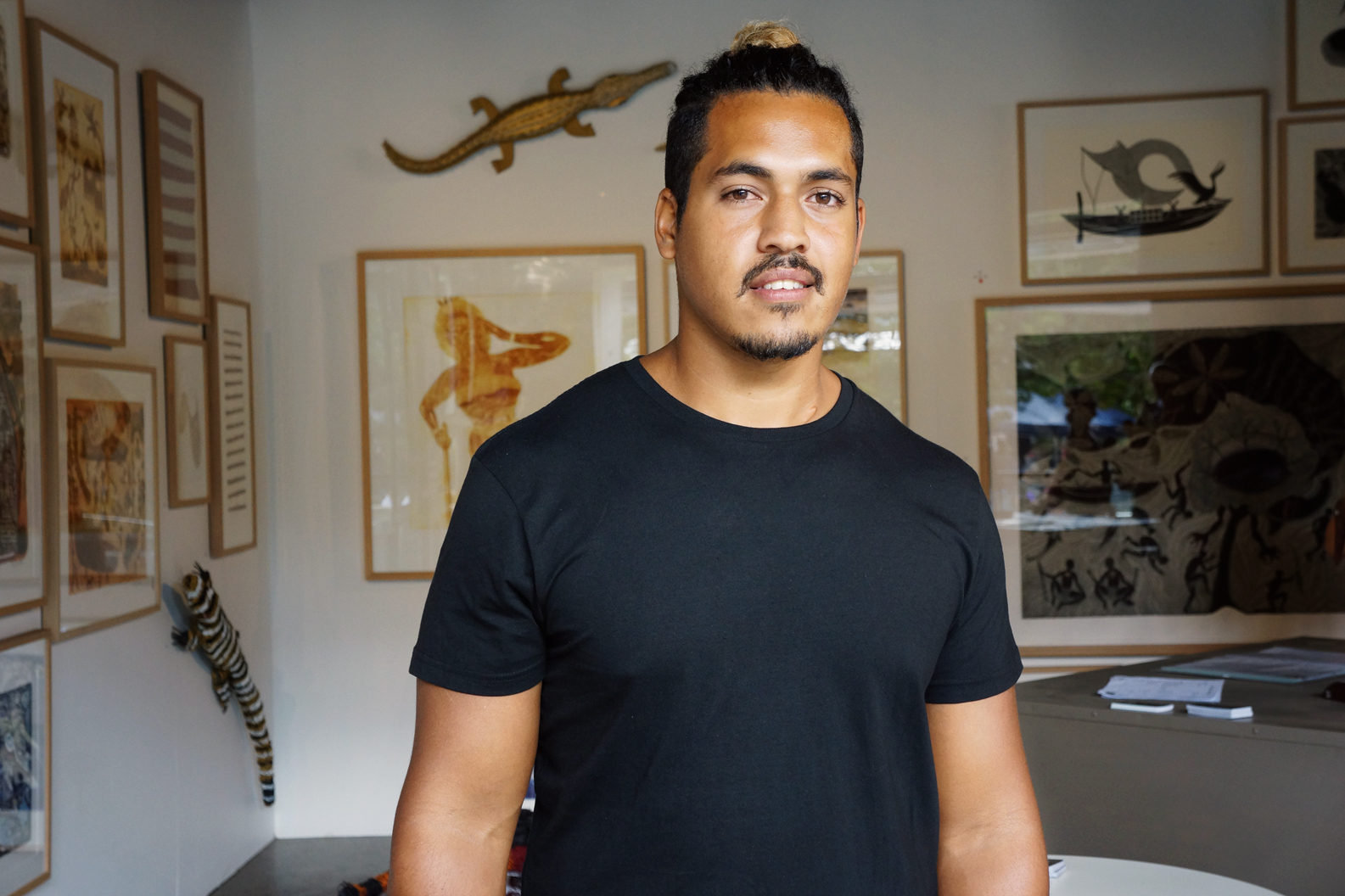
Exhibiting in the show were Cairns-based Torres Strait Islander Glen Mackie (Kei Kalak) with his complex and highly detailed lino-cut prints, Erub Arts from Darnley Island who created a life-sized row boat from ghost nets found at sea, Wik and Kugu Aurukun Art Centre and their popular carved dog sculptures, photography from Christian Thompson and works from illustrator and painter Arone Meeks. While many on show were long-standing artists with strong reputations, the show also supports up-and-coming talent like newcomer Daniel O’Shane – whose strikingly bold and modern vinylcut prints recently earned him the National Works On Paper prize.
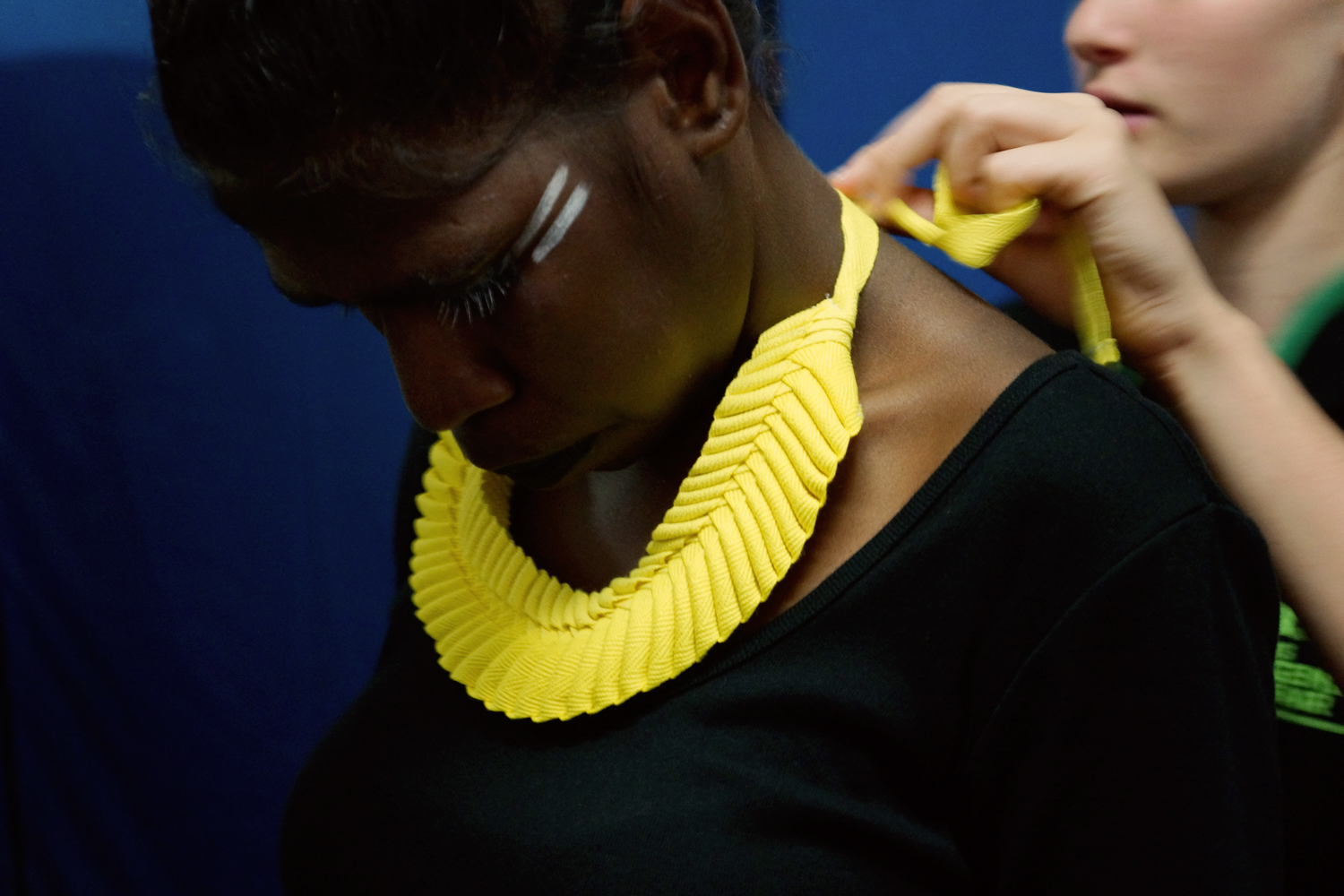
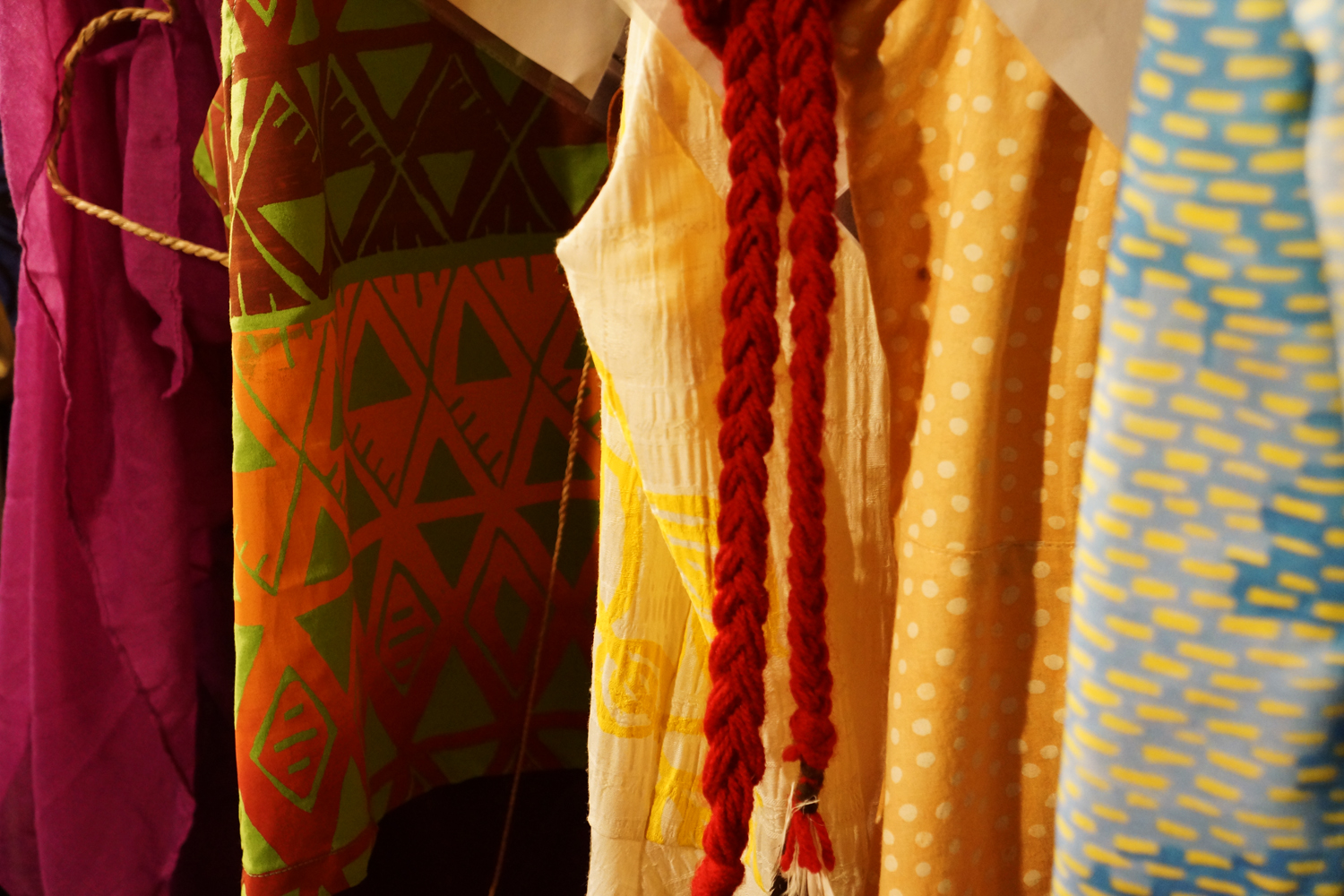
One of the highlights of CIAF was the fashion performance ‘Jana Jaral’ – which translates to ‘respect’ – curated by artist and fashion designer Grace Lillian Lee and choreographed by Fiona Wirrer-George. Artists, designers, textile- and clothing-makers and models collaborated in the spectacular show to celebrate Australian Indigenous culture, storytelling and style, bringing together the old and the new.
“I think it’s a new way of expressing and sharing,” says Grace of the performance. “Even though the catwalk has been around for years, I guess it’s just a new place where Indigenous culture can be expressed through this new dialogue of sharing.”
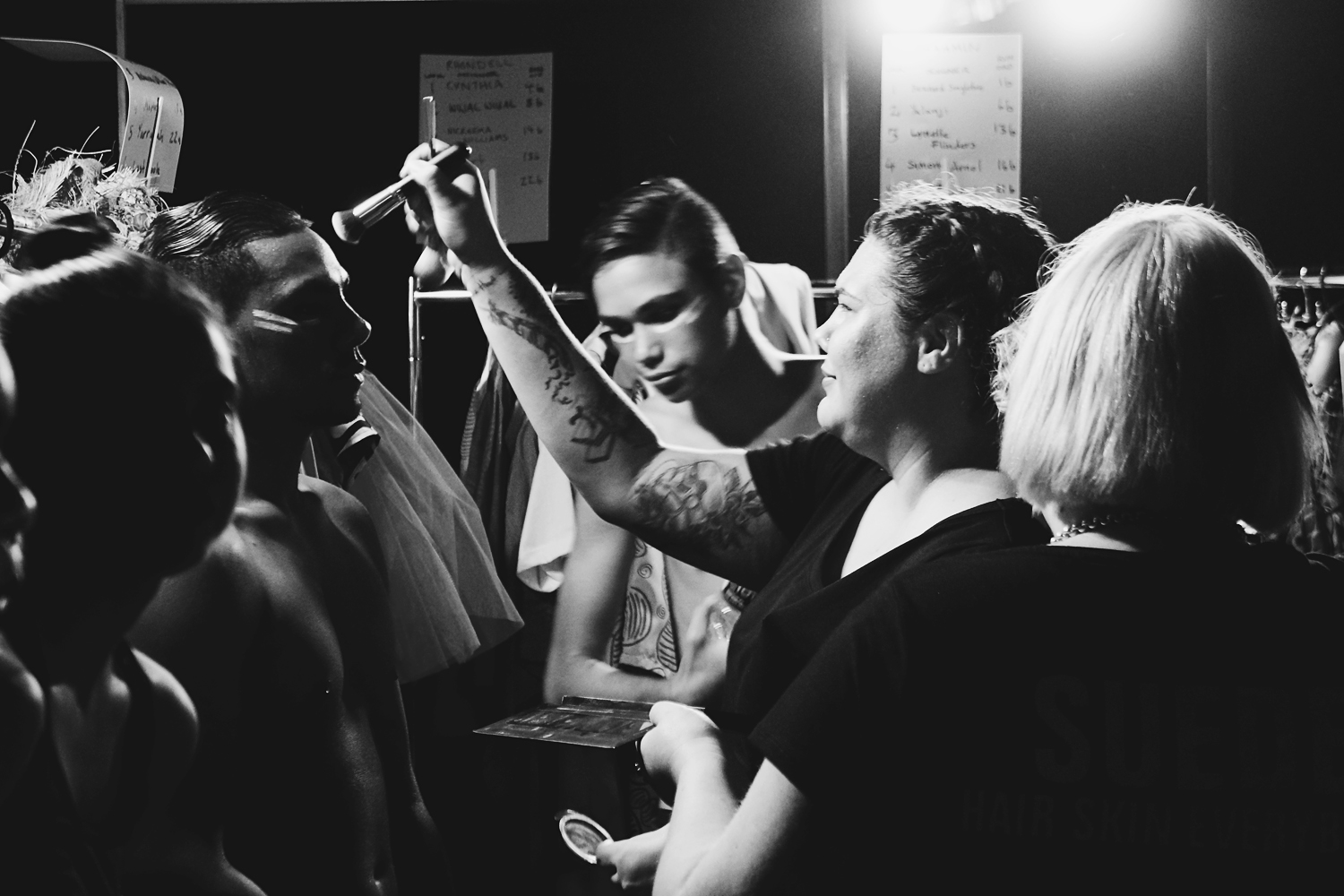
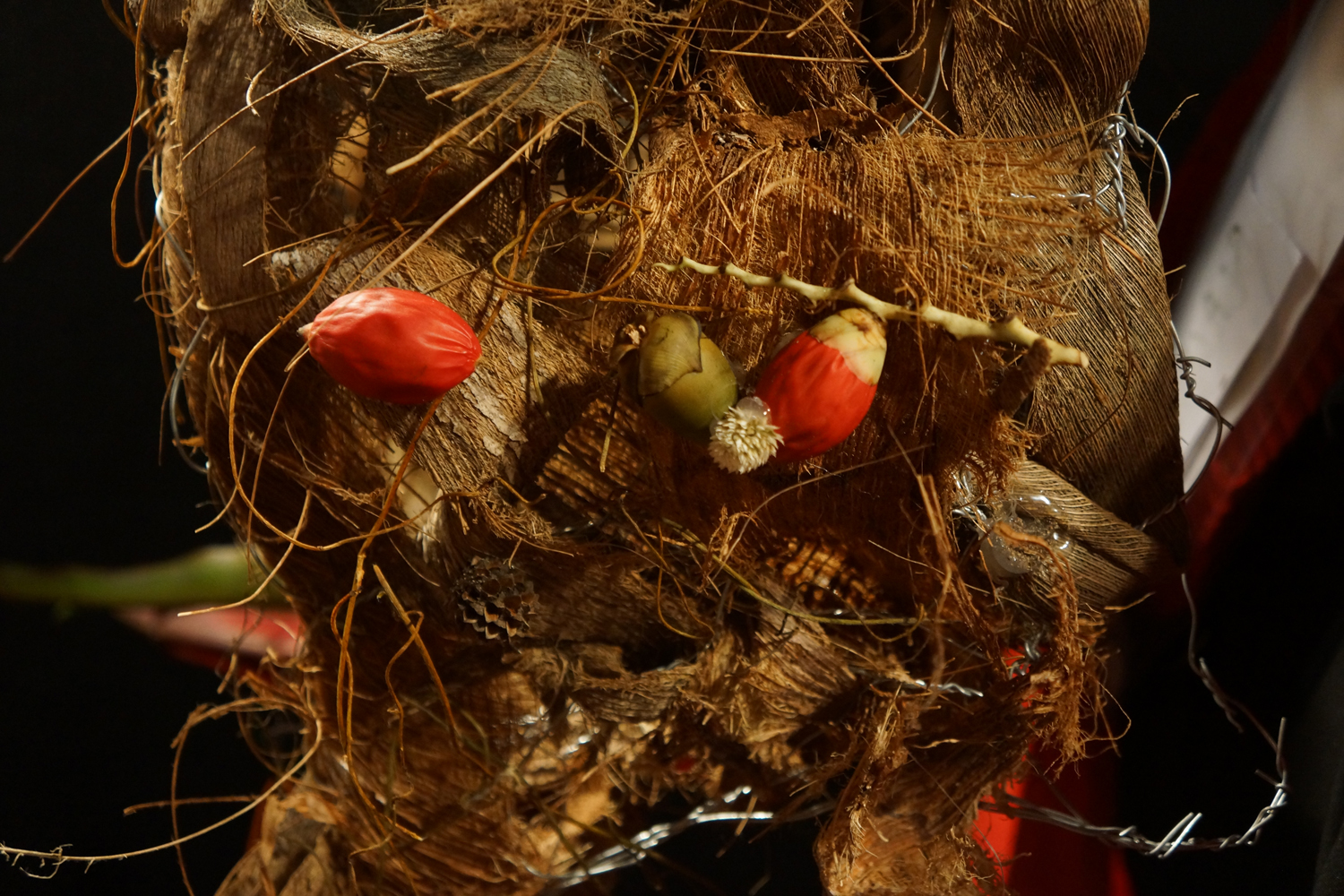
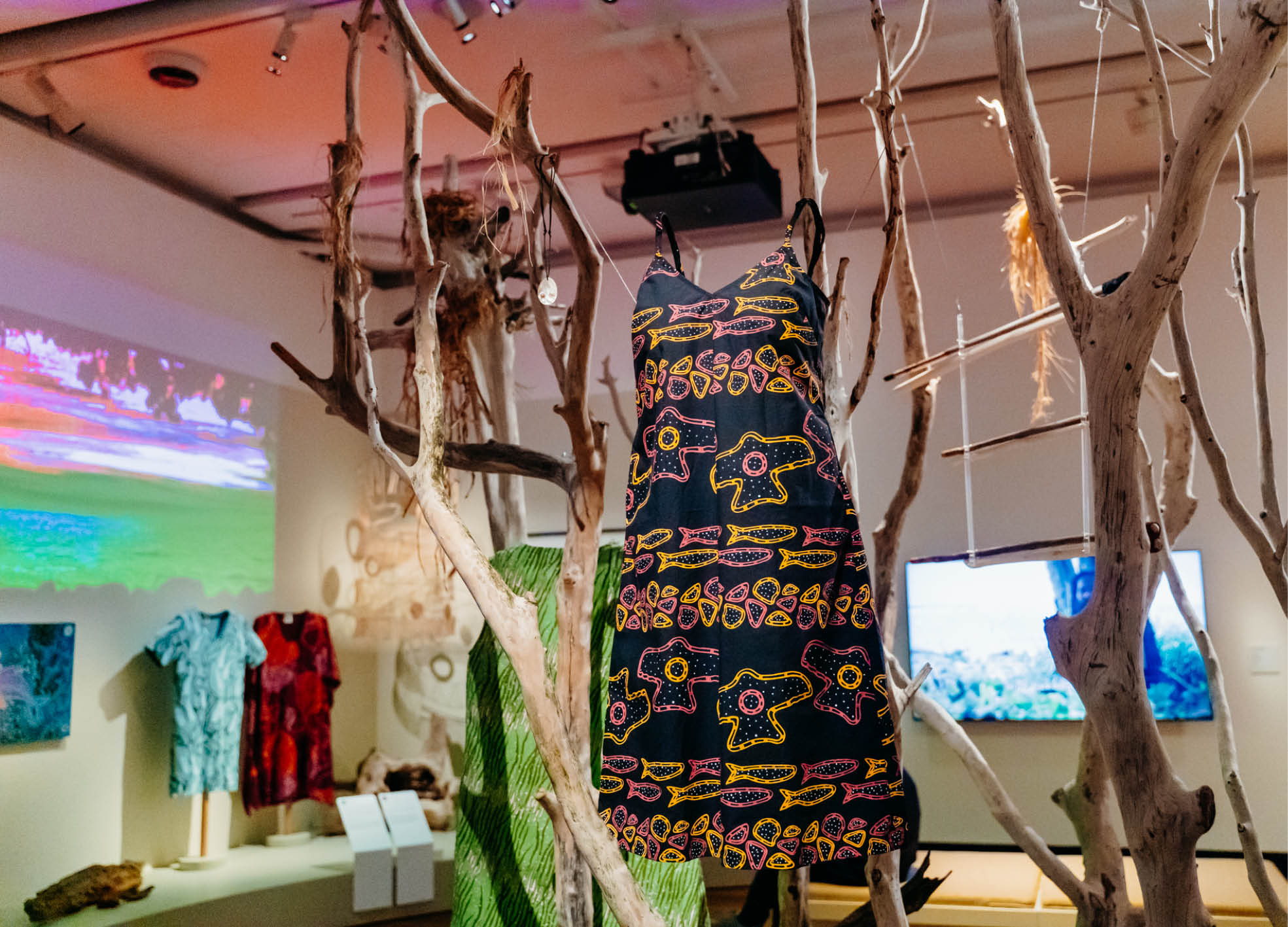
Participating designers included the highly acclaimed Mornington Island Art Designs (MIArt Designs) with their vibrant hand-felted jewellery and colourful silk and wool garments, artist Leecee Carmichael utilising weaving techniques, Nickeema Williams and her digitally printed textiles, screenprinted designs from Cynthia Vogler and bold creations from Yarrabah Arts and Cultural Centre. Grace Lillian Lee’s stunning woven collection also featured in the show, as well as being showcased in her own exhibition at the Cairns Regional Art Gallery for CIAF.
And for me, healing is critical, because when we are healed we are better.
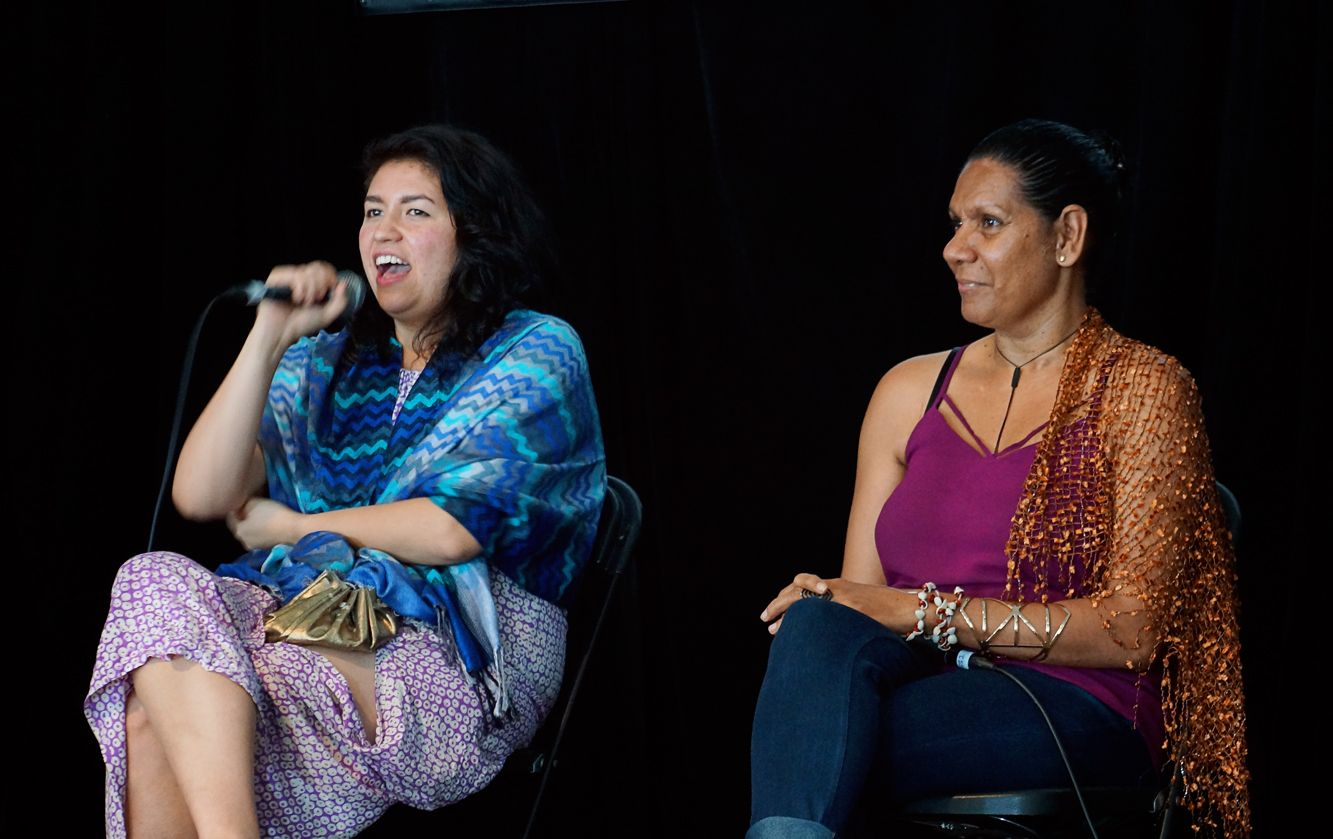
When speaking of the importance of the fashion show, her thoughts on the future of Indigenous arts and the direction she hopes to take with her role, choreographer Fiona explains: “I’m going to continue to explore the concept that’s currently unfolding from an academic perspective – because that’s where I am at the moment – and the role that dramatic reenactment dance movement vocabulary and visual arts wrapped in this cultural package [has on] our ontology as First Nations people. So where I am at is exploring that intellectually, philosophically and academically – because that is vital to the wellbeing of our people. If we can articulate the processes that works for us within our context, within our paradigms, within our ontology, then I think that will have a critical role to play in cultivating a healthy people, a healed people. And for me, healing is critical, because when we are healed we are better. We are able to think, we are able to feel, we are able to breathe and that will enable us to participate and interact and ultimately contribute to what is going to be the best for our mob.”
For more photos, see our Facebook gallery here.
———————
PHOTOS BY KELLEY SHEENAN






“Crafting is something that has come naturally since I was small and I just haven’t stopped. When I was smaller, I was interested in the end result. As I’ve gotten older, I realise it’s the process that keeps me coming back to craft. It’s a meditative state for me and I find the repetitive action of the stitching and felting quite therapeutic.”
Craving a world filled with warmth and whimsy? It’s all in a day’s work for textile artist @Cat_Rabbit, whose latest book, ‘Trinkets’, is bursting with felty food friends to make and cherish. Cat invited us into her universe, filled with cheeky characters, layered storytelling and loads of humour.
Plus: try the super sweet pattern for Cat’s Lucky Pickle, perfect to make as a stocking stuffer, extracted from Trinkets.
Read more from our ‘Just felt right’ feature in Issue 64, at newsagents and stockists now!
Photos: Tatanja Ross @On_JacksonStreet and Cat Rabbit
#PeppermintMagazine #CatRabbit #LuckyPickle #Craft #Crafting #Felting #FeltCrafts #Trinkets #ChristmasDecorations


Our hearts go out to everyone impacted by the Bondi Beach violence, especially the Jewish community. Also to the beachgoers, those who bravely helped and the first responders.
While it`s easy – and understandable – to get caught up in the horror of it all and direct anger at certain groups, remember this quote from teacher and author Erin Gruwell: "Don`t let the actions of a few determine the way you feel about an entire group."
“You don`t fight racism with racism. You fight racism with solidarity," said Bobby Seale of the Black Panthers. And solidarity is exactly what we need right now.
If you are feeling overwhelmed, you are not alone. Remember there is much more kindness in the world than hate. ❤️🩹
@LifelineAustralia has created a Bondi Beach Incident: Wellbeing support guide, where you’ll find information about common reactions, reassurance that what you’re feeling is valid, and ideas for taking care of your wellbeing.
https://lifeline.org.au/bondi-incident
You can also call Lifeline on 13 11 14, text on 0477 13 11 14 or chat at lifeline.org.au/crisis-chat anytime, no matter how this has impacted you.
@BeyondBlueOfficial is also available with free 24/7 support by phone on 1300 22 4636 or webchat at https://www.beyondblue.org.au/
Register.Find.Reunite. has been activated by @RedCrossAu to help people reconnect with family and friends. Visit redcross.org.au to access the service.
@NSWPolice Public Information and Inquiry Centre (PIIC) is operating 24/7 on 1800 227 228 for information relating to people impacted.
@LifeBloodAu is supporting Sydney hospitals. O- and O+ blood are always in high demand in emergencies. To donate (from anywhere in Australia – all states are welcome and helpful!) call 13 14 95 or use the Lifeblood app.

Just a reminder… from @SugarHouseCeramicCo
This holiday season be kind, patient and shop local!
#ShopSmall #ShopLocal #SupportSmallBusiness

✨️ Our website is getting a glow-up! ✨️
Sorry for the inconvenience but it will be offline for a few days. You can still purchase subscriptions (perfect for chrissy presents!) via the links on the holding page.
Last year we were extremely excited to receive funding from the Meta Australian News Fund, in partnership with the Walkley Foundation. The result of this is a fabulous new website, with a sustainable fashion and sewing directory that will follow early next year. We`ve worked with the lovely Amy and Jenny at @CrumpetClubHouse who have been making the magic happen – we can`t wait to show you the outcome! ✨️
In the meantime, please get in touch if you need help with anything – hello@peppermintmag.com
We`ll see you on the other side! 🌈

🎀 12 DAYS OF XMAS GIVEAWAYS 🎀
🎄On the 12th day of Christmas, we’re giving away… a GREENPAN FROST ICE CREAM & FROZEN DRINK MAKER! 🎄
Ice, ice, baby! Calling all kitchen magicians and dessert devotees: it’s time to churn, blend and devour your way to frozen heaven. It’s our final giveaway – and hoo girl, it’s a goodie! Thanks to the clever folks at @TheOriginalGreenPan.Anz, one reader will cool their mitts on the Frost Ice Cream & Frozen Drink Maker – perfect for conjuring up home-made gelato, sorbet, smoothies, slushies and more!
Valued at $599, the Frost Ice Cream & Frozen Drink Maker is designed with GreenPan’s signature Thermolon™ ceramic non-stick coating, so you can whip up summer-ready sweet treats free of PFAS, PFOA, lead and cadmium.
To snag this frosty prize, follow @TheOriginalGreenPan.Anz and tag a friend in the comments below before midday AEST 15 December! (Australian and New Zealand addresses only, please.) Good luck!
Update: The lucky winner of our final giveaway is @just__for__van - congrats! We`ll dm to get your details. Well done! 🎉
#PeppermintMagazine #12DaysOfChristmas #12DaysOfGiveaways #GreenPan

Oh hey 👋🏼 Just a little reminder that our subscriptions are sent in paper envelopes, which is a bit of a rarity in our industry. 💅🏼
If you need more reasons to subscribe, how about these:
💌 Enjoy a new issue arriving in your letterbox every six months.
💌 Subscribers exclusively receive FOUR digital sewing patterns per year!
💌 You’ll be the first to get your hands (and needles) on our patterns with early access.
💌 Get a 20% discount code on back issues of Peppermint so you can start your collection today!
💌 Automatically go in the draw to win amazing prizes each issue.
💌 Feel good about your subscription arriving in plastic-free postage.
💌 Support a small, women-led Australian business.
💌 Help us make the world a better place!
And... it`s a perfect Christmas present! We have a downloadable card you can print to go with your gift.
💌 Link in bio!
#PeppermintMagazine #SupportSmallBusiness #ShopLocal #ShopSustainable #PlasticFree
