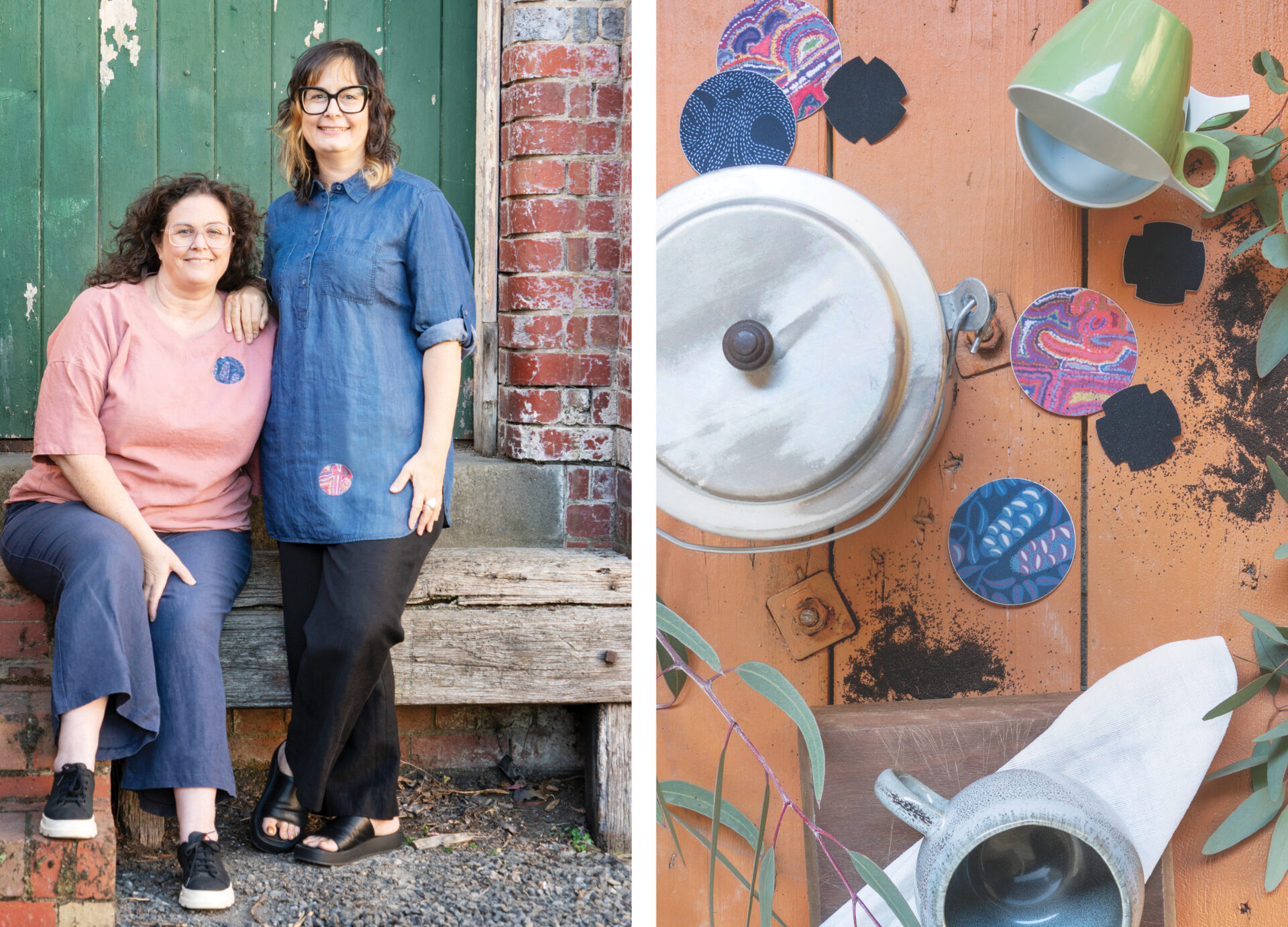
Meet Sophie and Megan Dyring, the sisters who turned a wardrobe malfunction into a nifty solution – beautifully designed textile repair patches that help to make mending accessible to everyone.
images FabPatch
Tell us how the business came about!
Sophie: I was in Finland a few years ago and wound up with a hole in my pants – that’s when I discovered FabPatch. When I got back, I told Megan about it and, because we both had piles of damaged clothes we couldn’t part with, we jumped online to order some – only to discover they weren’t available in Australia.
Megan: We had no experience in retail – I’m a secondary school teacher and Sophie is an architect – but we believed in the quality of the product and were aware of the horrible statistics around textile waste in Australia. So we put together a proposal and emailed the company in Finland – little did we know just how receptive they’d be to these upstarts from Australia!
You have big dreams for these little patches, right?
Sophie: We do! We want to change society’s perception of mending: we want to bring it into the mainstream and make it available for everyone, regardless of their skill set.
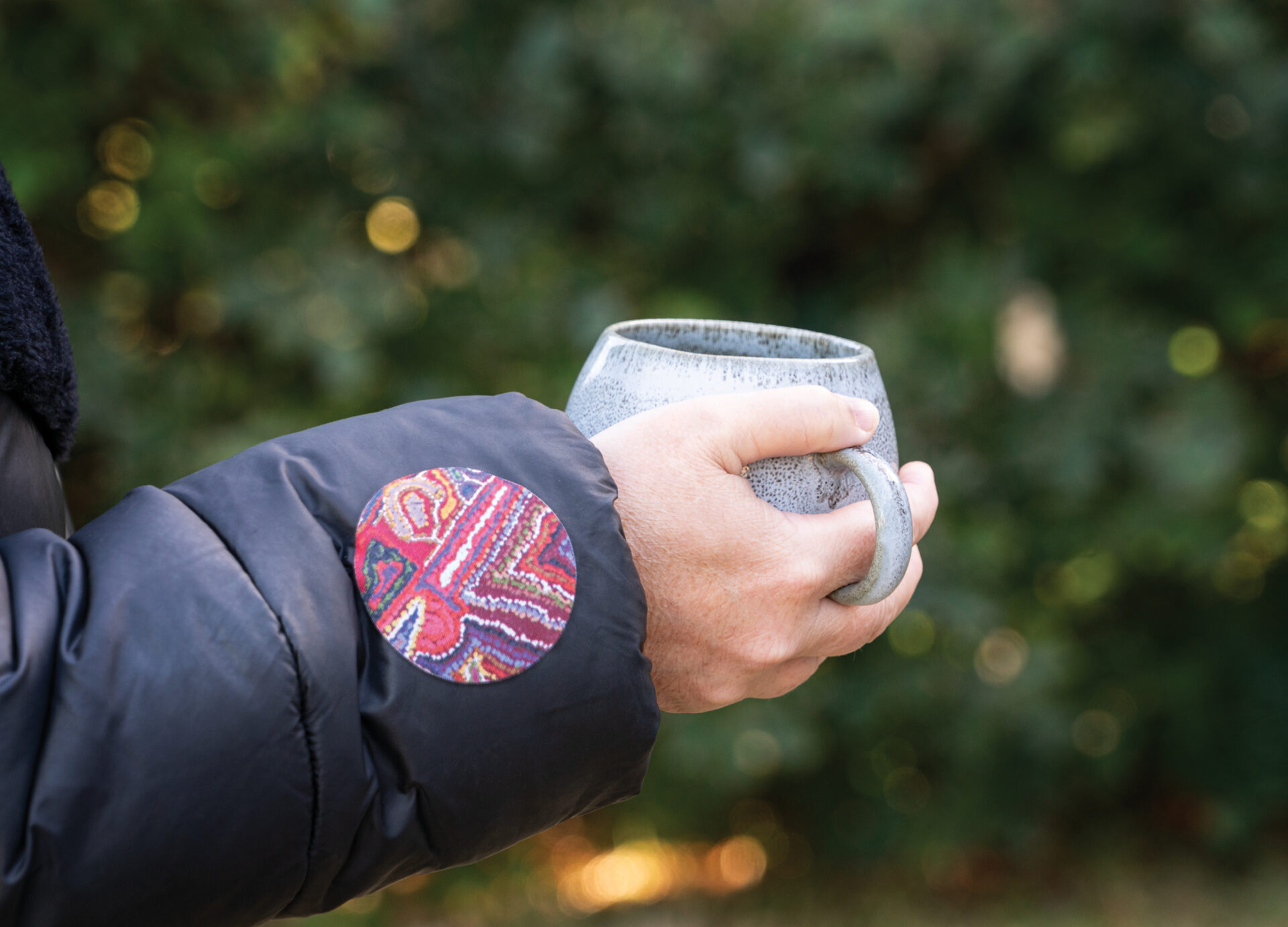
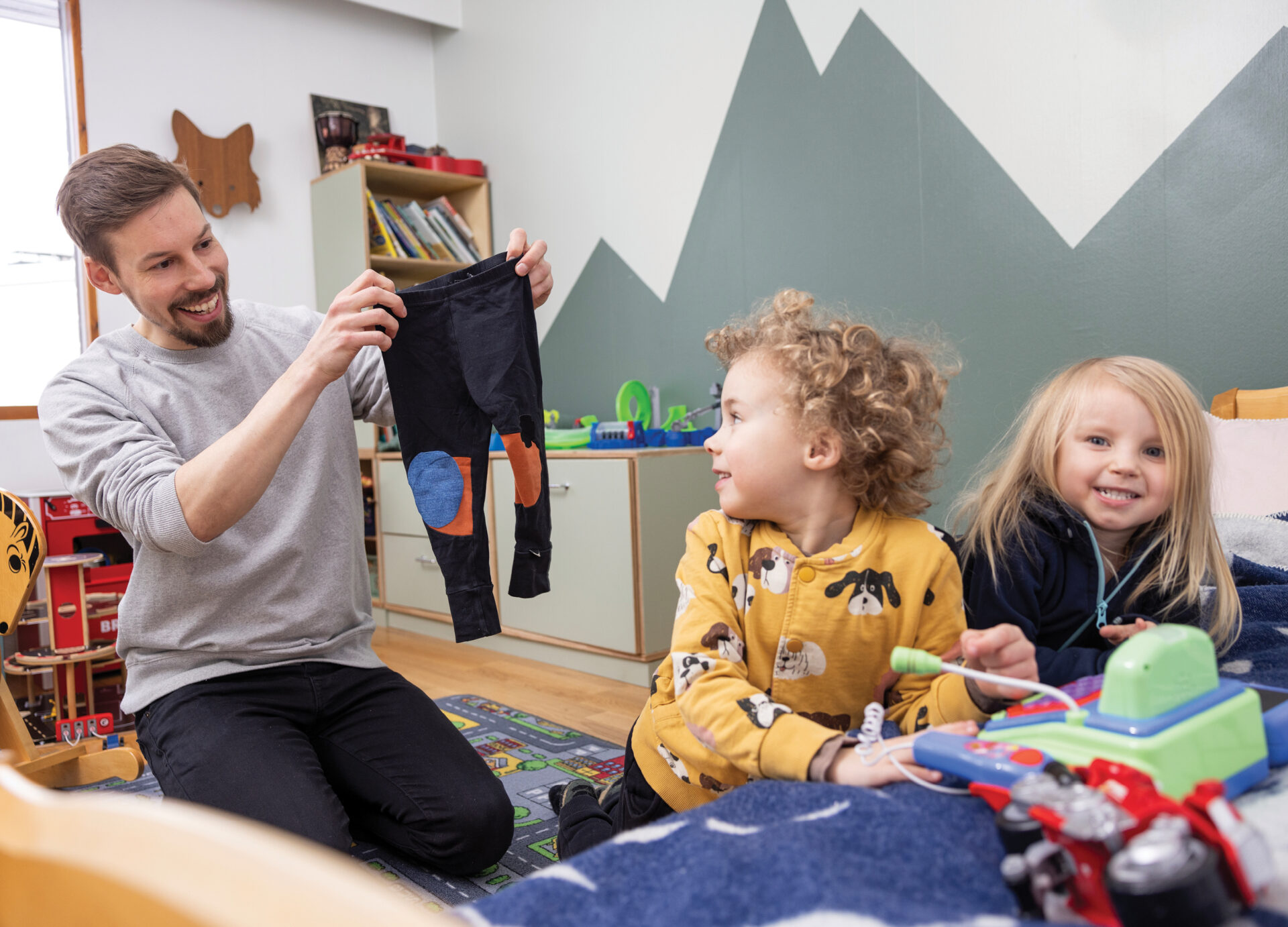
Megan: We want people to patch proudly – that’s why we’ve come up with these beautiful designs. And it isn’t just clothing we want people to mend: it’s beanbags, couches, cushions, shoes, wetsuits – all of these things can be repaired using FabPatches because they’re rub-on, not iron-on.
 You talk a lot about a “repair revolution” – walk us through that.
Megan: As an economics teacher, I’m very cognisant of the earth’s limits to support us and the currently unsustainable way we use its resources. Australians are the second-largest consumers of textiles [per capita, beaten only by the US], buying an average of 27 kilograms of new clothing each year – twice the global average. Some 6000 kilograms of clothing and textiles are dumped in landfill every 10 minutes.
Sophie: Our motto is, ‘long live the adventure’, the idea being that we all experience adventure in our lives – from finding that special item while thrifting, to the kids’ outdoor adventures connecting with nature. Sometimes our adventures can damage our clothes, and we hope to inspire people to think twice before throwing them away.
If we can extend the life of our clothing by nine months, we can reduce the carbon, water and waste footprints by an average of 20 to 30 per cent.
What other changes would you like to see in the fashion industry?
Sophie: It really needs to adapt: consumers are becoming more aware of the social and environmental impacts and that is affecting their buying choices. Organisations such as America’s Remake, which produces an annual accountability report, and Baptist World Aid Australia, which releases an ethical fashion guide, make it much easier for consumers to make informed choices. Unfortunately, based on these reports, we can see that companies still have a long way to go in becoming sustainable.
Megan: It would be great if the industry could lead the transition to a more sustainable model, rather than being forced to [by a government body]. The Seamless Clothing Stewardship Scheme charts a course for the fashion industry in Australia to become circular by 2030 by charging a fee for each item made or imported, which is then used to fund clothing collection, sorting, recycling and education campaigns. The aim is to divert 120,000 tonnes of clothing from landfill by 2027.
Sophie: We want to engage with these companies to see how FabPatch can help them achieve their targets.
 What are the patches made of?
Sophie: The current collection is produced using stretchy 100% recycled polyester. The production process starts in China, where PET bottle waste is turned into pellets and then thread. The thread is spun in Türkiye then the fabric is produced in Finland by a responsible operator.
Megan: The patches are also printed in Finland, using digital printing, which consumes less water and energy than traditional methods. The adhesive we use has never been tested on animals and it doesn’t contain any solvents or animal-based materials.
Sophie: The current supply chain isn’t ideal, but the company in Finland is working on establishing local suppliers, which would create a market for closed fibre circulation in Finland. Our goal is to develop localised manufacturing once the product is established in the Southern Hemisphere.
Now tell us about the fun stuff – the patterns!
Sophie: We currently have six designs, with two patterns by Jocelyn Proust and Charmaine Brown (skin name Napurrurla), whose work illustrates the beauty and breadth of our country. We did market research with approximately 10 different Australian designs and our audience overwhelmingly chose these because they complement so many materials and colours.
Megan: The purpose of these beautiful designs is to allow people to make a stylish statement. Of course, that isn’t the only option – we have black and denim so you can hide your patch if you’d prefer! These can be used internally for more discreet repairs, then there’s the option of invisible patching for the inside. They’re also very soft against the skin.
How long do FabPatches last?
Megan: That’s the value of them: they’re durable, long-lasting and hard-wearing. The pants Sophie patched back in 2022 are still going strong! That’s an extra two years she’s got from her favourite pants. They’ve now been patched on three separate occasions – without FabPatch, they would have ended up in landfill a long time ago.
This article originally appeared in Issue 61 of Peppermint, in partnership with our friends at FabPatch. Click here to get your hands on back issues as well as our lovely Sew&Tell digital magazines.