Searching for Warrajamba: Artist Delvene Cockatoo-Collins on mermaids, memory and the meaning of home
- Words by Peppermint
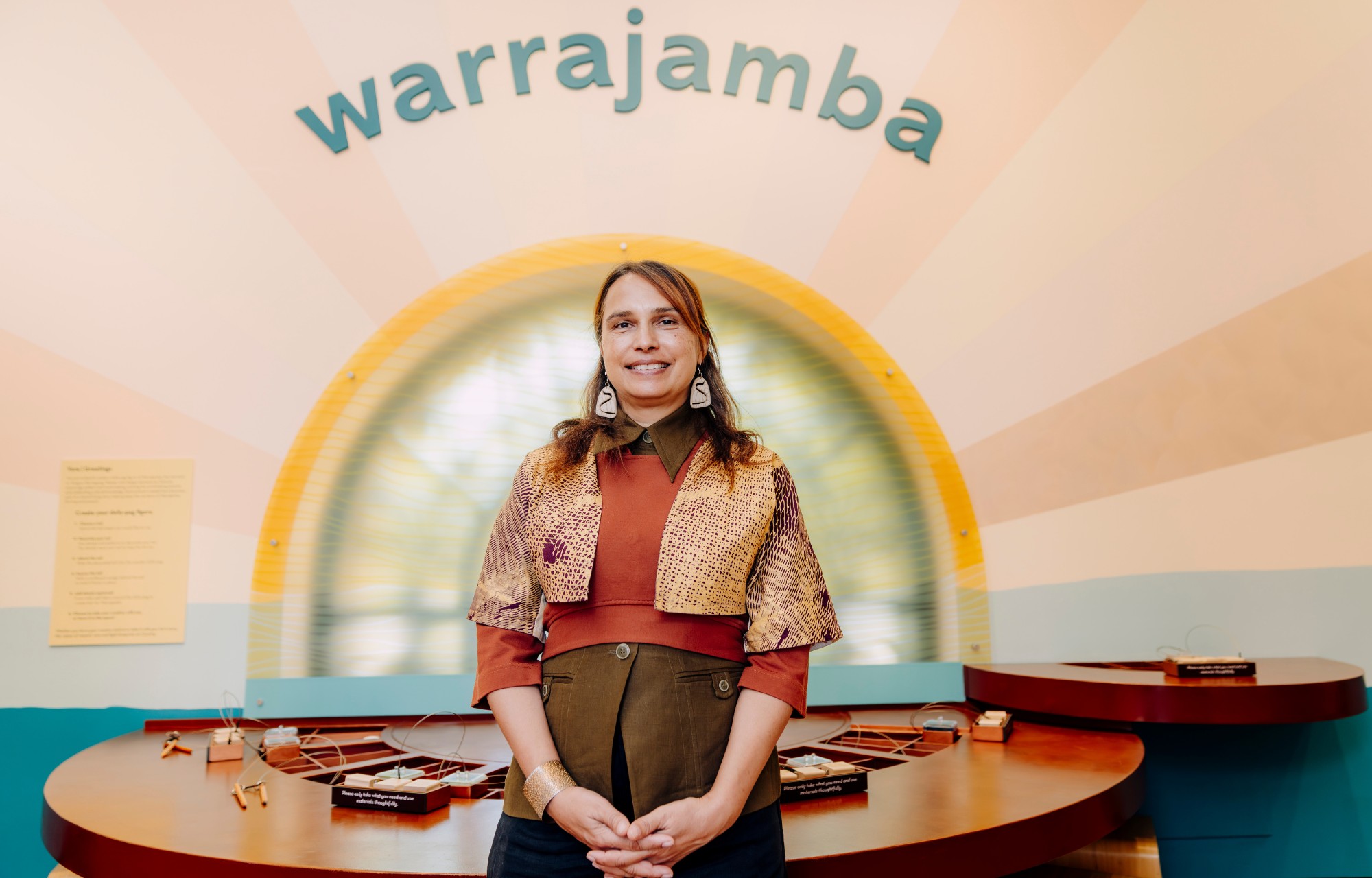
Once upon a time and a place, there was Warrajamba: a mermaid whose story has been carried through generations by artist and designer Delvene Cockatoo-Collins’ grandmother, Bethel Delaney, and mother, Evelyn Parkin. And, like so many other living, breathing, unfolding stories, it has been in search of an ending.
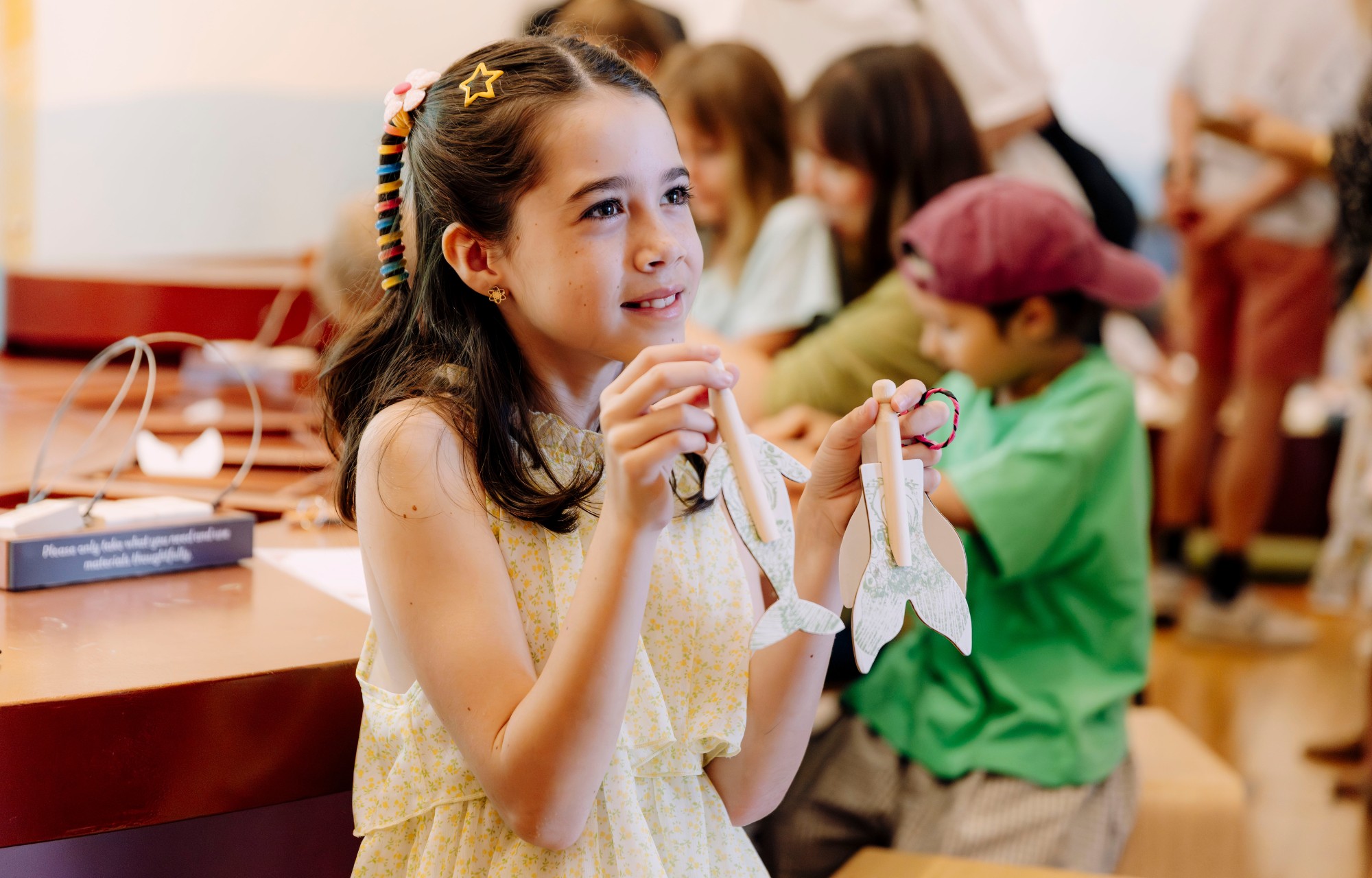
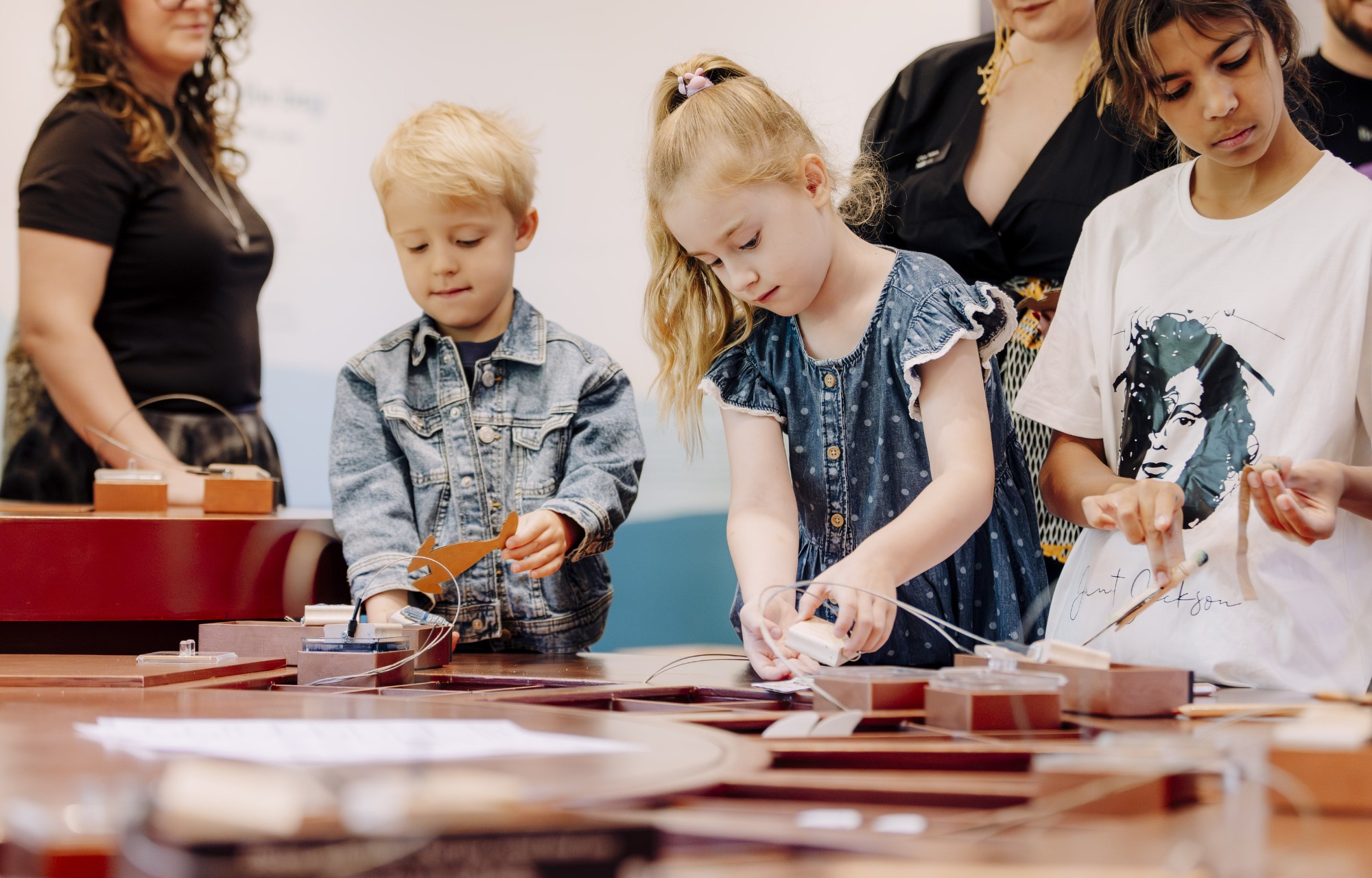
Delvene, a proud Quandamooka woman of the Nunukul and Goenpul (Minjerribah/North Stradbroke Island) and Nggu (Mulgumpin/Moreton Island) peoples, draws much of her inspiration and guidance from the significant story of Warrajamba. From now until 15 November 2026, Delvene will reimagine Museum of Brisbane’s Creative Space as an immersive realm shaped by land and sea in the mermaid’s honour. Delvene’s soaring sculpture features in the space, made from materials gathered from Minjerribah, including yungair freshwater reed, talwalpin and quampie shells. Visitors can immerse themselves in this celebration of living heritage, taking part in free making activities like crafting a mermaid or dugong dolly peg doll using stamps featuring Delvene’s designs.
Delvene’s soaring sculpture features in the space, made from materials gathered from Minjerribah, including yungair freshwater reed, talwalpin and quampie shells.
As the Museum’s newest Artist in Residence, Delvene welcomes audiences of all ages to join in her ongoing search for the ending to Warrajamba’s story. It’s an invitation grounded in Country, culture and community, and the matriarchal line of storytelling that guides her practice.
We spoke to Delvene about intergenerational knowledge, creative responsibility, and what it means to follow in the, well, fin-prints of a mermaid.
Hi Delvene! For those meeting Warrajamba for the first time, can you share who she is and what she represents within your family’s story?
Warrajamba is a mermaid from our family’s stories, connected to the land and sea of Mulgumpin (Moreton Island) and Minjerribah (North Stradbroke Island). There is oral history that she exists in this bay, alongside written records that describe her moving between land and water.
Within our family, she represents both presence and mystery, something that has always been there, even when not fully spoken about. She holds our connection to water and Ancestral stories. While we don’t have the full story, for me she represents the importance of asking questions, gathering family knowledge, and recording and celebrating those stories.
You’ve described your work as an ongoing search for the ending of Warrajamba’s story. What does it mean to carry a story that isn’t neatly wrapped up?
It means accepting that not all stories are resolved. Some are lived alongside, revisited, and understood differently over time. Carrying Warrajamba’s story is about sitting with the unknown and allowing it to unfold slowly. I’ve been on this journey of expressing the story of Warrajamba through my practice for about 10 years now.
It’s less about finding an ending and more about deepening my relationship to the story through making, listening, and time. In that process, I often uncover other stories and moments shared with family that may not be directly about Warrajamba, but are just as important.
Your work draws deeply from your grandmother Bethel and your mother Evelyn. How does that matriarchal line shape the way you create and share?
That line grounds everything I do, as it is both influence and responsibility. There is an obligation to honour them both. The way I create is shaped by how they held and shared knowledge, through quiet strength and observation, and through the moments we’ve shared and the love and time they’ve given.
Those memories stay with me. So I feel those memories and moments continue to guide how I create and share.
The way I create is shaped by how [my grandmother and mother] held and shared knowledge, through quiet strength and observation, and through the moments we’ve shared and the love and time they’ve given.
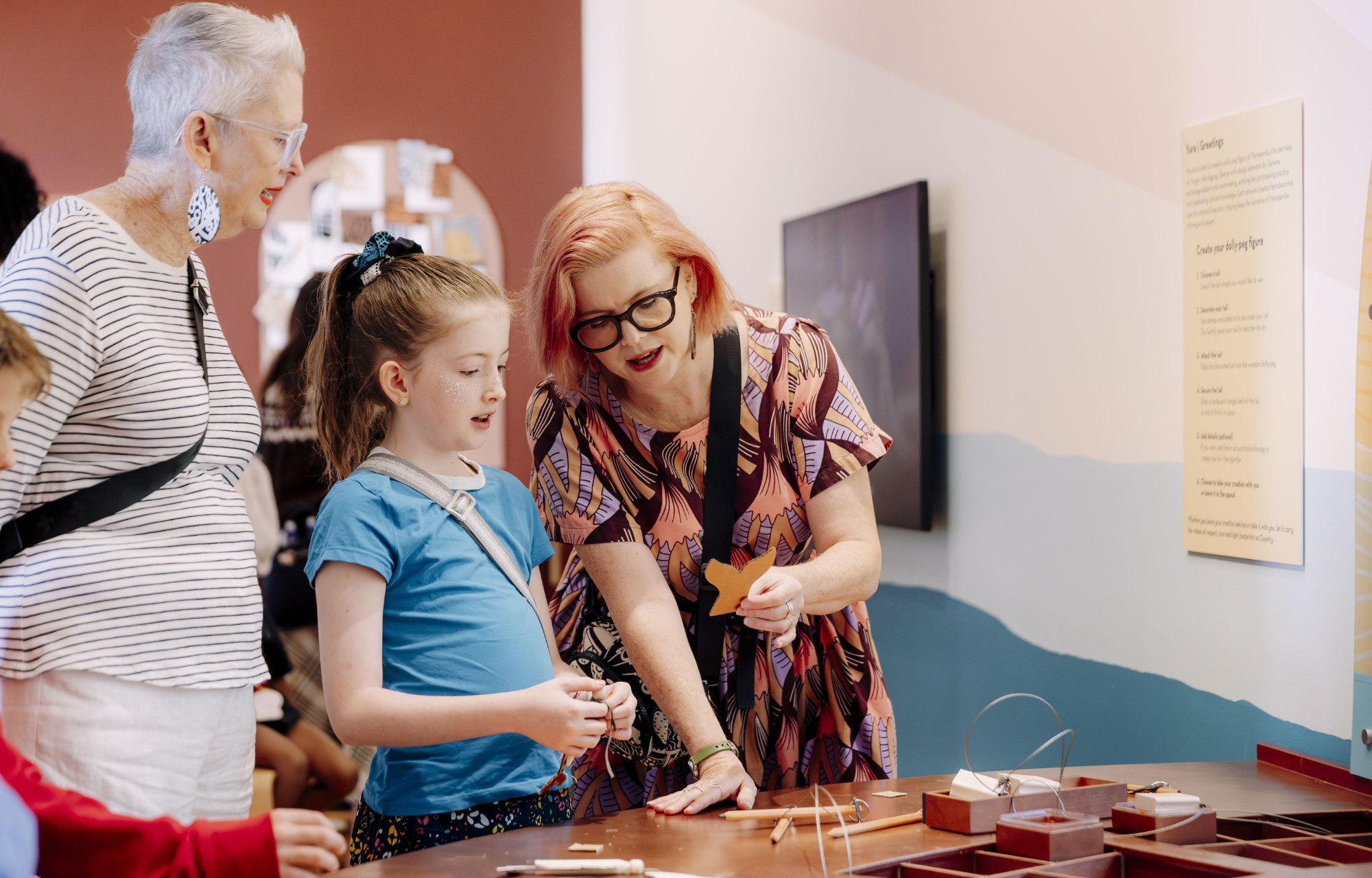
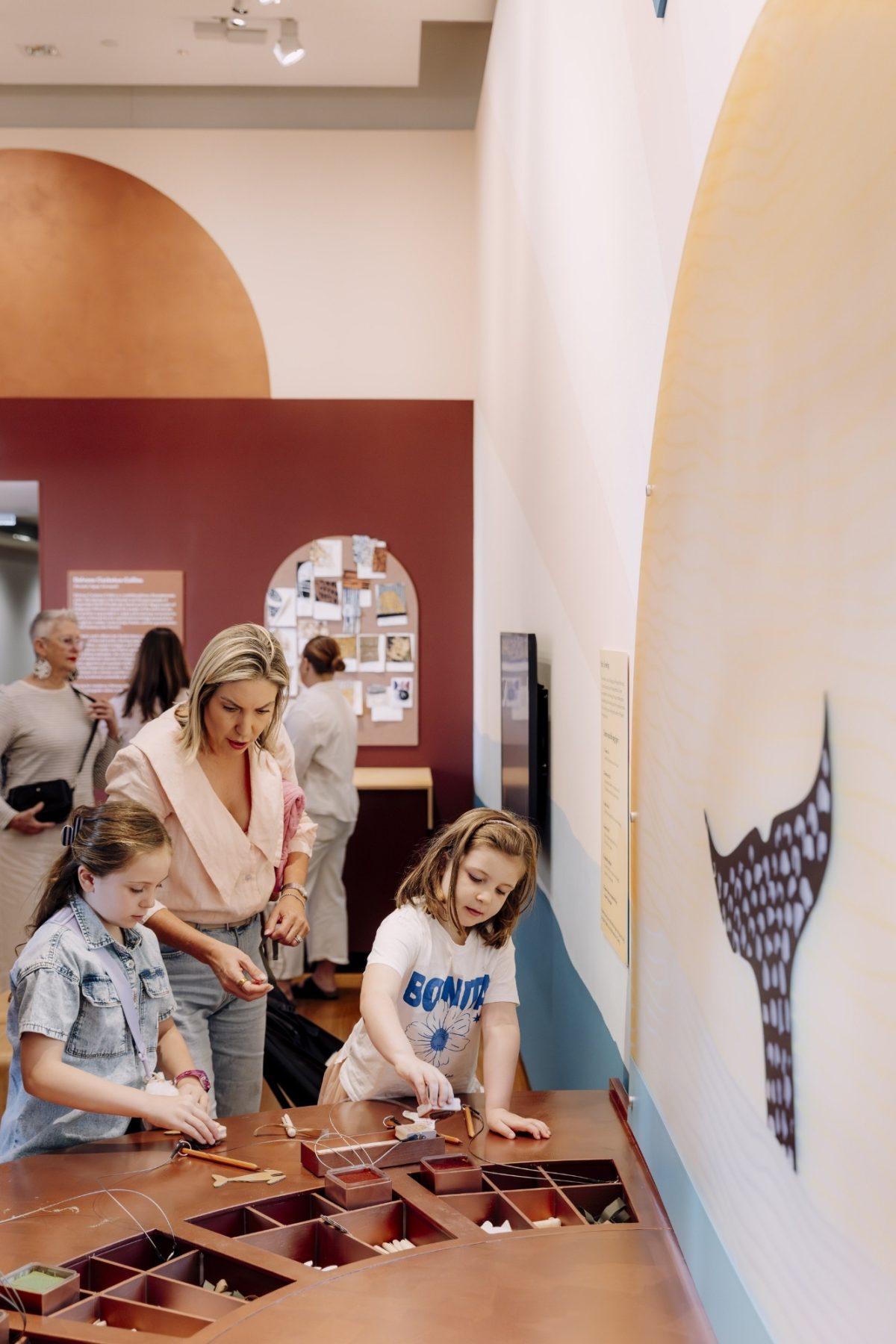
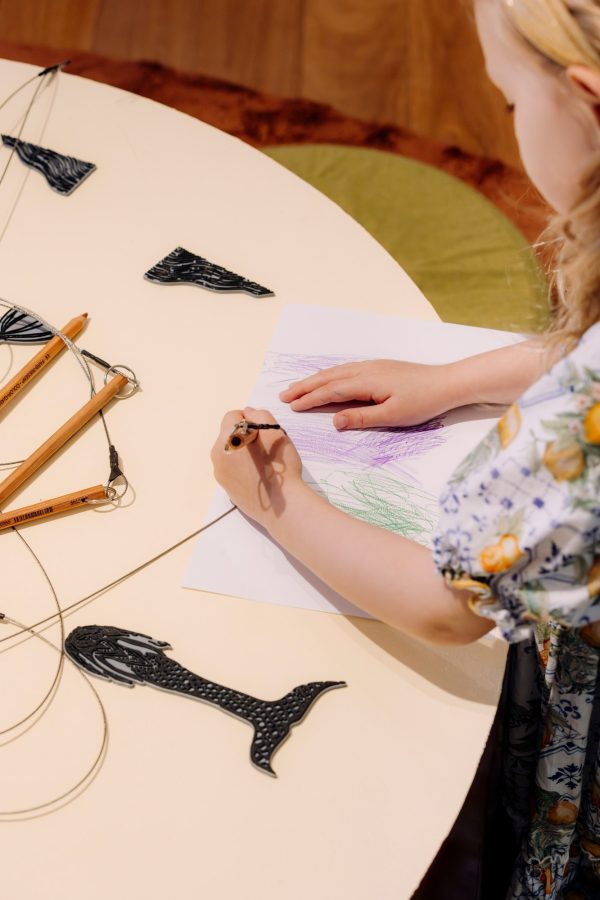
What excites you about transforming the Creative Space at Museum of Brisbane into something immersive and hands-on?
I’m excited by the opportunity to slow people down and bring them into the process. When I first walked into the space after install, it felt calm, like a place you could rest and nap in. It carries a sense and feel of the island, like the copper tones of late afternoon, the pearl-like light on the water at high tide. When you talk with people about their visit to the island, it is often about the relief and calm they feel as soon as they are on the barge or water taxi across from Cleveland. The team at MoB have really captured this and brought that sense of calmness into the space.
The Creative Space becomes somewhere you can sit within the work, to listen and to make. That shift from observing to participating creates a deeper kind of understanding.
You’re working with natural materials from Minjerribah like yungair and quampie shells. Do the materials themselves bring meaning and story?
Yes, the materials carry their own stories before I begin. Where they come from, how they are gathered, and how they continue to be part of our lives, through making and food, all of that holds meaning.
Working with them keeps me connected. I’m working with what they already hold.
How do you balance sharing cultural stories with protecting what must remain within community?
It comes down to understanding what is ok to share and what isn’t. Not everything belongs in a public space. Some stories are held within family and community, and that boundary is important.
My work offers a glimpse without giving everything away, respecting that some knowledge is not meant to be translated or displayed. My mum has written a family book that remains within our family, and I’m always checking with her about what is appropriate to share. Within my practice, what I reveal is intentional and considered, often explored through different mediums rather than directly told.
Not everything belongs in a public space. Some stories are held within family and community, and that boundary is important.
The ‘mermaid in the bay’ has also found expression in your textile and fashion work. How does Warrajamba move differently through installation compared to fabric, ceramics or wearable art?
In installation, she becomes something you can step into, as she surrounds you. In the Creative Space, Warrajamba was made in around 2017 with the assistance of my dad, using a wire frame for structure, ochre from Mulgumpin across the bodice, quampie shells to reflect the texture and light of scales, and tawalpin (cotton tree) to evoke movement through seagrass.
In textiles and wearable work, she moves with the body and out into the world, the form with fibres and shells all from around the bay. Each medium carries a different energy, but they all speak to the same story as it shifts across form.
The exhibition includes hands-on making activities for visitors. Why is participation such an important part of this project?
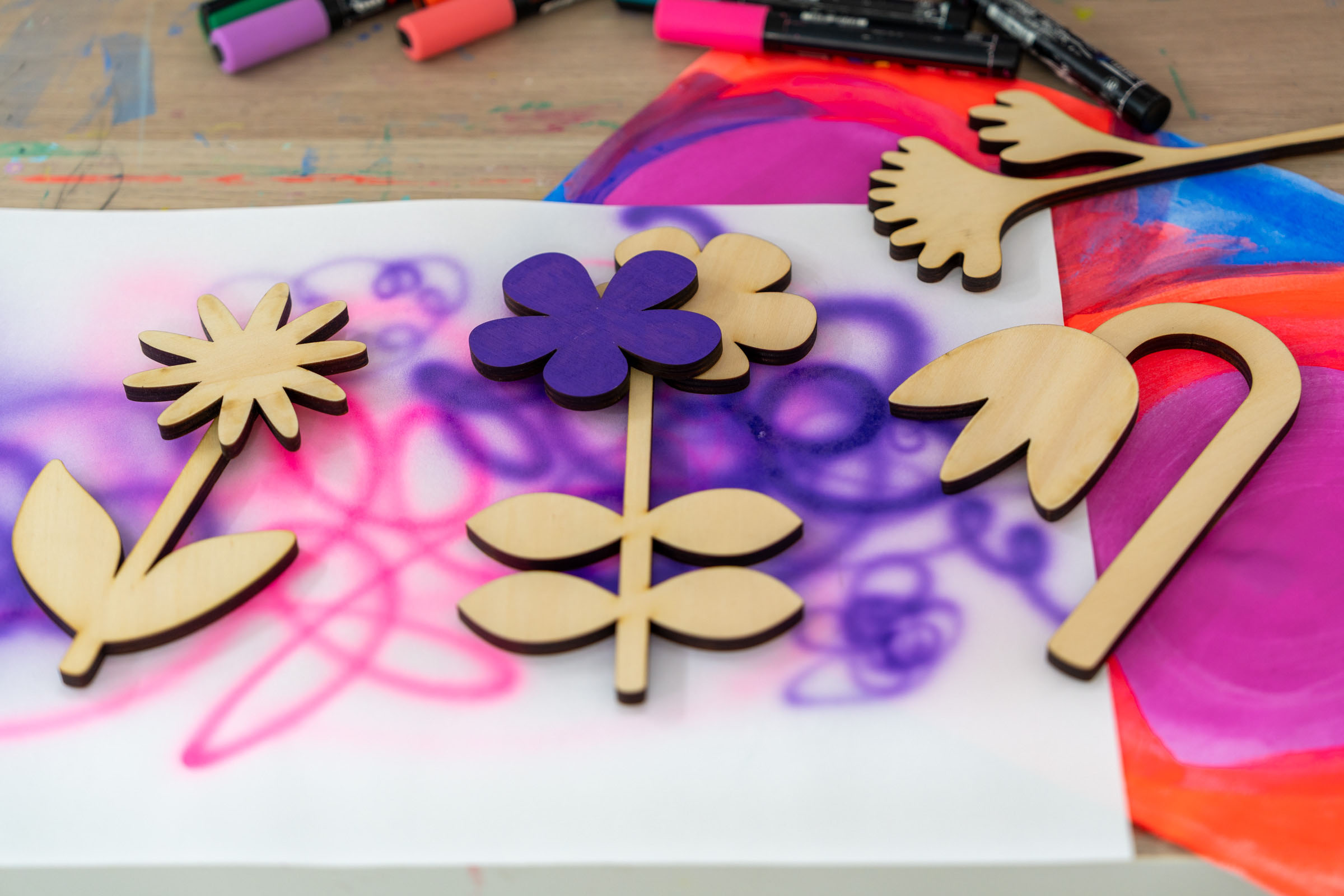
Because making is a way of understanding. When people use their hands, they connect differently to material and to story.
During my residency, I observed a child, while making a mermaid, glance up at the video content and listening intently, and others move from the making table to read The Legend of the Dugong. There are multiple ways to encounter the work including through sound, sight and hands-on experience. That layered engagement is important.
Making is a way of understanding. When people use their hands, they connect differently to material and to story.
You’ve grown your creative business carefully, resisting mass production and keeping your hands on the work. What does growth look like to you, both as an artist and First Nations storyteller?
Growth, for me, has never been about scale; it’s about depth and staying local. It’s about building something that remains true to where I come from while creating pathways for the next generation.
Maintaining integrity, staying connected to family and community, and allowing the practice to evolve at its own pace, that’s what growth looks like.
During this residency, I’m working on a collection that includes a gulay, or dilly bag, inspired by my grandmother’s grandmother’s gulays, which will be shown on an overseas runway later this year. That growth is also personal, as it’s honouring stories and skills that belong to our family.
In your heart, what do you feel is the ending to Warrajamba’s story?
I don’t think there is a single ending. In my heart, her story continues in that it shifts, resurfaces, and changes as I do.
♡ This is a Better Together Peppermint Partnership, where we team up with brands we love. This story was created with support from our friends at Museum of Brisbane. MoB’s Artist in Residence program is supported by Tim Fairfax AC. The Creative Space is proudly supported by Major Partner Brisbane Airport and generously supported by Ian and Cass George, and Holly and John Livingstone. Warrajamba is supported by the Queensland Government through Arts Queensland.



JOIN OUR MAILING LIST
Brighten up your inbox with our not-too-frequent emails featuring Peppermint-related news, events, competitions and more!
explore
More articles