
On September 22, Milan Fashion Week drew to a close with the Green Carpet Fashion Awards – a special event to laud environmental and social sustainability in the sector.
Now in its third year, the Awards is a joint effort between non-profit The National Chamber of Italian Fashion and Eco-Age, a sustainable fashion consultancy led by activist Livia Firth. Conceived as a way to celebrate the ‘unsung heroes’ of fashion – the millers, the makers, and the many thousands of individuals who work in the supply chain – Green Carpet celebrates fashion companies that demonstrate a commitment to sustainability, while simultaneously showcasing those who preserve time-honoured Italian traditions. It’s here, at the nexus of heritage and innovation, that organisers believe the most exciting changes are taking place.
Given the momentum that’s been building around ethical fashion in the past 12 months, this year’s instalment carried special significance. “We’ve turned a corner finally,” organiser Livia Firth told The Guardian on the eve of the Awards. “It’s a beautiful moment.” Falling on the final evening of Milan Fashion Week, this year’s Awards were attended by more than 1,000 guests, including designers and Hollywood A-listers. Australian model Adut Akech, dressed in a Valentino gown made from GOTS Certified silk, co-hosted the ceremony, itself a work of sustainable art.
The concept for the evening was inspired by Leonardo da Vinci; the 500th anniversary of his death is being marked this year. Guests entered onto a green carpet fashioned from 2,000 square metres of Econyl, nylon fabric regenerated from recycled fishing nets and other ocean debris. After the event, plants and flowers used to decorate the venue were donated to the City of Milan for re-planting.
The Green Carpet Challenge
While Livia Firth donned a 2004 gown (below), choosing to shop her own wardrobe rather than buy new, other guests sported fresh looks as part of the Green Carpet Challenge. Founded by Firth in 2010, the friendly competition defies some of the world’s leading luxury fashion houses to reimagine their designs using sustainable materials and manufacturing processes.
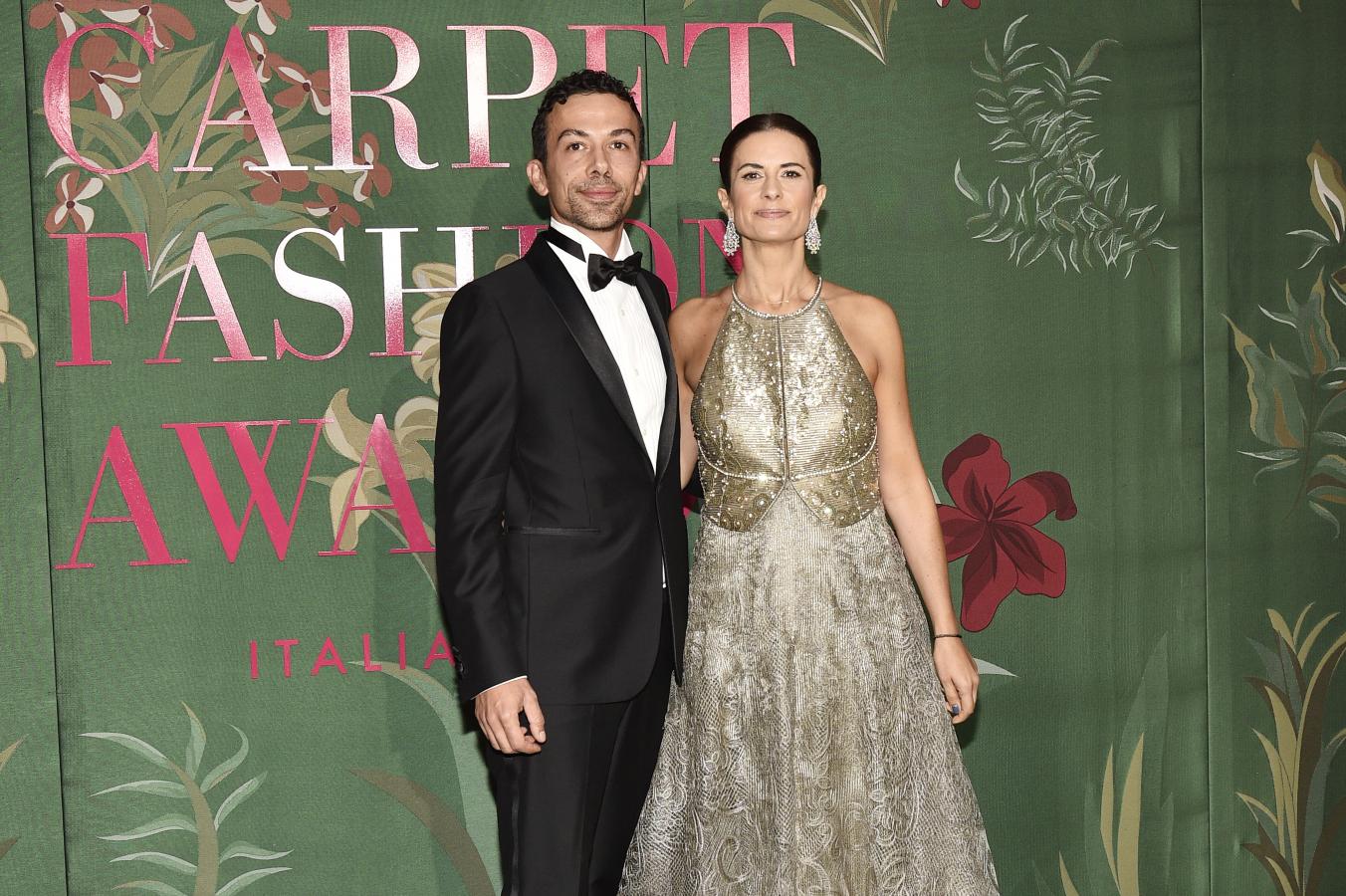
Highlights included Brazilian model Alessandra Ambrosio’s Etro gown, embellished with fabric remnants salvaged from old samples. Dutch model and Green Carpet Award winner Doutzen Kroes’ outfit, an organic silk number by Max Mara, featured a coat padded with Cameluxe, a material made from camel hair fabric offcuts. Doina Ciobanu, a London-based fashion blogger, wore an Emilio Pucci frock ornamented with sequins made by ADITY, an Indian company that makes notions from plastic waste collected from the streets of their home city. Hungarian model Barbara Palvin, meanwhile, was dressed in a white tuxedo by Diesel, made using their Better Cotton Initiative denim.
The gents weren’t left out: actor and model Ian Somerhalder was dressed in a tuxedo fashioned from Global Recycled Standard yarn derived from post-consumer plastic bottles. The fabric innovation is the work of Tommy Hilfiger. Actor Dylan Sprouse donned a BOSS Menswear Traceable Wool suit, part of a new capsule collection made from ethical New Zealand merino.
GCFA Award Winners
While the Green Carpet Challenge highlighted the latest in eco fashion, it was the 12 award winners who stole the show. Traditionally bestowed on entrepreneurs, activists, small businesses, craftspeople and designers, the awards recognise those who are changemakers in their industries.
The Legacy Award, the most prestigious of the evening, went to Valentino Garavani. The founder of Italian couture giant Valentino has long been a champion of handcraftsmanship. Also of note, this year’s Visionary Award went to Francois-Henri Pinault, Chief Executive of the Kering Group and chief architect of the recently announced G7 Fashion Pact.
Sustainability is today a global open workshop, an ongoing process propelled forward by trials and errors
After receiving the Groundbreaker Award for her vocal support of ethical fashion, Stella McCartney delivered an impassioned speech. “Sustainability is today a global open workshop, an ongoing process propelled forward by trials and errors. The definitive solutions have yet to come – that’s why the conversation has to be circular, with as many players as possible taking part in the debate,” she told the audience.
Model Doutzen Kroes was presented with the Social Media Changemaker Award for her #NotOnMyPlanet campaign, a social media movement that aims to end the slaughter of elephants for their ivory. The Art of Craftsmanship award went to Pino Grasso, an embroidery workshop in Milan with a 50-year legacy, while at the opposite end of the spectrum, Flavia La Rocca, a made-in-Italy brand that promises to create the ultimate capsule wardrobe with their zero-waste modular apparel, was named Best Emerging Designer.
The Association of Venetian Gondoliers were spotlighted for their decision to switch to natural merino wool for their iconic black-and-white-striped uniforms
It wasn’t just individuals who were recognised on the night – a number of collectives and grassroots movements also received Green Carpet Fashion Awards in recognition of their work. I Was A Sari, a social enterprise backed by Gucci, repurposes pre-loved Indian saris while training young female embroiderers in Mumbai. Seven women from the group flew to Milan to accept their Responsible Disruption Award.
The Circular Economy Award, meanwhile, was given to Healthy Seas, an NGO staffed by volunteer divers who are dedicated to cleansing the oceans of plastic waste and transforming it into a useable resource, Econyl fabric. The accolade was presented by Prada, who recently entered into a partnership with Healthy Seas to create a range of upcycled Prada Re-Nylon bags. The Association of Venetian Gondoliers were spotlighted for their decision to switch to natural merino wool for their iconic black-and-white-striped uniforms. They received the Ecostewardship Award for their efforts.
All winners of the Green Carpet Fashion Awards took home a trophy handcrafted from Fairmined Certified ethical gold.
WORDS: EMILY LUSH IMAGES: ECO-AGE




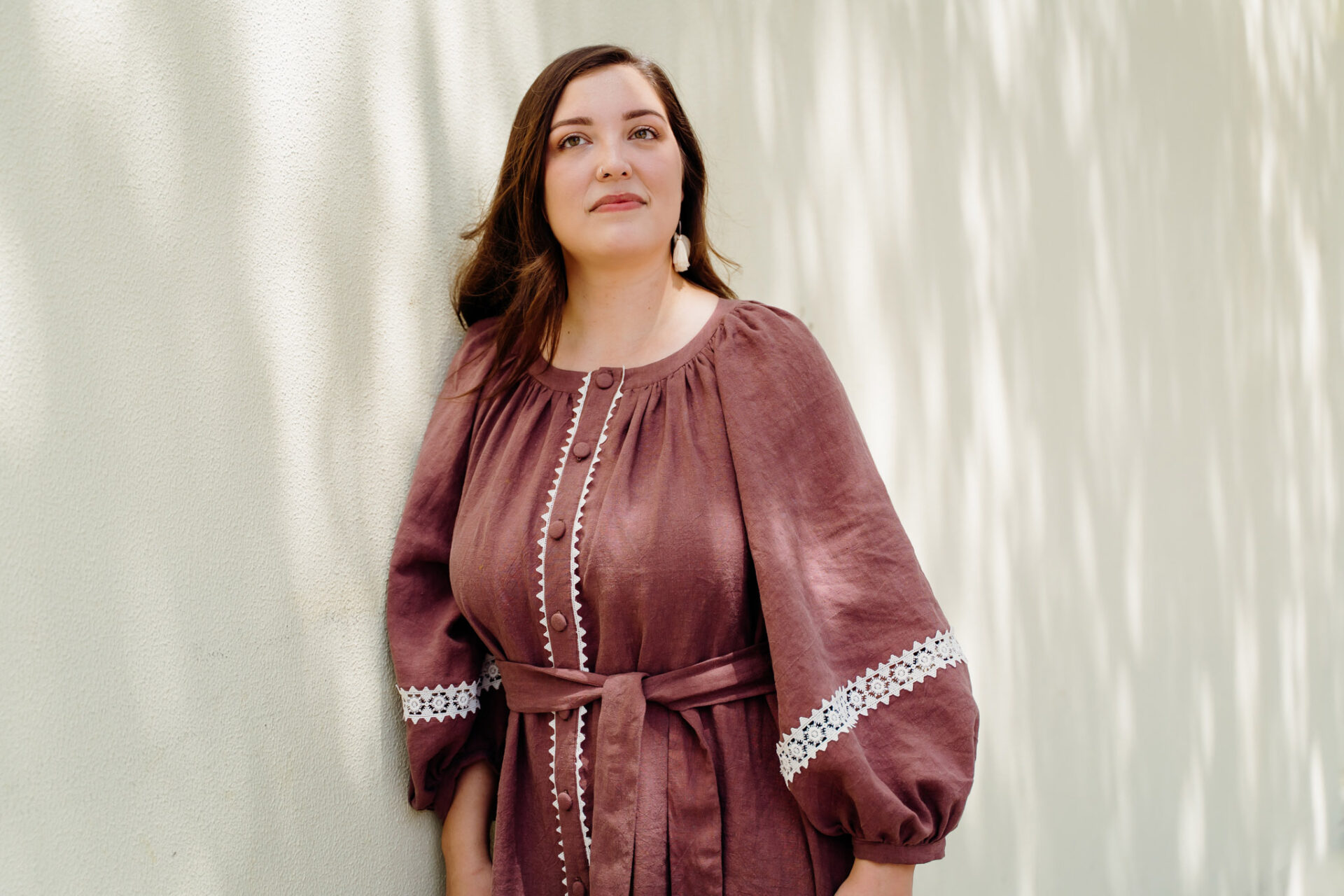



🌻 The Paddington 🌻
This is a much-loved staple, created for Issue 50 in 2021. We love seeing the #PeppermintPaddingtonTop continually popping up in our feeds!
How stunning is our model Elon MelaninGoddessEfon – she told us it was one of the first times she had been asked to come to a shoot with her natural hair. 🌻
We worked with South African patternmaker Sarah Steenkamp of @FrenchNavyNow_ to create this wardrobe essential – the perfect puff-sleeve blouse. Raglan sleeves make it the ultimate beginner sew, plus the gorgeous back buttons let you add your own personal twist.
Pattern via the link in bio! 🪡
Photos: @KelleySheenan
Fabric: @Spoonflower
Model: MelaninGoddessEfon


“In the 1940’s, Norwegians made and wore red pointed hats with a tassel as a form of visual protest against Nazi occupation of their country. Within two years, the Nazis made these protest hats illegal and punishable by law to wear, make, or distribute. As purveyors of traditional craft, we felt it appropriate to revisit this design.”
Crafters have often been at the heart of many protest movements, often serving as a powerful means of political expression. @NeedleAndSkein, a yarn store in Minnesota, are helping to mobilise the craftivists of the world with a ‘Melt The Ice’ knitting pattern created by @Yarn_Cult (with a crochet pattern too), as a way of peaceful protest.
The proceeds from the $5 pattern will go to local immigrant aid organisations – or you can donate without buying the pattern.
Raise those needles, folks – art and craft can change the world. 🧶
Link in bio for the pattern.
Images: @Gather_Fiber @NeedleAndSkein @a2ina2 @KyraGiggles Sandi.204 @WhatTracyMakes AllieKnitsAway Auntabwi2
#MeltTheIce #Craftivism #Knitting #CraftForChange

TWO WEEKS TO GO! 🤩
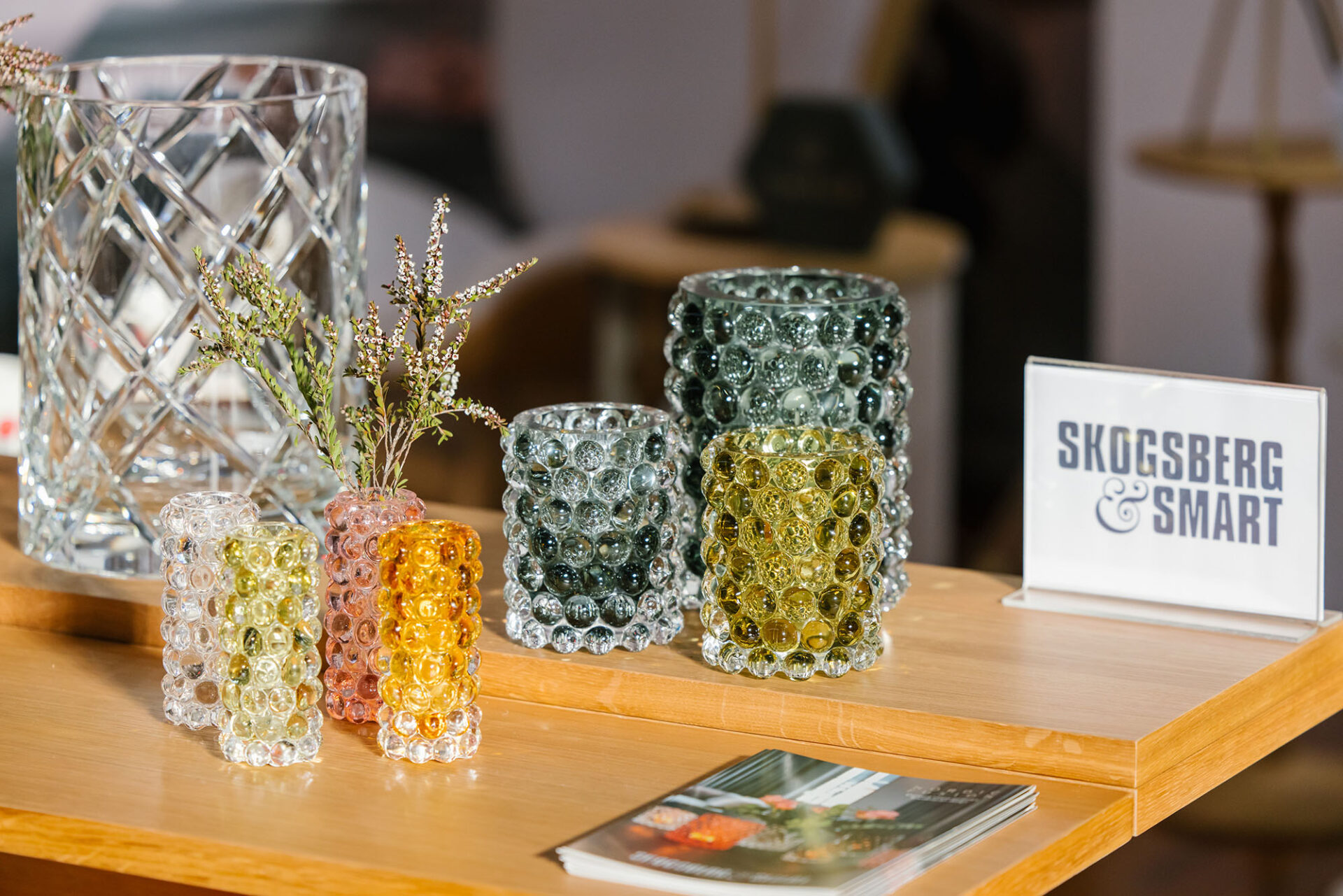
"The most important shift is moving from volume-led buying to value-led curation – choosing fewer, better products with strong ethics, considered production and meaningful stories. Retailers have real influence here: what you buy signals what you stand for. At Life Instyle, this means using the event to discover and invest in small-scale, planet-considerate brands that align with your values and your customer’s conscience. Consumers don’t need more things; they need better things, and retailers play a key role in selecting, contextualising, and championing why those products matter."
Only two more weeks until @Life_Instyle – Australia`s leading boutique retail trade show. If you own a store, don`t miss this event! Connect with designers, source exquisite – and mindful – products, and see firsthand why this is Australia’s go-to trade show for creatives and retailers alike. And it`s free! ✨️
Life Instyle – Sydney/Eora Country
14-17 February 2026
ICC, Darling Harbour
Photos: @Samsette
#LifeInstyle #SustainableShopping #SustainableShop #RetailTradeEvent

Calling all sewists! 📞
Have you made the Peppermint Waratah Wrap Dress yet? Call *1800 I NEED THIS NOW to get making!
This gorgeous green number was modelled (and made) by the fabulous Lisa of @Tricky.Pockets 🙌🏼
If you need a nudge, @ePrintOnline are offering Peppermint sewists a huge 🌟 30% off ALL A0 printing 🌟 when you purchase the Special Release Waratah Wrap Dress pattern – how generous is that?!
Head to the link in bio now 📞
*Not a real number in case that wasn`t clear 😂
#PeppermintWaratahWrapDress #PeppermintPatterns #SewingPattern #WrapDress #WrapDressPattern

8 Things to Know About January 26 - from @ClothingTheGaps:
Before you celebrate, take the time to learn the truth. January 26 is not a day of unity it’s a Day of Mourning and Survival for Aboriginal and Torres Strait Islander peoples.
It marks the beginning of invasion, dispossession, and ongoing colonial violence. It’s time for truth-telling, not whitewashed history.
Stand in solidarity. Learn. Reflect. Act.
✊🏽 Blog written by Yorta Yorta woman Taneshia Atkinson.
🔗 Link in bio of @ClothingTheGaps to read the full blog
#ChangeTheDate #InvasionDay #SurvivalDay #AlwaysWasAlwaysWillBe #ClothingTheGaps

As the world careens towards AI seeping into our feeds, finds and even friend-zones, it`s becoming increasingly hard to ignore.
We just wanted to say that here at Peppermint, we are choosing to not print or publish AI-generated art, photos, words, videos or content.
Merriam-Webster’s human editors chose `slop` as the 2025 Word of the Year – they define it as “digital content of low quality that is produced usually in quantity by means of artificial intelligence.” The problem is, as AI increases in quality, it`s becoming more and more difficult to ascertain what`s real and what`s not.
Let`s be clear here, AI absolutely has its place in science, in climate modelling, in medical breakthroughs, in many places... but not in replacing the work of artists, writers and creatives.
Can we guarantee that everything we publish is AI-free? Honestly, not really. We know we are not using it to create content, but we are also relying on the artists, makers and contributors we work with, as well as our advertisers, to supply imagery, artwork or words created by humans. AI features are also creeping into programs and apps too, making it difficult to navigate. But we will do our best to avoid it and make a stand for the artists and creatives who have had their work stolen and used to train AI machines, and those who are now losing work as they are replaced by this energy-sapping, environment-destroying magic wand.
Could using it help our productivity and bottom line? Sure. And as a small business in a difficult landscape, that`s a hard one to turn down. We know other publishers who use AI to write stories, create recipes, produce photo shoots... but this one is important to us.
`Touch grass` was also a Merriam-Webster Word of the Year. We`ll happily stick with that as a theme, thanks very much. 🌿
