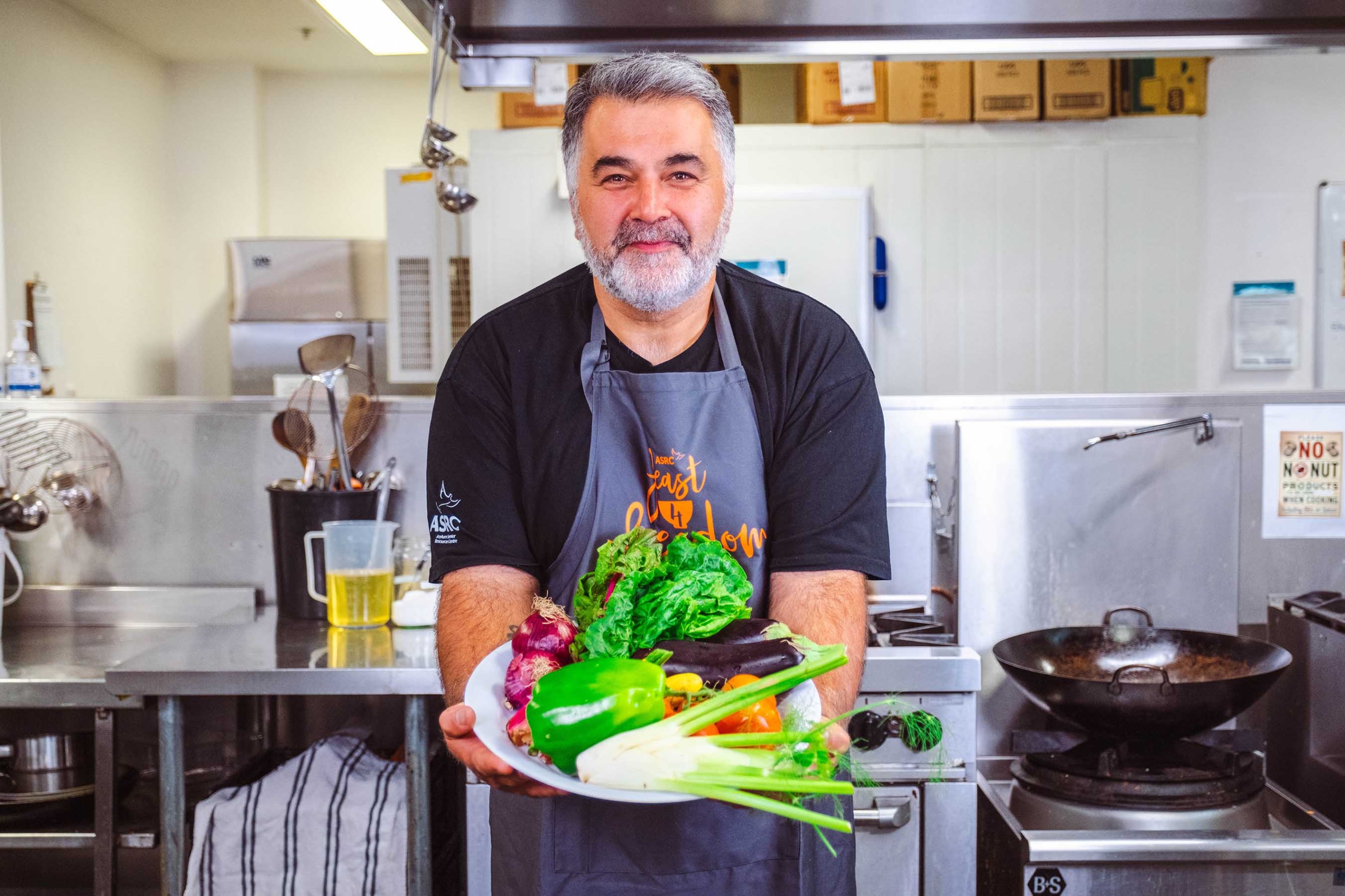
Sharing a meal is a way to strengthen connections, forge new friendships, and perhaps even see the world through different eyes… No wonder everyone always ends up in the kitchen at parties! It’s the heart of the home, no matter your background. And in a world that feels so devastatingly off-kilter, perhaps the kitchen is where we should start rebuilding hope, reaching out, and coming together over food. Feast For Freedom invites you to do exactly that. Host your own Feast this April, and you’ll help raise funds for the Asylum Seeker Resource Centre, providing food, shelter and health services to over 7,000 people seeking asylum in Australia each year. Once you register, you’ll receive a host kit filled with recipes gifted by refugees – helping you plan your Feast, experiment with delicious new flavours, and make a real difference. Registrations close 31 March so jump on it now, and then you’ll have all of April to host your gathering. We had a chat with ASRC founder and CEO Kon Karapanagiotidis to find out more about Feast For Freedom and how to get involved.
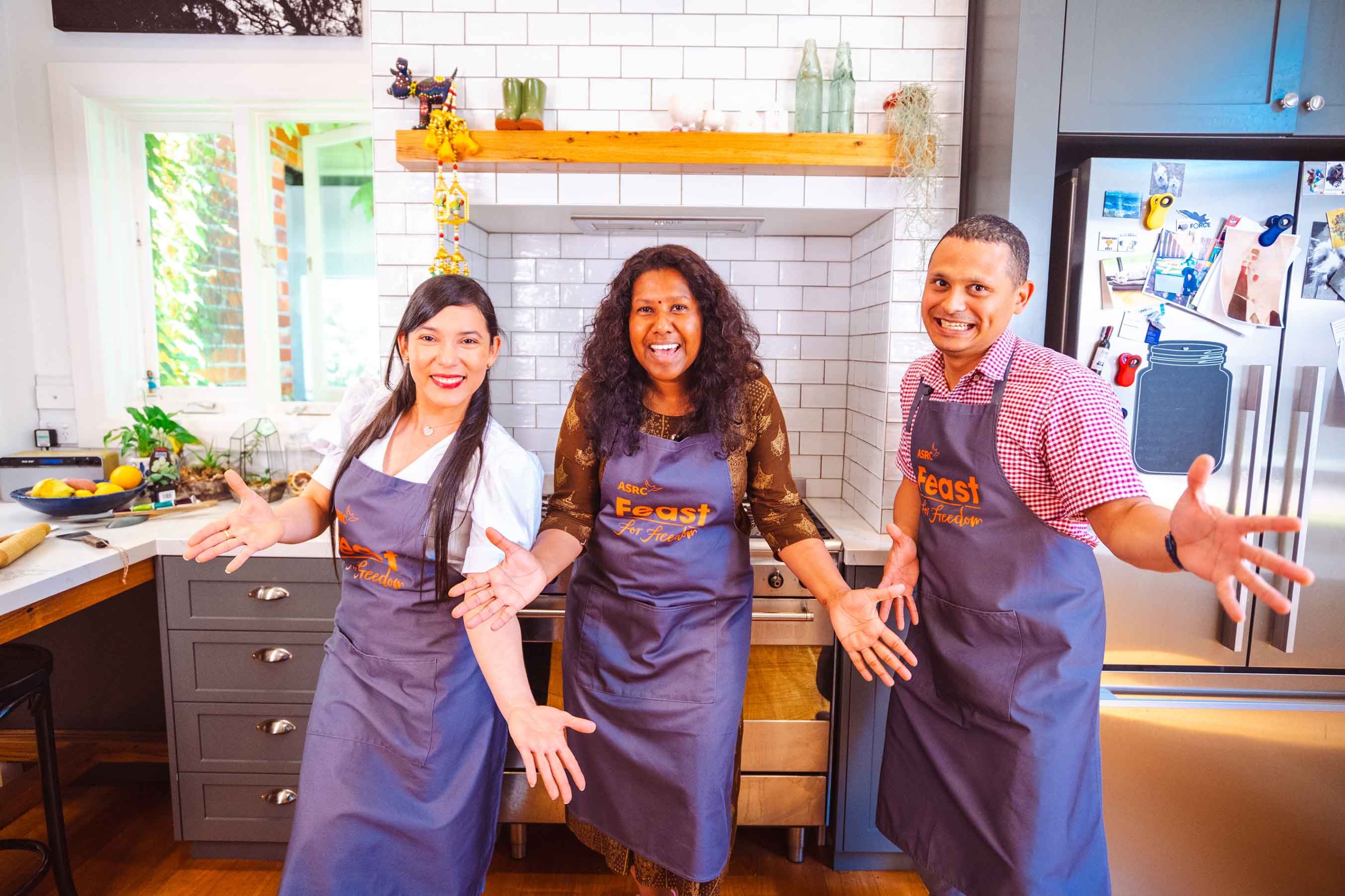
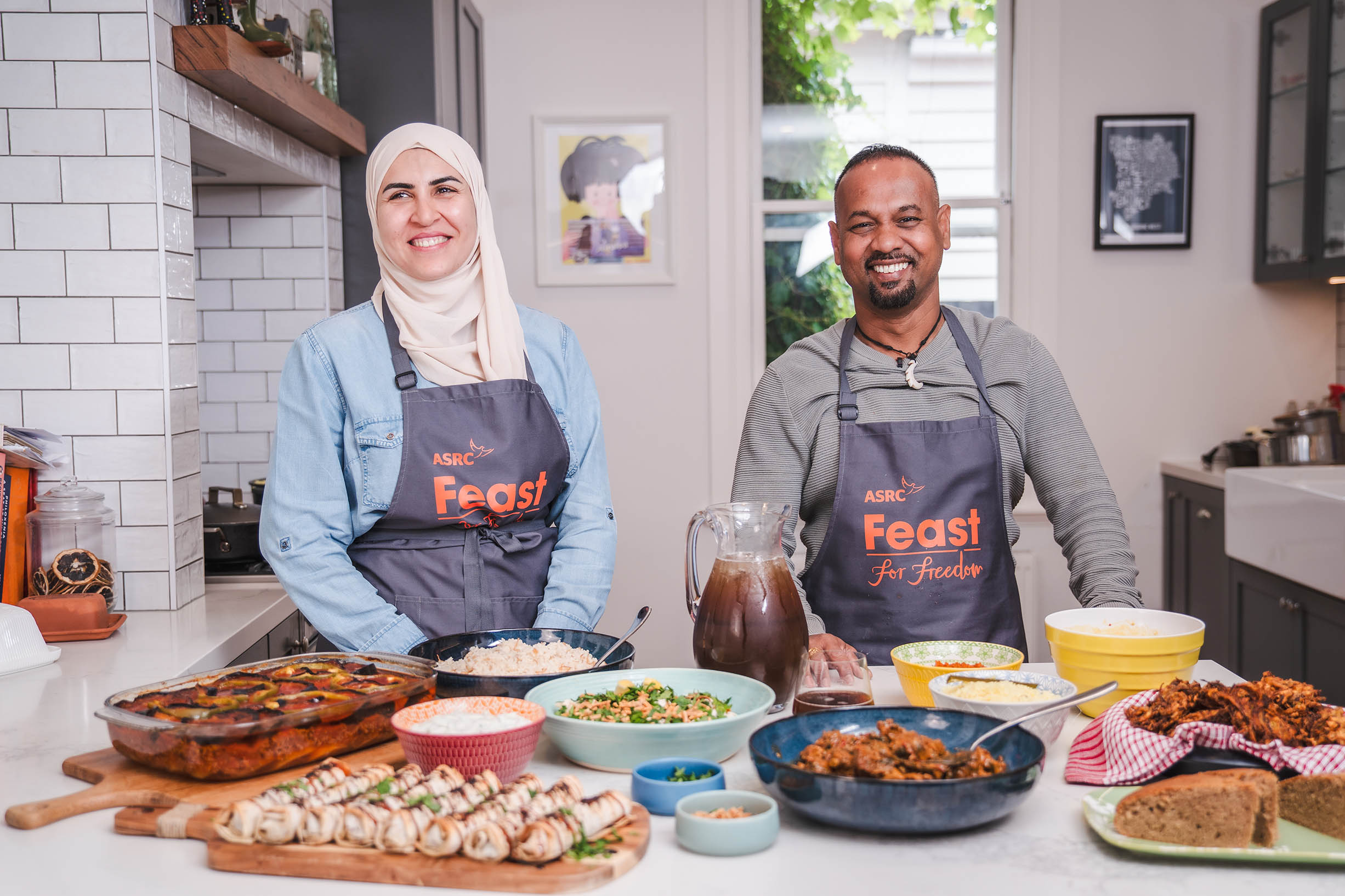
ABOVE: KON KARAPANAGIOTIDIS, BELOW: LIDYS, JANE AND JOSE
Hi Kon! Can you tell us more about what kickstarted the Feast For Freedom project?
It came about out of a desire to break down barriers, to bring people together over the universal language of breaking bread together. Feast For Freedom sends a powerful message of welcome, the simple idea that we don’t need any tougher borders and higher walls but longer tables of welcome and compassion, with a seat at the table for everyone. We thought it was also a wonderful way of creating a safe space where people could start conversations about refugees with family and friends, and help raise awareness and educate people further, within the comfort and familiarity of a shared meal.
Why is food and sharing a home-cooked meal such a powerful way to navigate the tension and potential misunderstandings caused by the perception of ‘difference’?
Refugees and migrants have always used the power of their food as a social armour and scaffolding to enable them to be seen as human and break down prejudices in often unwelcoming and racist spaces, to integrate and build shared connections. Food invites people into your culture, it tells a story and encourages people to be curious. Once you’re sharing and enjoying a meal with someone from a different culture or place, you are sitting at a table as equals, doing something that is universal and loved by us all, sharing a good meal over food, company and conversation. In this safe space we suddenly see how we have much more in common than apart, and also come to appreciate those differences as enriching us.
Food invites people into your culture, it tells a story and encourages people to be curious.
Sharing a meal can also be a comforting experience for those experiencing mental and/or physical isolation – how have you seen that manifest in your work?
We help over 7,000 people seeking asylum each year at the ASRC. 64% have no right to work, they are intentionally forced into poverty and hunger by government policies. Something as simple as a hot meal is a luxury for many – and the dignity that comes with being able to sit and share in a place that is safe, clean and welcoming. We see people who have experienced unimaginable trauma and suffering due to war and persecution open up, make friendships, share stories and feel less isolated and alone.
What have been some of the proudest – or most inspiring – moments that originated from Feast For Freedom?
My favourite and most touching moments are firstly refugees who have so generously gifted their recipes and stories to make Feast For Freedom even possible, and to see the pride and joy they feel in being celebrated and valued in a country that rarely does. Secondly, to hear of people we’d once helped as asylum seekers now hosting their own Feasts to give back fills my heart with gratitude and pride.
How can people get on board with their own Feast?
All you need to do is register at feastforfreedom.org.au before 31 March and host any time before 30 April. You’ll get a personal fundraising page on our website so you can start fundraising for people seeking asylum and refugees. The next step is to decide where you will host your Feast (at home, workplace, a community centre) and start inviting your guests – family, friends, colleagues.
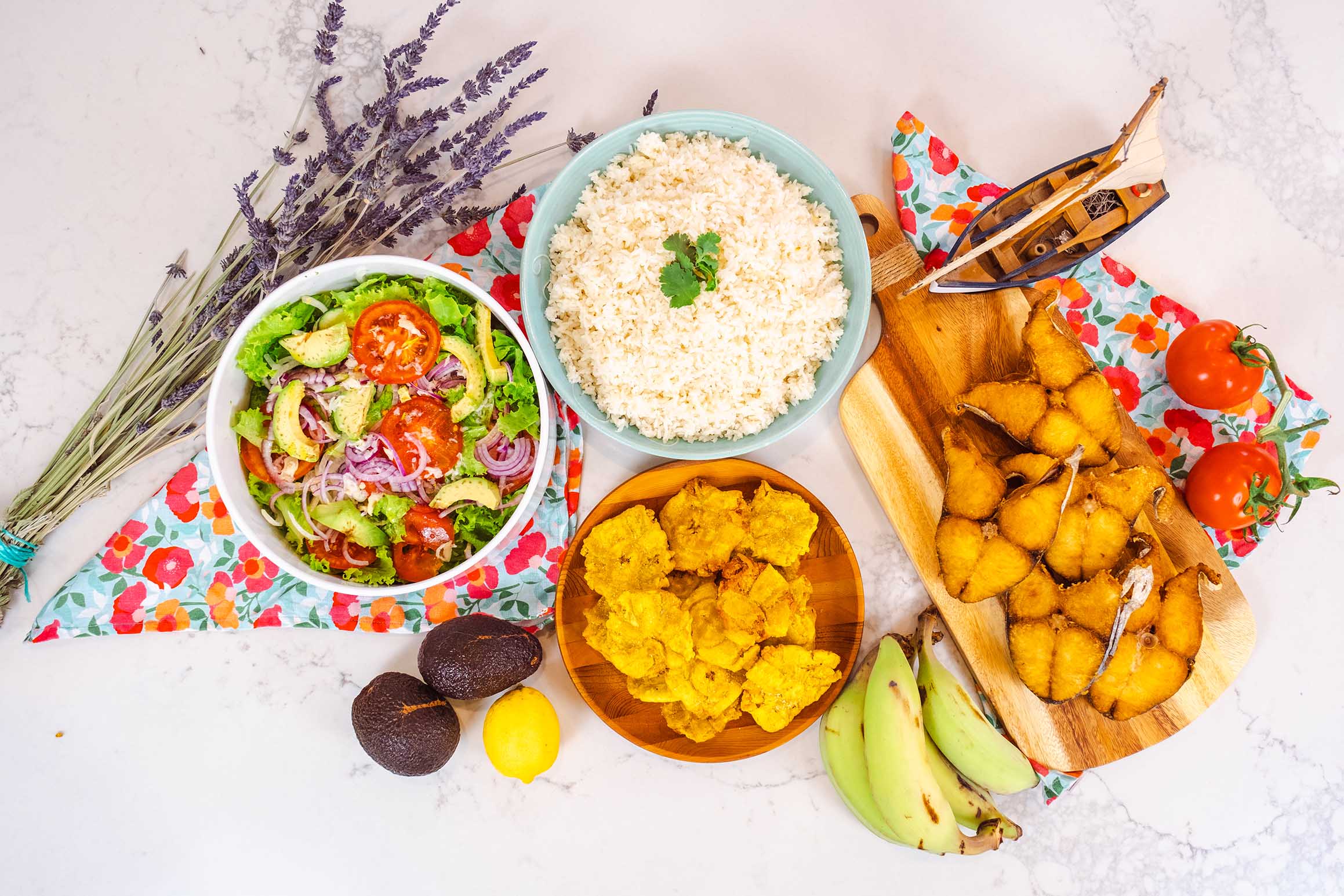
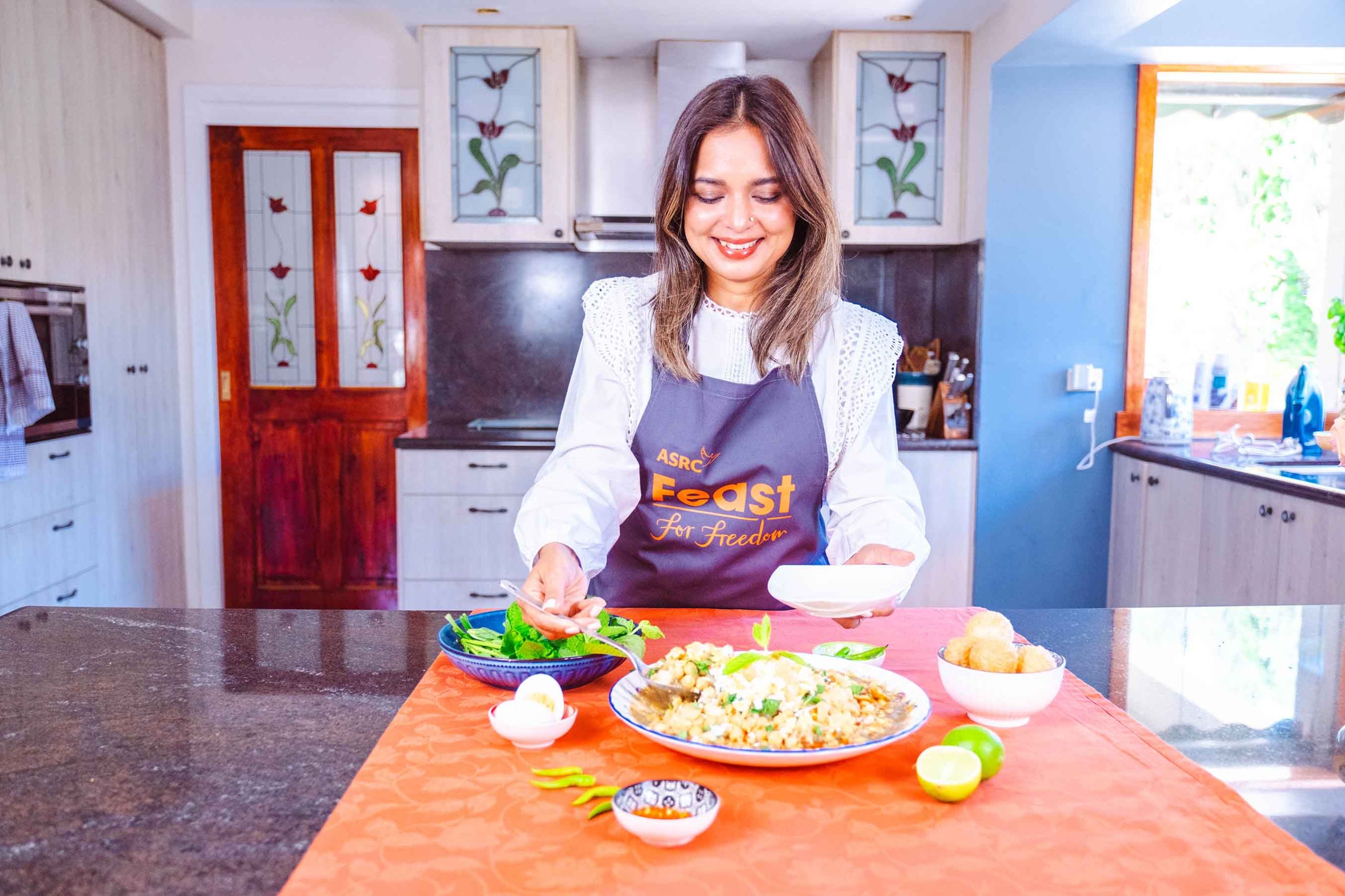
Once you register to host your own Feast, you’ll receive a recipe book with delicious Indian and Colombian dishes prepared by our Hero Cooks – Jane, Lidys, and Jose – as well as a selection of past Feast For Freedom favourites and special guest recipes from our Feast For Freedom ambassador Kishwar Chowdhury of MasterChef Australia [pictured above] – and some from my own cookbook as well!
We want Feast For Freedom to be accessible to everyone, and many of our recipes use simple ingredients and are budget-friendly. You can also ask your guests to bring their own favourites to share: make it a joyous celebration of everyone’s cultural backgrounds and memories!
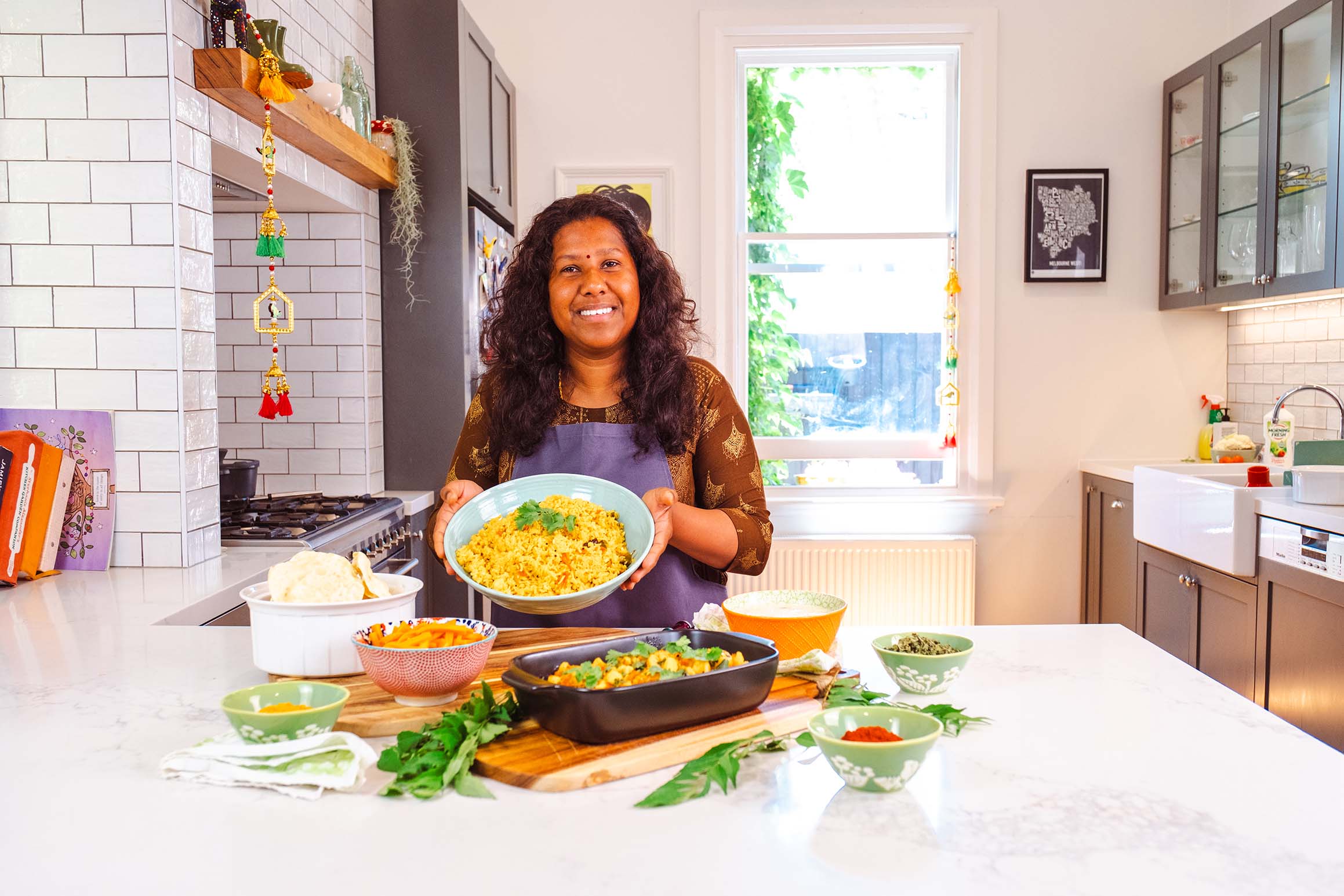
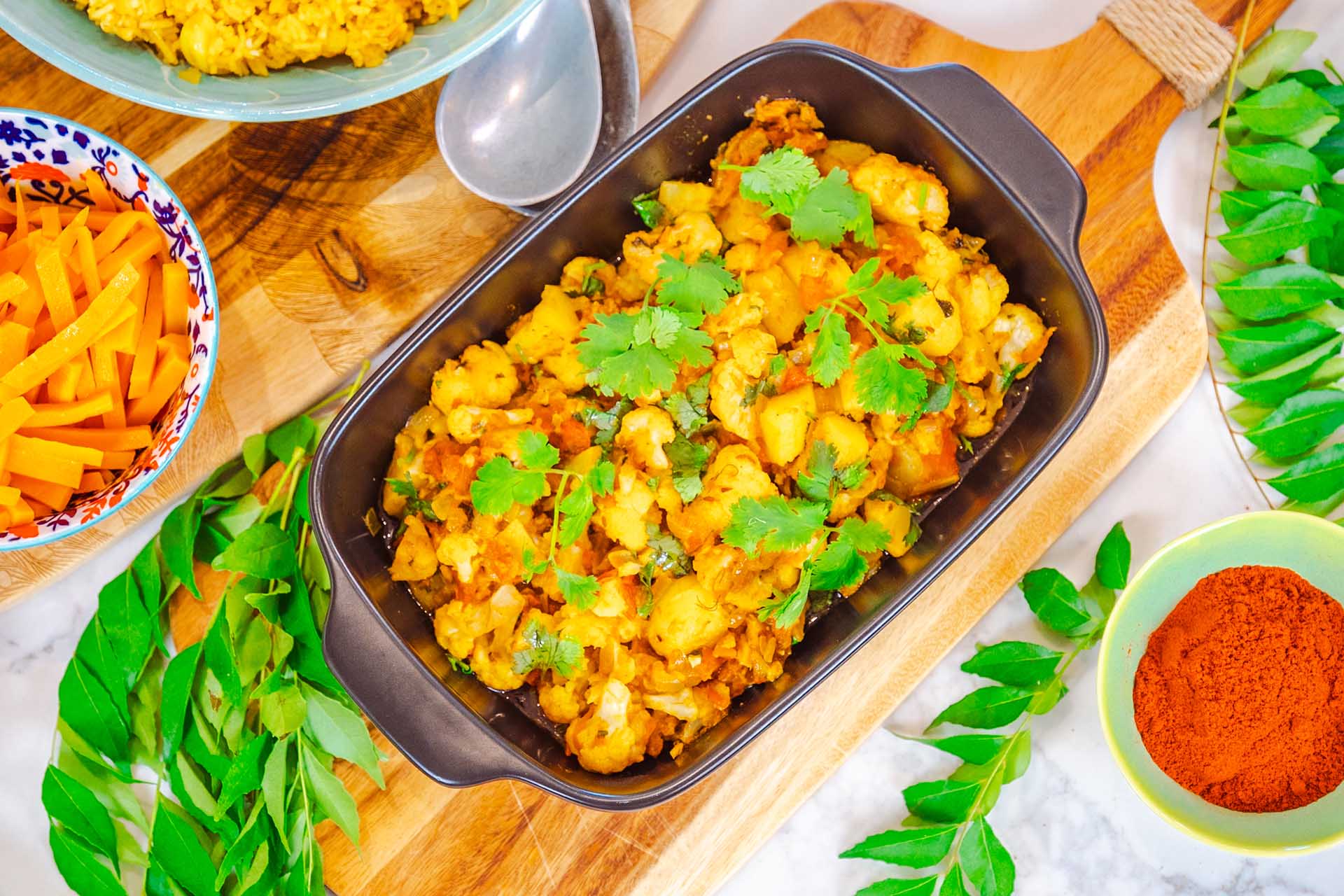
Ready to Feast? Hero Cook Jane’s recipe for Aloo Gobi is just one of the moreish meals you’ll find in this year’s Feast For Freedom recipe book. “Food means love for me,” says Jane, a Malaysian Tamil with Indian roots. “I think cooking food is the way we show love.” Originating in northern India, this delicious potato and cauliflower dish is richly flavoured with tomatoes and spices.
ALOO GOBI
Time: 35 minutes
Difficulty level: 2/5
Serves 4-6 people
GF, Vegan
$$
INGREDIENTS
- ½ cup vegetable oil or other neutral-flavoured oil
- 2 medium potatoes cut into 2cm cubes
- Salt
- ½ medium cauliflower broken into 2cm florets
- 1 tsp whole cumin seeds
- 1 tsp dried fenugreek leaves*
- 1 onion peeled and finely chopped
- 3 cloves garlic peeled
- 1 thumb-size piece fresh ginger
- ½ tsp Kashmiri chilli powder* (or more to taste)
- ½ tsp ground coriander
- ¼ tsp turmeric
- ¼ tsp ground cumin
- ¼ tsp garam masala
- 2 large tomatoes cored and finely chopped
- 2 tbsp fresh coriander plus extra to garnish
Method
- In a deep-sided pan, heat the oil over a high flame. When oil is hot, add potato with a pinch of salt. Fry for 4–5 minutes, turning regularly, to ensure all sides are lightly coloured but not brown. Remove from oil with a slotted spoon and set aside on kitchen paper to drain.
- Add cauliflower to the pan with a pinch of salt and cook for 4–5 minutes, turning regularly. When cauliflower begins to turn translucent, remove it with a slotted spoon and drain on kitchen paper.
- Discard most of the oil leaving about 3 tablespoons in the pan. Reduce heat to low and add cumin seeds and fenugreek leaves. Stir for a minute; add onion and cook, stirring occasionally for about 5 minutes or until onion is soft and translucent. While the onion is cooking, pound the garlic and ginger together in a pestle and mortar** to make a paste.
- When the onion is soft, add the turmeric, ground cumin, chilli powder, ground coriander and garam masala to the onion mix. Add the garlic and ginger paste with a pinch of salt and cook for 3 minutes.
- Add the tomatoes and increase heat to medium, stirring occasionally for 3–4 minutes until tomatoes are soft.
- Return the potatoes and cauliflower to the pan and stir to ensure spices and vegetables are well combined. Cover and cook over medium heat for 2–3 minutes or until the potatoes and cauliflower are tender. You can add a splash of water if you prefer a looser sauce.
- Remove pan from heat and stir through coriander leaves. Serve topped with additional fresh coriander.
*Dried fenugreek leaves and Kashmiri chilli powder can be purchased from Indian grocers.
**No pestle and mortar? No problem! Grate or finely chop the ginger and garlic. Place it in a small bowl and mash it together with the end of a rolling pin or the back of a spoon until it forms a paste.
THIS POST WAS CREATED IN PARTNERSHIP WITH THE INCREDIBLE FOLK AT THE ASYLUM SEEKER RESOURCE CENTRE.







Between 2000 to 2015, global clothing production doubled... while the duration of garment use decreased by 36%.
We are throwing away clothing at a faster rate than ever before. How can we tackle this problem?
✨️ WEAR
Be an outfit repeater - wear your items of clothing as long as possible. Learn to style your garments in various ways. Loved clothing lasts.
✨️ SHARE
If you really need to move it along, share the love with friends - hold a clothing exchange night! Or organise a timeshare with a friend where you swap a few favourite pieces of fashion. If you really can`t find a new home for it, then donate to an op shop or charity.
✨️ CARE
The care of your clothing – washing, drying and ironing – can account for approx 30% of a garment`s total carbon footprint. Hand wash, line dry, wash in cold water, and only wash when necessary.
✨️ REPAIR
Mending – and making – slows down fast fashion buying habits. Repairing used to be common practice, until disposable fashion took over. Extending the life of clothing by just nine months can reduce carbon, water, and waste footprints by 20–30%. Fixing doesn`t need to just be utilitarian – get creative with visible mending!
*Fact from The United Nations Environment Programme
#PeppermintMagazine #WearShareCareRepair #SustainableFashion


Have you whipped up the Acacia A-Line Skirt yet? 🪡
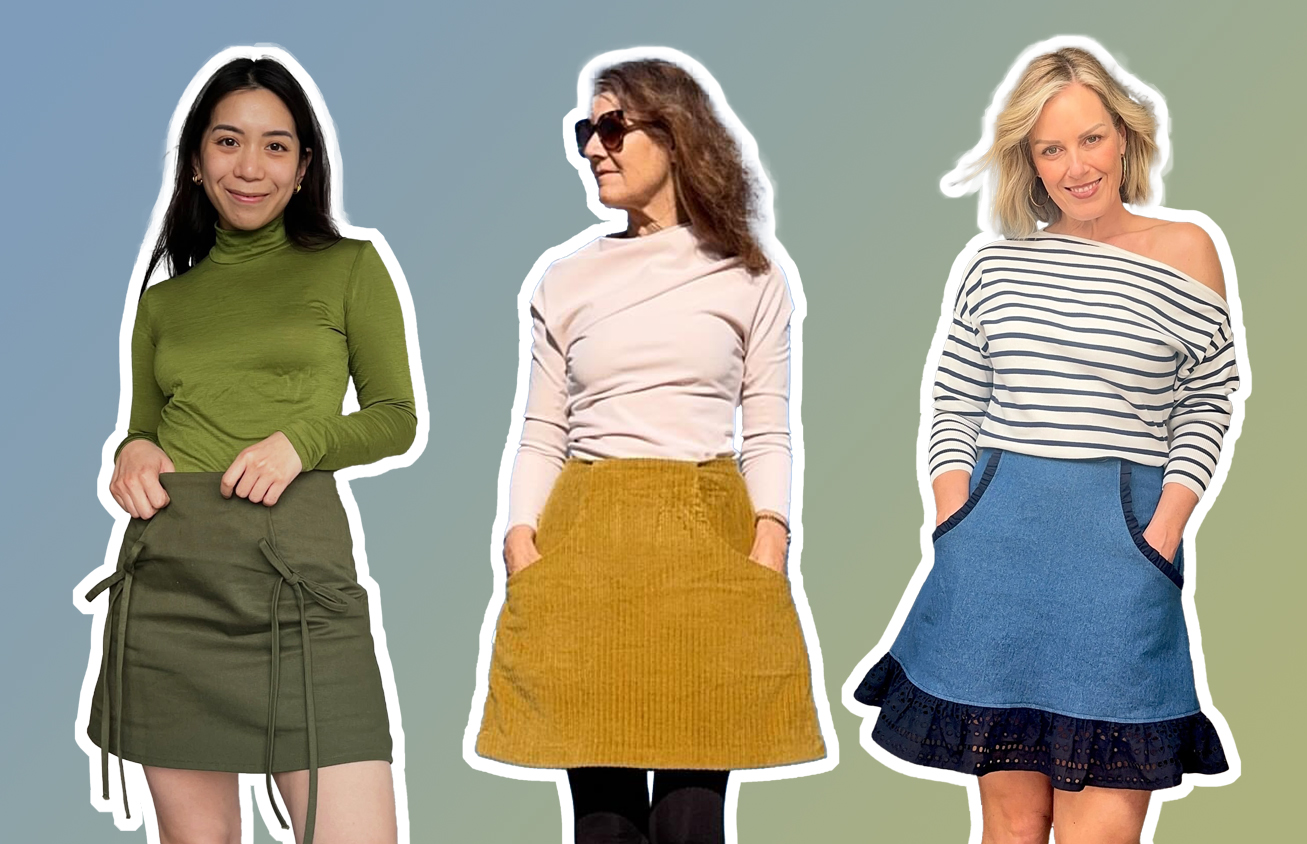
Accessible to beginner and experienced sewists alike, its classic style makes this skirt a wardrobe staple and a pattern you can happily play on repeat. Curved front pockets and the fun exposed-zip detail at the centre back make this style pop! The Acacia is a blank canvas, awaiting inspiration – add contrast top stitching, trim the pockets with bias binding or even change the length. We’ve chosen the smooth, clean lines that come from facing the waist, with back darts to ensure a neat fit on the hip. *chef’s kiss*
This pattern was made with the support of the lovely folk at @WeftAndWarpFabrics 🫶🏼 The team at Weft and Warp graciously sent three sewists the fabric of their choice to whip up their own Acacia A-Line – the results are super sweet!
Head to our website to see the makes from @The.Sewcialite @HandmadeByCarolyn and @You_CanSew - link in bio!
#PeppermintAcaciaAlineSkirt #PeppermintPatterns #WeftAndWarpFabrics #MeMade

Polka dots for days…
We love this Tansey Top by @_Rubys_Threads_ - the ultimate simple but stylish top you need in your rotation now!
Pattern: #PeppermintTanseyTop
Fabric: Japanese cotton @RawFibre
#MeMade #PeppermintPatterns

How`s your long weekend going? Working hard on your PhD? 🪡✂️🧵
Image from JoellsLeatherWorks on @Etsy
#ProjectsHalfDone #SewingPile #ProjectPile

In case no-one has told you lately, Emma Giacalone says you`re a good egg. (And we happen to agree).
This incredible mini egg embroidered 3D artwork was created by @Emma_Giacalone_Textiles, a textile artist in Gloucestershire, UK.
"When we buy an item of clothing, a label is attached telling us how to look after it to keep it at its very best. My mission is to create little care instructions to help to remind us to lead our happiest life."
INGREDIENTS: Freehand machine embroidered onto 100% cotton, using Egyptian cotton thread, and wool felt backing.
#EasterArt #GoodEgg #TextileArt

No ordinary wrap dress! 💃
Wrap dress wardrobe malfunction? Not with the Peppermint Waratah Wrap Dress pattern! We designed the Waratah to make sure this never happens.
Enjoy a few BTS videos from this super fun shoot. Maybe some inspo for Easter weekend sewing?
MODELS/SEWISTS: @Melt.Stitches, @KatieMakesADress @Tricky.Pockets @Laura_The_Maker
Head to the link in bio for the #PeppermintWaratahWrapDress 🪡
#PeppermintPatterns #SewingPattern #MeMade #WrapDress
