words KATE FLEMING images ELANA MCGANNON
Last year I challenged myself to stop shopping. No new clothes, shoes, or accessories. Nothing. 2020 was my year of kicking the impulsive shopping habit, lightening my environmental footprint and taking control of my consumption. I’d done a few New Year’s resolutions before, like going vegetarian and quitting fast fashion, but this was definitely my most ambitious to date. I’d seen similar challenges done before online, but it was serendipitous timing in the end that pushed me to take the challenge.
I came back to Melbourne halfway through 2019 after spending eight months in Europe on a university exchange program. I lived out of a suitcase and had everything I needed for a European winter, spring and summer in that bag, as well as everything I needed for uni. I essentially created a capsule wardrobe out of necessity. When I came home, I felt so overwhelmed by the amount of clothes I had in my wardrobe and I realised how many clothes I owned that I never wore. Long story short, I watched the Minimalism documentary and some Marie Kondo episodes, and the decluttering process began.
In the interest of helping you take a leap into this kind of challenge, here’s what I learned from my year without shopping, and how to start!
TIP #1: Take stock and declutter your wardrobe before you start your challenge.
You need to know what you’ve got to work with before you cut shopping out for a year! Fast forward to the beginning of 2020, and Danish vlogger and stylist Signe Hanson Glud (of Use Less) launched her #2020wehaveplenty low-buy challenge (which includes a really handy checklist to keep you on track and accountable)just as I finished decluttering. Her challenge was a bit different—it was low-buy instead of no-buy. She allowed shopping secondhand and buying from ethical brands, and she encouraged customising the challenge to suit individual circumstances. Given the sheer volume of clothes in my wardrobe that I’d just decluttered – I counted over 200 items before starting – I decided to take the challenge up a notch and cut out shopping entirely.
TIP #2: Customise the rules and tailor the challenge for your own circumstances.
Like Signe, I gave myself rules: no shopping for anything new and no secondhand shopping. I could buy essentials like underwear and replace basics like jeans, if needed. I could also borrow, receive gifts and hand-me-downs – but that was it.
Decluttering aside, one of my main motivations for the challenge was to advocate for slow fashion consumption and spend a year living with less. In Australia, we throw away 27kgs of textiles every single year and, according to a 2017 YouGov report, close to a quarter of us throw away items after just one wear. Of the billions we spend every year on clothes, only four percent of that money goes to garment workers, and 92% of the clothes we buy are imported, which leaves our local garment industry neglected.
But facts aside, I’m a romantic at heart and I don’t think clothes should be disposable. Clothes are made to be worn and loved, so let’s wear them. I’m frequently asked how a sustainable wardrobe can be achieved without spending big, and fortunately the easiest answer is also the cheapest – simply wear what you already own. It’s the simplest and cheapest way to fix a pretty big problem.
TIP #3: Keep your out-of-season clothes in storage when you don’t need them, then ‘shop’ from your wardrobe as the seasons change.
So how did I go in that year? I spent $257 and bought two things – a secondhand jumper from a charity shop, which I needed for work, and a new pair of runners. I started running during Melbourne’s lockdown, so I needed the runners for that – and yes, I’m still running a few times a week! I also received a few hand-me-downs from my mum, and received a few clothing items as presents.
TIP #4: Find other ways to get that ‘new-clothes’ feeling by swapping, renting or altering what you already have.
In some ways, the lockdown made the challenge easier by removing temptation, but it also made it harder. Seeing so many local brands suffering in 2020 almost made me break my ban to support them. But I stuck to it and tried to support and promote brands in other ways. I used my new-found time to research and curate a brand directory for my blog, and I also shared brands doing good on Instagram.
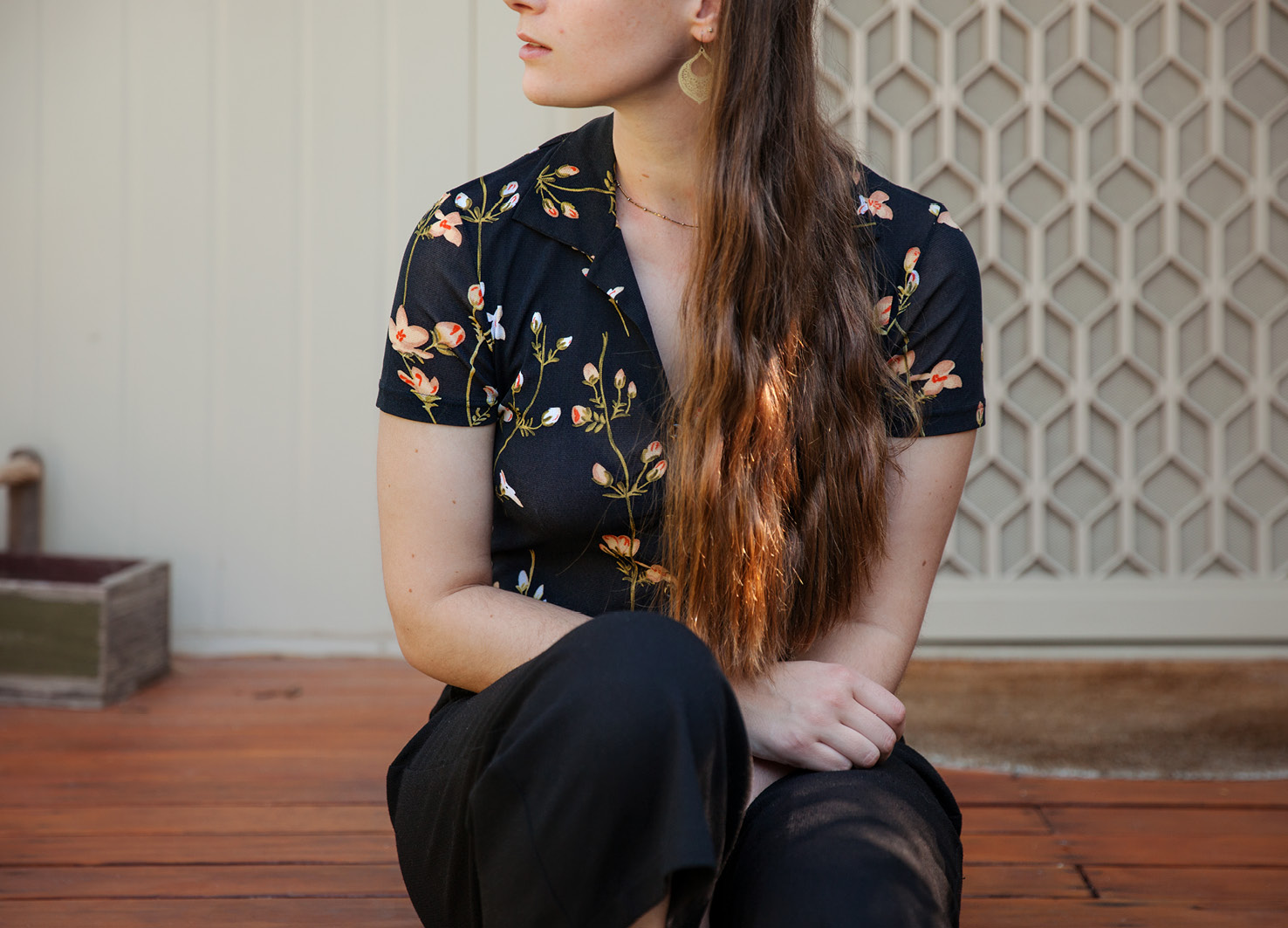
While the research was a far better use of my time than shopping, I have to admit, wearing the same clothes day after day wasn’t particularly exciting for a girl who loves fashion. So, what was my solution? I got creative and taught myself to sew. I cropped a men’s shirt I’d had lying around and took up quilting. I borrowed clothes from my Mum’s wardrobe and swapped items with friends to create new outfits without spending a cent. I also looked into rental companies like Glam Corner for a wedding I was attending, but then COVID happened… so that was sadly postponed.
Looking back now, I learnt a lot about myself. Shopping used to be a habit, a form of therapy and a way to make myself feel better. It was a costly means to an end – both to my wallet and the environment. But in 2020 I learned to sew, saved money and transformed shopping from a wasteful habit into a mindful practice that I only do when I really need to.