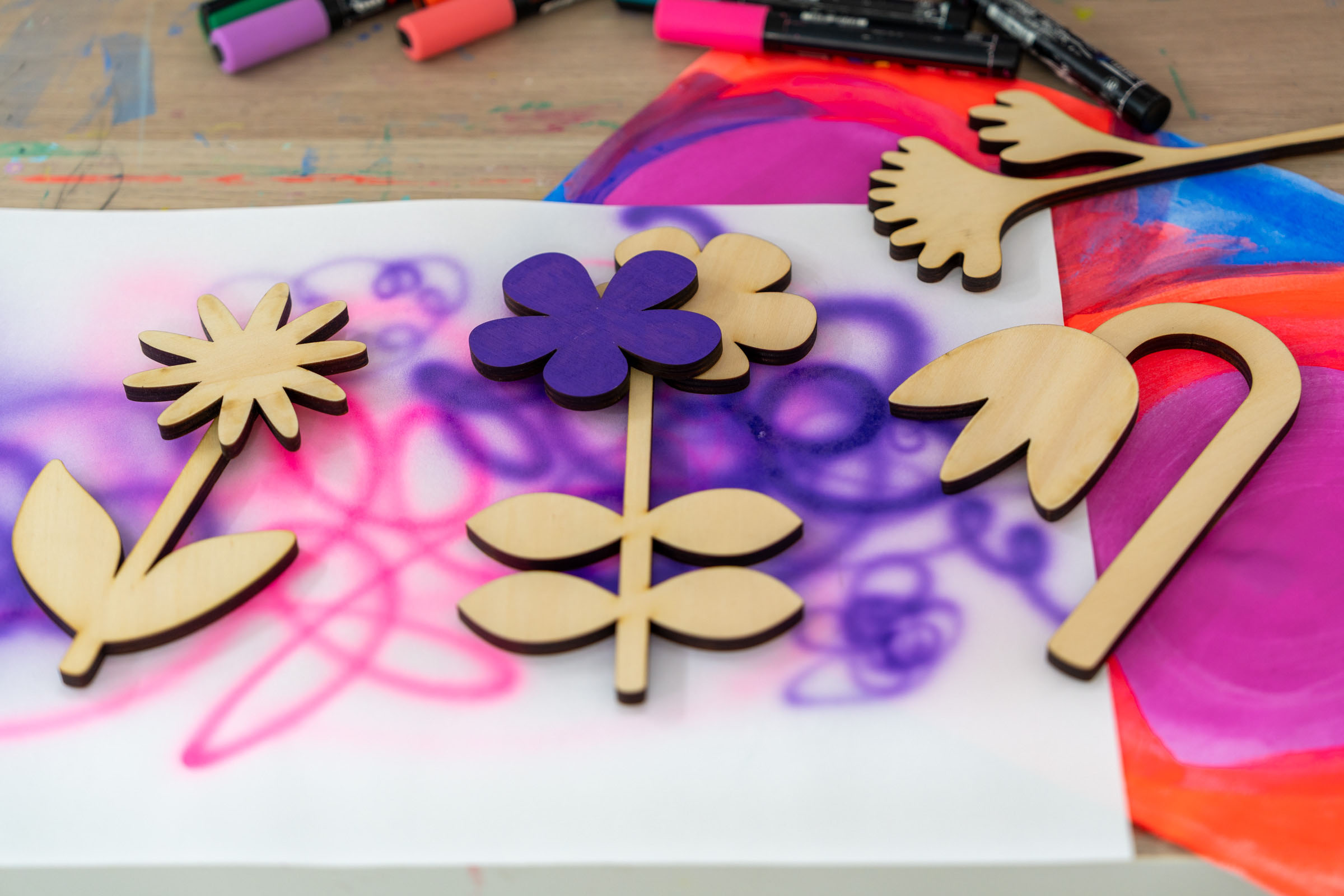
When was the last time you let yourself play? Lizzie Rose, from creative social enterprise Rumpus, explains why it isn’t just for children – and how to incorporate more time for play into your daily life…
Not too long after we’re born, most of us learn to grasp with our hands. We reach for a pen, pencil, texta or crayon with our chubby, keen fingers, confident in our clumsiness. Soon after this, we figure out this grasped tool can make a mark. It’s exciting! We draw lines, dots – sometimes obsessively – on paper, our bodies, the walls. We draw in the sand, make lines in the steam from the shower; we draw with our food, smashing pumpkin across the table. We are almost primal in our urge to make a mark. It’s something that predates verbal language; we are literally hardwired to draw. So why, then, do we stop?
We get busy and, often without even realising it, we leave playfulness behind.
If you pause and watch a child, the pathway from thinking to drawing is seamless, unfiltered, free and playful. Most of all, it happens without that all-too-familiar voice saying, “You can’t draw, you’re not an artist.” But something happens in our culture when we become adults. We stop scribbling, singing, moving and creating for the sheer fun of it. We get busy and, often without even realising it, we leave playfulness behind.
Sadly, this shift in mindset from childhood to adulthood not only costs us joy, but also mental wellbeing and social connection. For anyone who’s raised kids in the last decade or so, the focus and language around the importance of ‘play’ will be very familiar: we’re told that it’s vital for the development of social skills, creative problem solving and fine motor growth. In a nutshell, it’s a part of our biology that’s as important as nutrition, exercise, safety and sleep. For these reasons, we believe it’s time for adults get serious about the business of playing. Here are a few ideas for bringing play into your everyday…
Find your flow
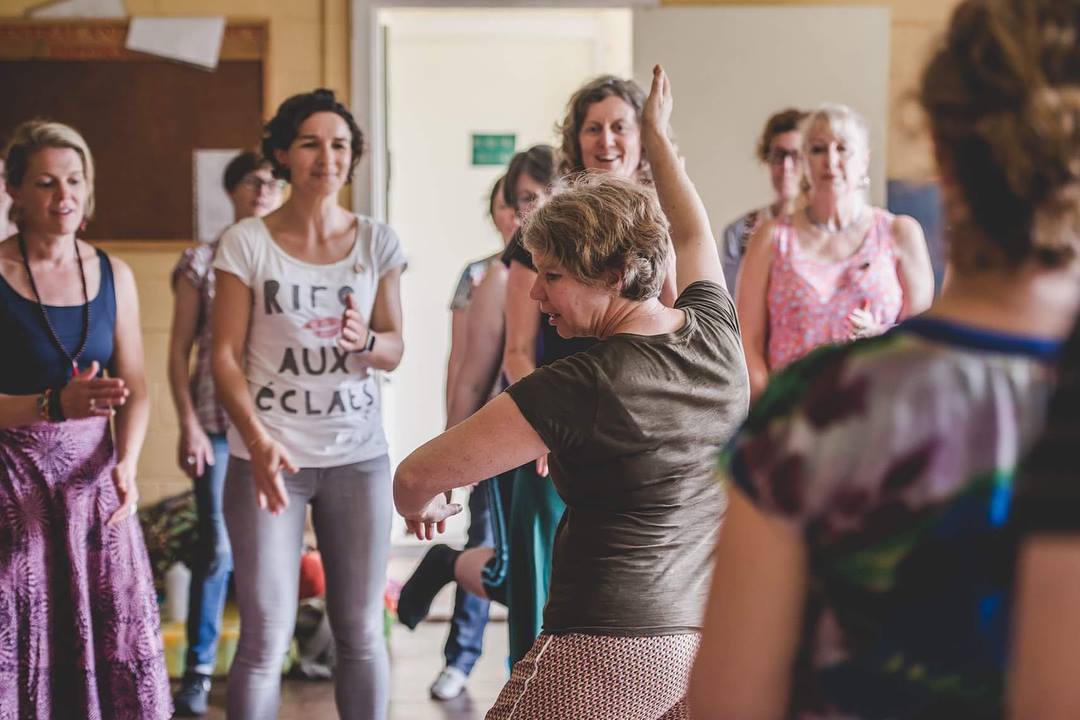
Play is a curious exploration and a natural state of flow. It is experiential, preconscious and a free experience, engaging the part of our brain that helps make us feel calmer. If you’ve ever been completely absorbed in the moment, or held joyfully in the space of a lost sense of time that can come from walking in a forest, playing music, dancing, planting something in the garden or painting, then you would know the lightness, calm and happiness that can come with this. It’s not a great leap to think that regularly practising these activities can play a huge part in maintaining our mental wellness.
Connect with others (and yourself)
Playful activities or habits ground us into a state where we are more able to connect – with ourselves, others and our community. This connection is fundamental to our human needs, but sadly our communities have never been more disconnected, and the rise of anxiety, depression, stress and burn-out is considered one of the most pressing public health issues of our time. However, the good news is that the evidence shows that just 15 minutes of drawing, painting, craft, mindful cooking, gardening, building or making can decrease stress hormones, regulate our emotions, engage our imagination, and foster mindfulness and the ability to meditate.
Do it on the daily
As an adult with real-life responsibilities, it can be hard to find the time to squeeze play into your everyday. But taking even just a few minutes every day to prioritise play can help build a strong foundation, and turn this new more playful attitude into a lifelong daily habit. Some ideas include…
● Keep a notebook by your bed and write for the first five minutes after you wake up. Write what you see, hear, smell, feel – anything goes!
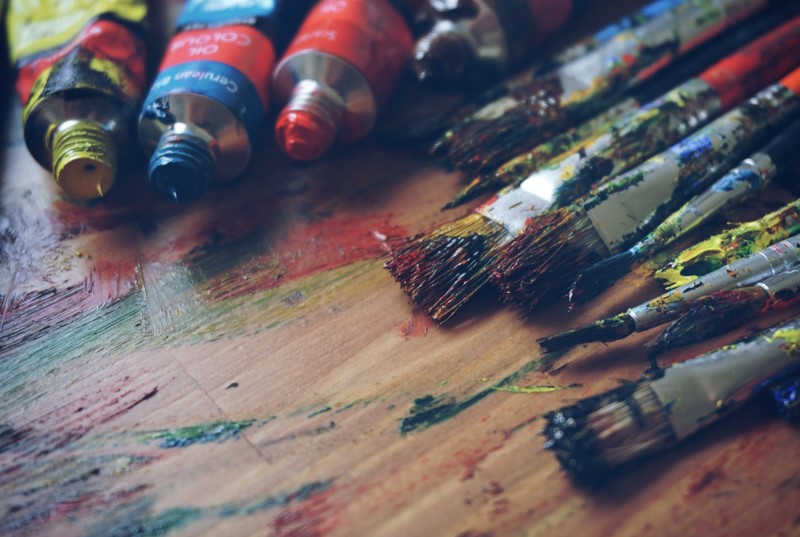
● Keep an easy to access collection of inexpensive paint tubes. Whether it’s watercolour, acrylic or oil, just a few colours is enough to start practising and getting used to the paint.
● Commit to time once a week to whip up things you love to cook and eat – for the fun of it, not out of obligation.
● Sketch your view each morning while you enjoy your daily tea of coffee: whether it’s a cafe, your balcony or your own living room.
● Learn a new skill: kombucha-making, sewing, bread-making, permaculture gardening, dancing – the list is endless.
The more you allow yourself to play, the more you realise what a valuable – and important – thing it is to do as an adult. As George Bernard Shaw once said, “We don’t stop playing because we grow old; we grow old because we stop playing.”
Rumpus is a non-profit creative social enterprise based in Wollongong that works with thousands of people and use play as a tool to unlock skills and build mentally healthy communities and workplaces through workshops, retreats and creative programs. @the_rumpus
WORDS: LIZZIE ROSE // PHOTOS: COURTESY OF RUMPUS