Pattern Play: Michelle Holik’s beautiful designs inspire fabric prints with staying power
- Words by Peppermint
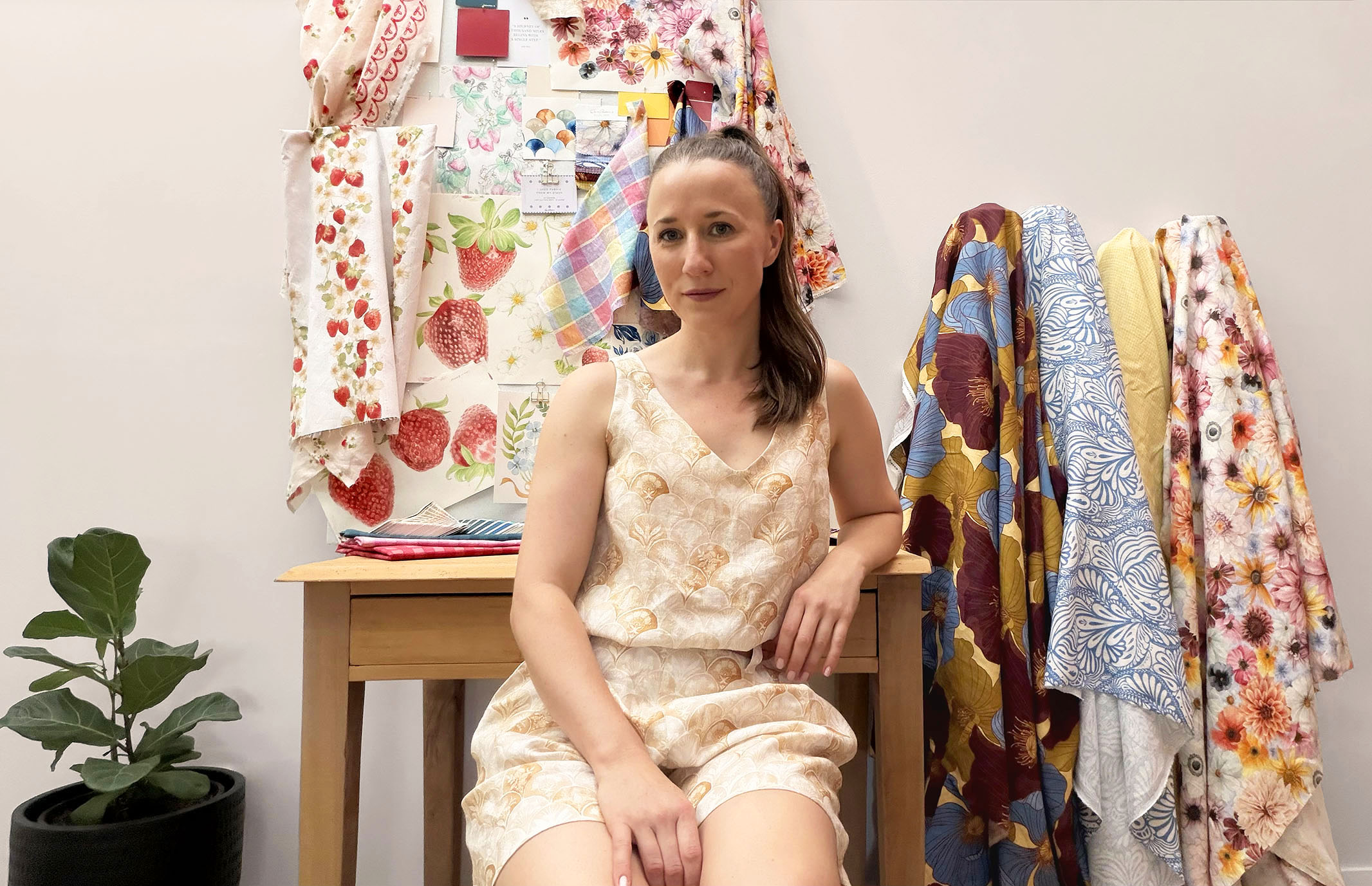
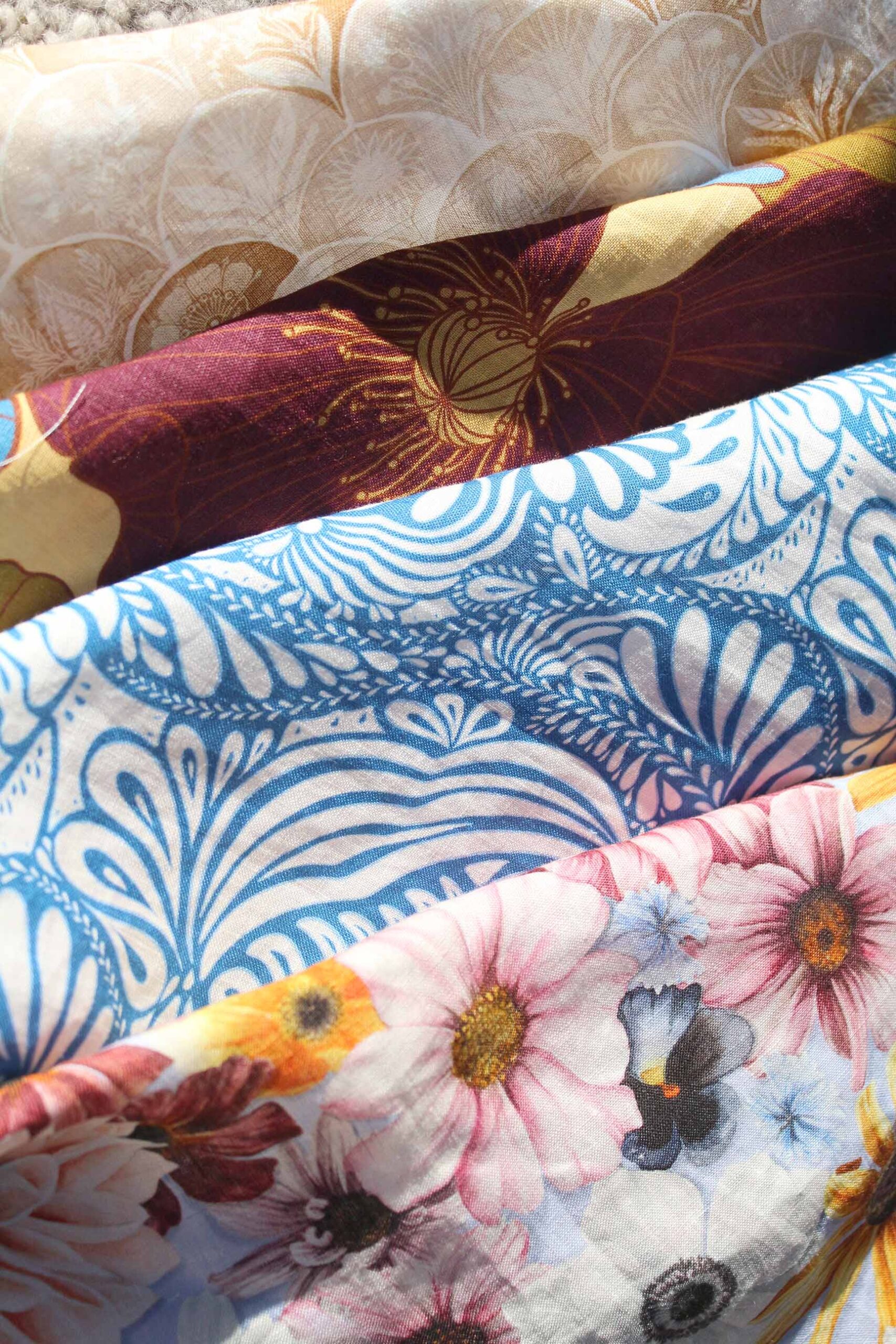
Being artistic is a gift – even more so when that creativity is shared. Luckily for those of us that sew, Michelle Holik, founder and designer at Rare Patterns Boutique Fabrics, has unlocked a new level of expressing her cleverness – taking her hand-painted and hand-drawn designs from paper to textile. An Australian artist and surface pattern designer since 2010, Michelle is a lifelong maker and sewer with a deep understanding of fabric, colour and design. Her beautiful botanical designs are inspired by nature, floral and leaf forms created using pencil, pen, and watercolour. Here, Michelle shares the story behind Rare Patterns, the evolution of her botanical style, why sustainability sits at the heart of her work, and rediscovering confidence through colour and print.
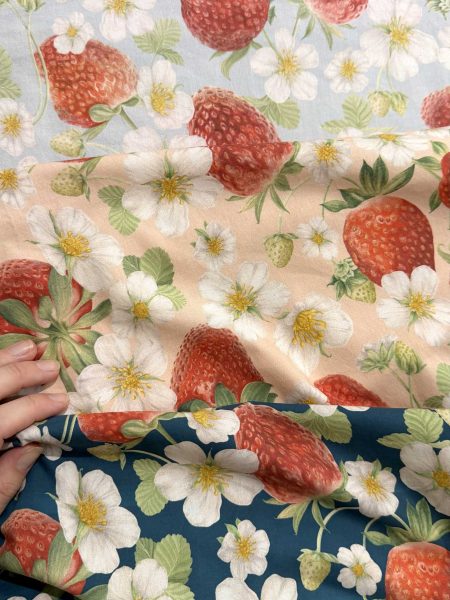
What compelled you to launch Rare Patterns? What makes it different from others?
After more than 15 years as a textile and surface pattern designer, it felt like the right time to take the plunge and create my own fabric business. I’d spent so long designing for other brands, and Rare Patterns felt like a natural next step – a way to unite everything I love about art, fabric, and sewing under one name.
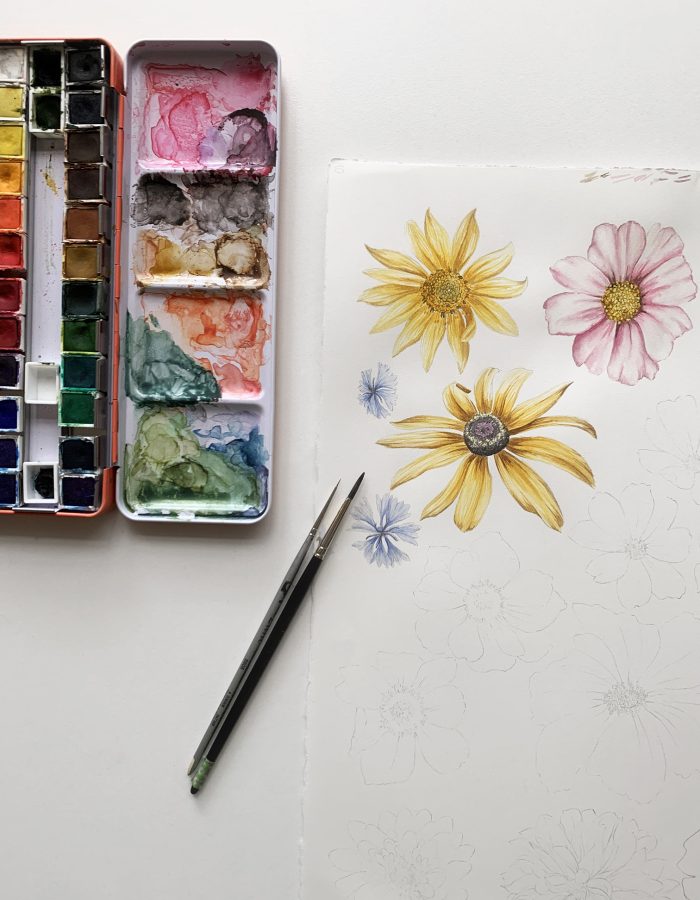
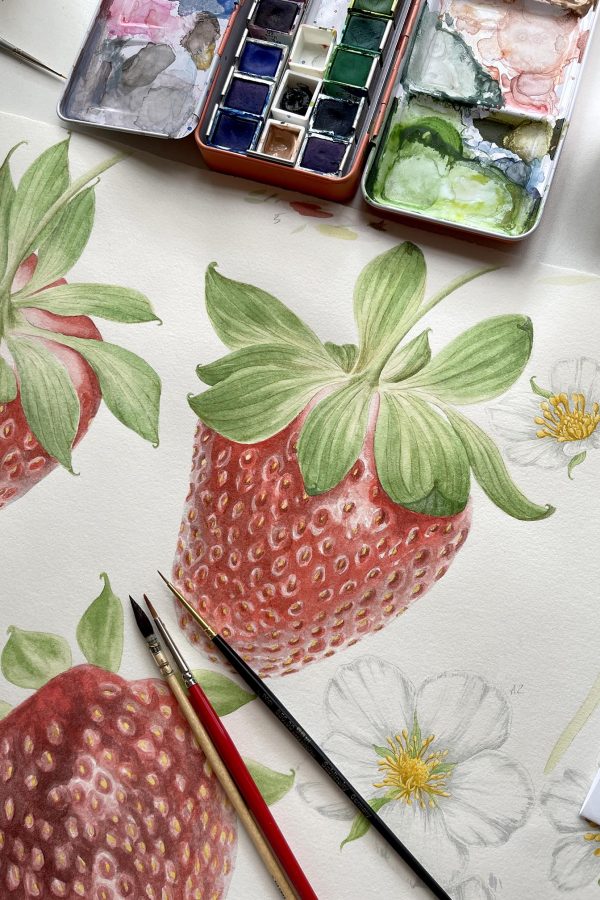
What makes Rare Patterns unique is the artwork itself. Every design begins by hand – watercolour painting, pencil drawing, or hand-drawn digital work – and each pattern is exclusive to Rare Patterns. They’re not stock designs or trend-led prints; they’re thoughtful, carefully developed artworks you won’t find anywhere else.
What inspired your lifelong love for making and creating?
I’ve been creative for as long as I can remember. My mum is an artist and sculptor, so I grew up surrounded by creativity, materials, and the understanding that making things was simply part of life. As a child, I was always sewing, drawing or spending hours outside. Even now, the ability to create something from nothing still amazes me. There’s something incredibly grounding and satisfying about working with your hands. One of my earliest memories is making outfits for my dolls – I’m sure my mum helped!
How has your creative practice evolved?
Having worked for many brands over the years, I’ve developed a wide range of artistic skills, so it actually took some time to truly recognise what my own style was. Over time, I’ve honed in on what I’d describe as botanical. Nature and flowers have always been my greatest inspiration: they’re endlessly beautiful, complex, and never truly repeat themselves. I also love referencing historical drawings, architecture and decorative objects, reinterpreting those details in new and interesting ways.
My work balances realism with stylisation: I’m drawn to fine details and organic forms, but also enjoy simplifying and reworking them into something graphic and repeatable for fabric. That balance has come from years of experimenting and understanding how artwork translates best onto textiles.
My mum is an artist and sculptor, so I grew up surrounded by creativity, materials, and the understanding that making things was simply part of life. As a child, I was always sewing, drawing or spending hours outside. Even now, the ability to create something from nothing still amazes me.
Where do you find inspiration for textile designs?
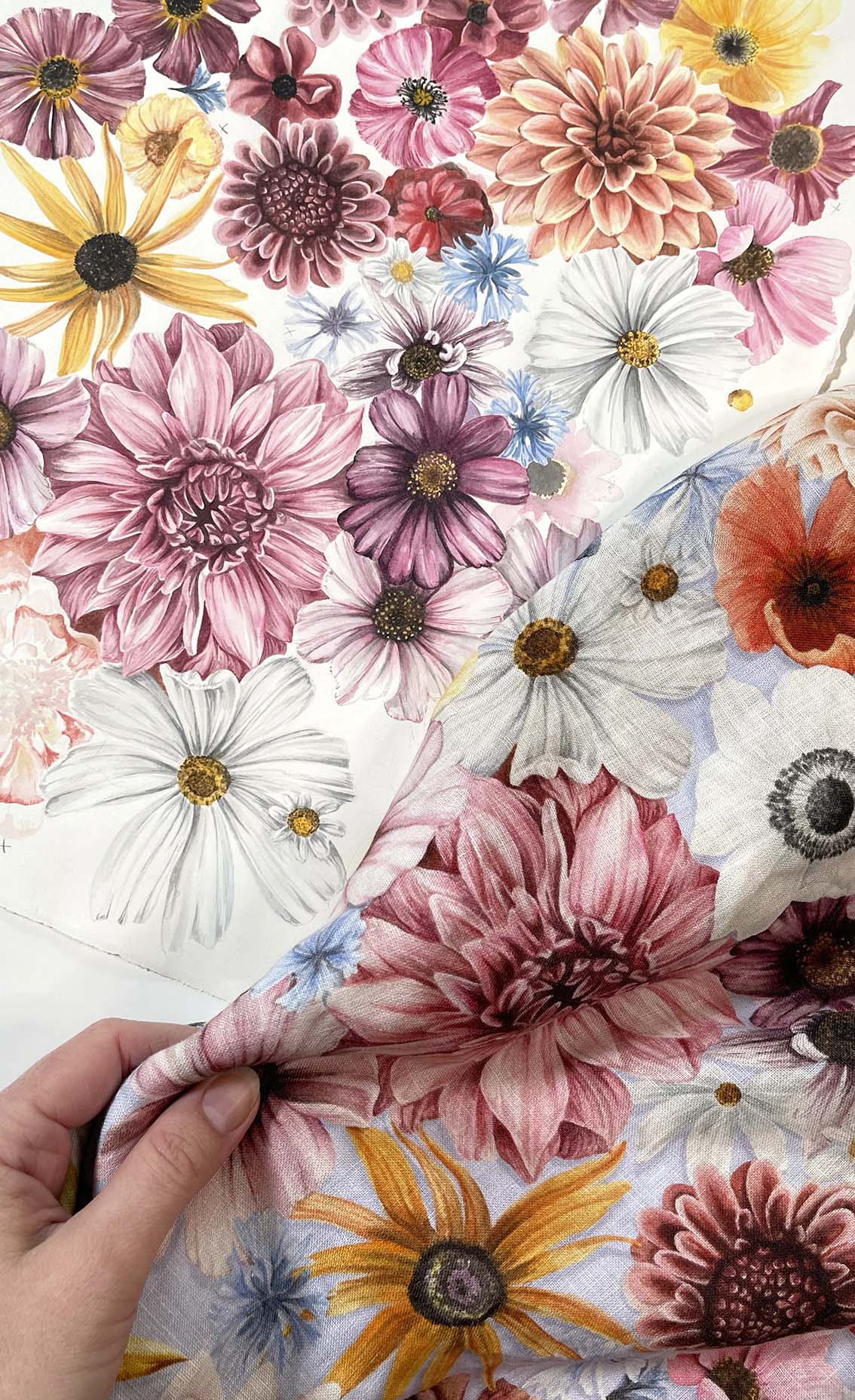
Most designs begin with a single idea or object, often something simple, like a spring floral bouquet, a leaf shape, or a particular colour combination that sparks something. Sometimes it’s simply that I’d love to paint a subject, such as strawberries – so I build a collection around that! I usually see the pattern first. Even before I’ve put pencil to paper, I can visualise the flow and movement of it, how it will repeat and how it will feel. The challenge then is figuring out how to translate what’s in my head onto paper. I’m also inspired by how fabric is used – how it moves, how it feels when worn, and how a print can completely shift the mood of a garment.
Your mind must be constantly brimming with ideas – how do you decide which prints will make it to the fabric?
It’s one of the hardest parts of the process. I think practically about how people will use the fabric. A design might be beautiful as artwork, but if I can’t clearly imagine it being sewn into a finished garment or object, it usually won’t make the cut. Sometimes a simple mock-up is enough to make or break a design. Printing patterns onto paper at full scale also helps, seeing the design at 100% allows me to assess whether the scale feels right before moving into fabric sampling.
I also consider balance across a collection – varying scale, layout, pattern density, and colour palette. If too many designs feel similar, they begin to compete rather than shine individually. Each print needs to bring something unique. Designing for movement is important too. You don’t want a motif landing in an awkward place on the body. Some designs might look beautiful on screen, but simply don’t work for garments in real life.
You work with natural fibres – what materials in particular and why is fabric choice important to you?
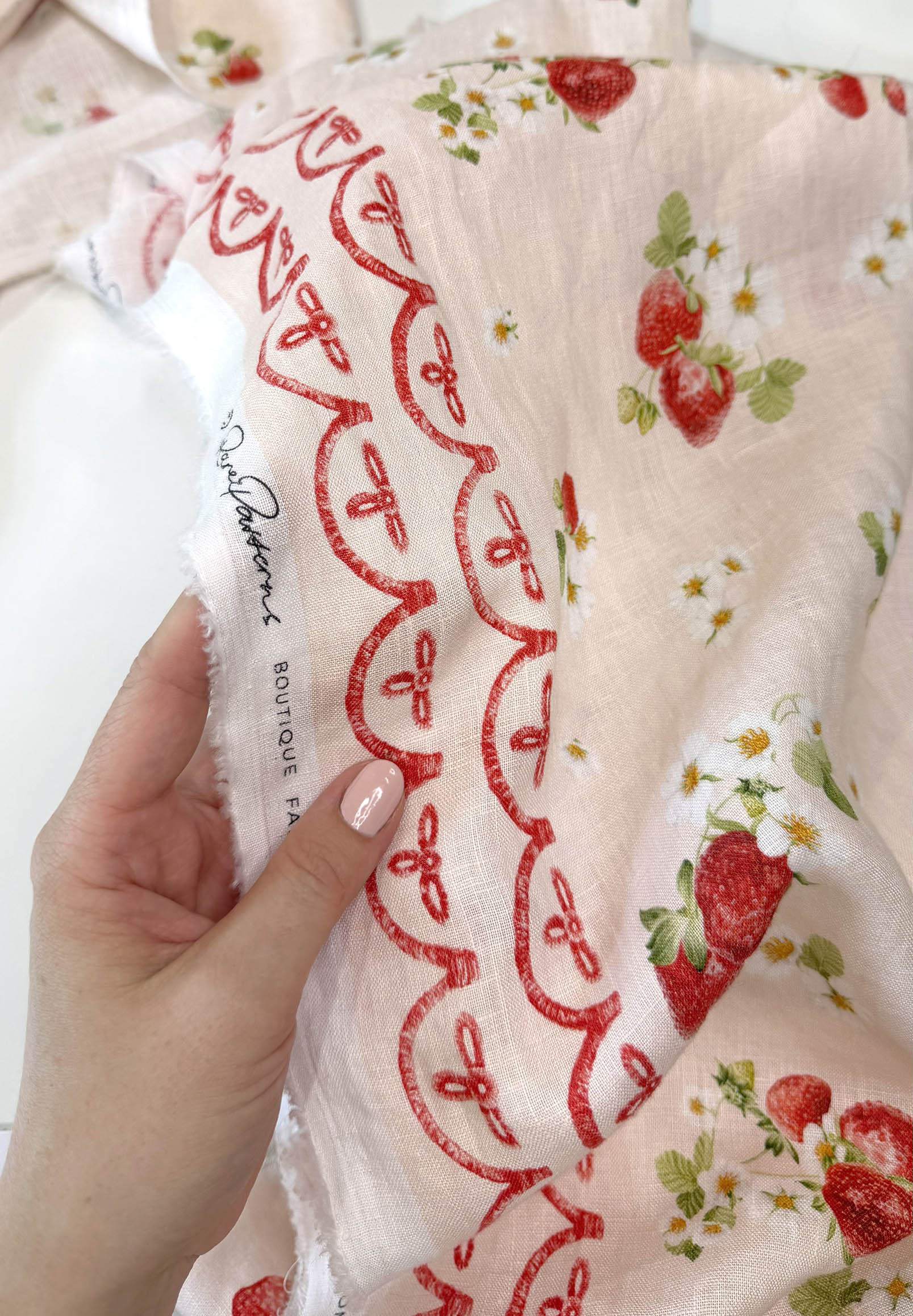
Natural fibres have always been my first choice. Linen, especially, is incredibly special: more sustainable to grow and process, softens beautifully over time, and can last a lifetime if cared for properly. I love wearing and sewing with linen, which is why it’s our primary fabric. We’ve recently introduced cotton as well. While less sustainable in terms of growing and processing, it’s a much-loved staple that many people enjoy sewing and wearing, so it felt important to offer.
There’s also so much fabric in the world made from plastic – polyester yarns that aren’t breathable and can shed microfibres into the environment over time. Synthetic fabrics rely on fossil fuels and don’t readily break down at the end of their life. Natural fibres offer inherent qualities that synthetics simply can’t replicate: breathability, moisture-wicking, and comfort. They’re derived from renewable resources, and at the end of their lifecycle (when untreated and free from synthetic blends) they can biodegrade and return to the earth. In the future, I’d love to explore other fibres too – hemp is high on that list.
How does sustainability influence what you do at Rare Patterns?
I grew up on a farm in Central West NSW, so from a young age I understood the importance of conserving water and power, and learning to make do with what you have. That upbringing still influences how I approach my business today.
Sustainability guides everything from fabric choice to how often I release collections. Rather than chasing trends, I focus on timeless, classic designs – pieces that people will love, sew and wear for many years. Longevity is an important part of that conversation. A thoughtfully sewn garment made from high-quality natural fibres can be worn, loved, repaired, and passed on – which, to me, is one of the most sustainable choices we can make.
It’s also reflected in the practical side of the business. We use paper-based packaging wherever possible, prioritising recyclable materials, and using home compostable shipping satchels. Sustainability and fibre choice aren’t afterthoughts but core to how Rare Patterns operates and evolves. I won’t pretend it’s always simple. It’s a balancing act between these values and running a small business that needs to grow and remain viable. But thoughtful, considered design will always sit at the heart of Rare Patterns.
A thoughtfully sewn garment made from high-quality natural fibres can be worn, loved, repaired, and passed on – which, to me, is one of the most sustainable choices we can make.
What’s the favourite thing you’ve sewn and why?
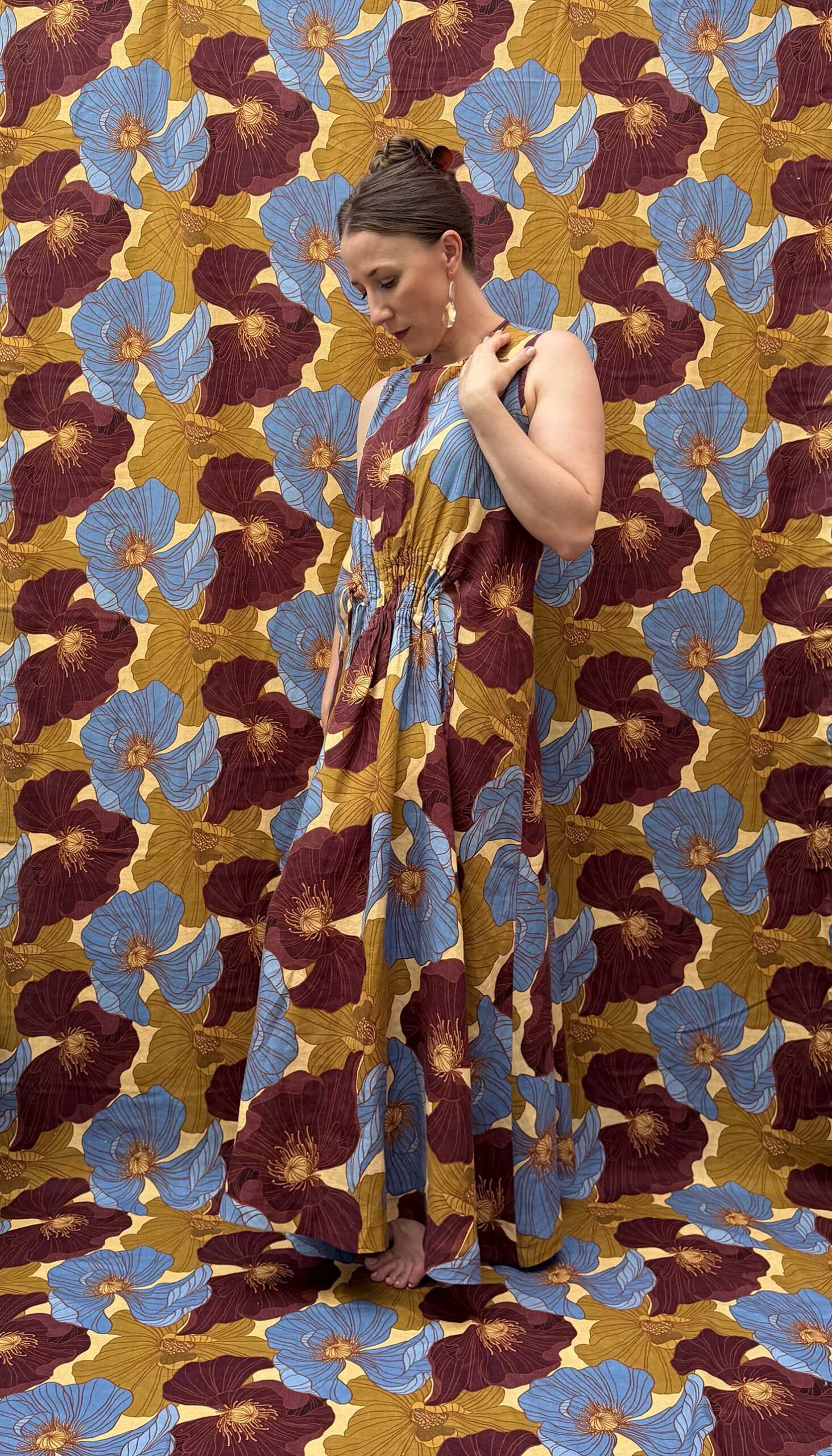
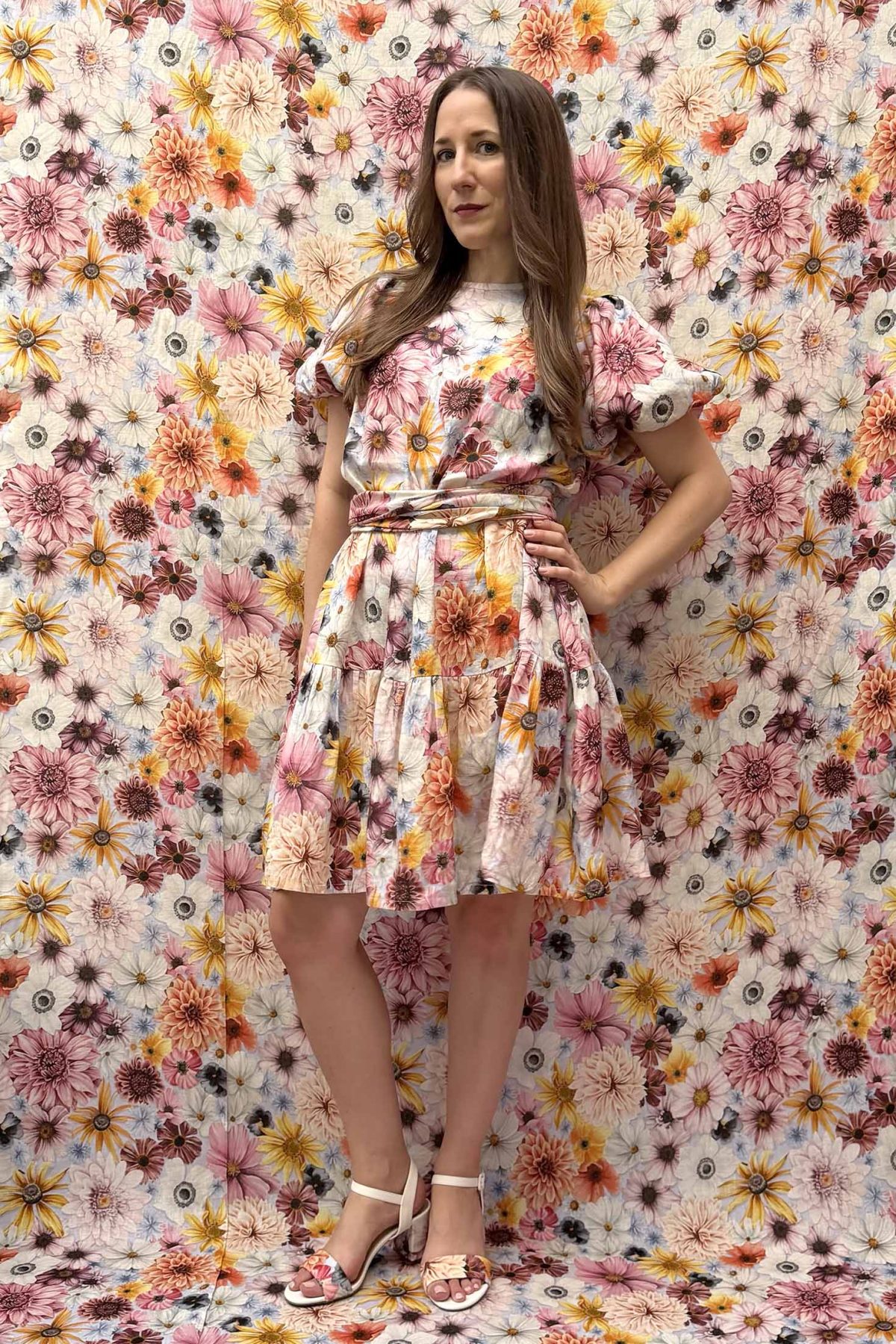
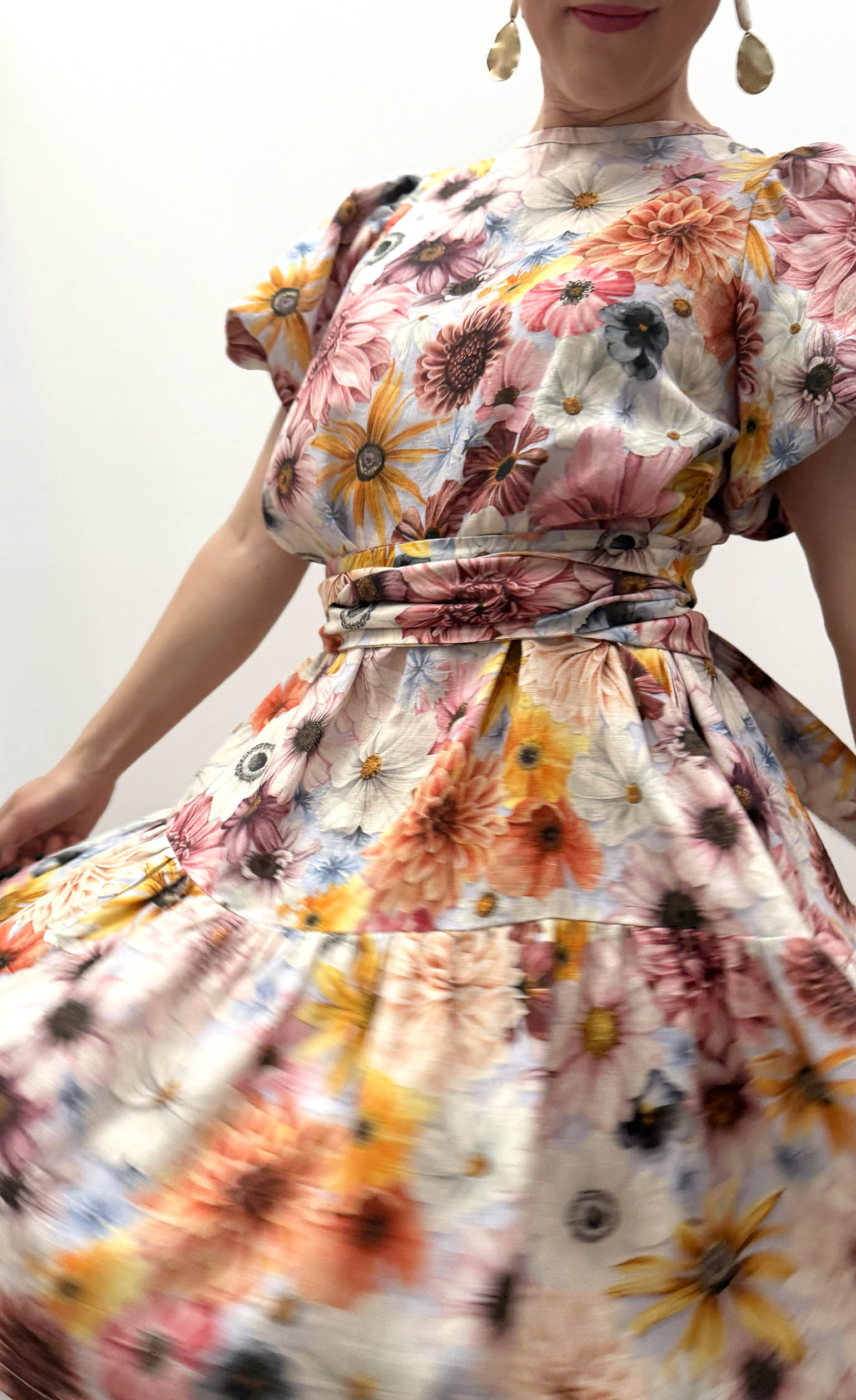
My dream floral dress is definitely my favourite piece so far. It’s made using our ‘Blossom’ linen fabric and Veronica Tucker’s ‘Audrey’ dress pattern. The fit is beautiful, it really showcases the fabric, and most importantly, I feel like the best version of myself when I wear it.
What do you hope your fabrics inspire in others?
I hope they encourage people to explore their creativity and feel confident using colour and print. I’d love to inspire experimentation, stepping outside comfort zones and discovering what truly makes you feel amazing.
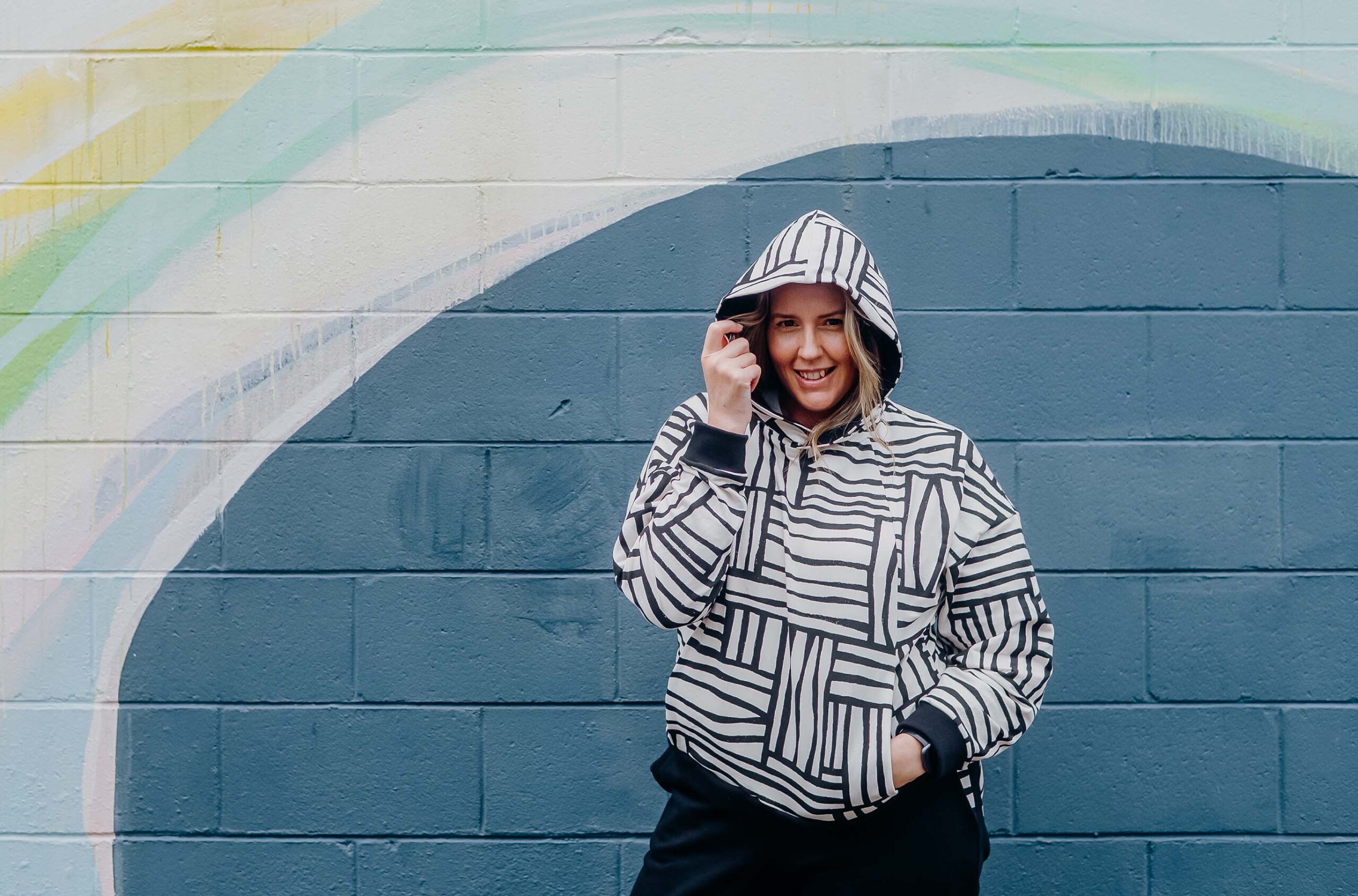
For a long time, I shrunk myself down. Working in the commercial design world, for many years I wore a lot of plain colours and black – I didn’t want to be noticed and just wanted to ‘fit in’. Returning to sewing has helped change that. Creating and wearing garments full of pattern and colour feels like a true expression of who I am and what I value. It’s given me back a confidence I didn’t realise I was missing. Finding the colours, patterns, and garments that feel right for you can be incredibly empowering. It helps you show up as your most confident, authentic self.
I also hope our fabrics encourage people to keep creating – to learn new techniques, connect with their local or online sewing communities, and stay engaged. Sewing offers so many mental health benefits, and I truly believe it can enrich your life, especially when you’re working with beautiful printed fabrics like ours!
Creating and wearing garments full of pattern and colour feels like a true expression of who I am and what I value. It’s given me back a confidence I didn’t realise I was missing.
What does the future hold for Rare Patterns?
There’s so much I’d love to explore, but for now my focus is on creating and releasing beautiful, thoughtful fabric collections. With a background in product development, my mind is always full of ideas, but I’m intentional about creating pieces that are both useful and beautiful, rather than simply adding more for the sake of it.
I dream of one day opening a bricks-and-mortar store – a beautiful, welcoming space where people can see and touch the fabrics in person. Fabric is such a tactile, sensory experience, and I’d love to create a place where that connection can truly be felt. In the not-too-distant future, I’d love to collaborate with other artists. Supporting and working alongside creatives has always been close to my heart. I have the gift of seeing pattern potential in almost any artwork or illustration, so I’m excited about where that could lead.
I’d also love to see our designs extend beyond fabric – into wallpaper, stationery, puzzles, and other product collaborations. These patterns deserve to be experienced in many different ways alongside our fabric collections. At the heart of it all, Rare Patterns is about celebrating beauty in everyday life – through fabric, through making, and through the quiet confidence that comes from wearing something you’ve created yourself. This is only the beginning.
♡ This is a Better Together Peppermint Partnership, where we team up with brands we love. This story was created with support from our friends at Rare Patterns, an online boutique fabric store with premium fabrics featuring exclusive, hand-painted prints.



JOIN OUR MAILING LIST
Brighten up your inbox with our not-too-frequent emails featuring Peppermint-related news, events, competitions and more!
explore
More articles