
If you’ve never heard of ‘circular fashion’ then brace yourself – it’s one of those terms you’ll soon hear bandied around a lot. Happily, Peppermint’s Marketing and Partnerships Manager Roxane was part of the first ever Australian Circular Fashion Conference (ACFC) held recently in Sydney – and here’s what she learned about the hottest term in the (sustainable) town:
So, what actually is circular fashion?
Circular fashion is the antidote to ‘linear fashion’. Think of the linear fashion model as a straight line: you buy something, you wear it and you throw it out. Because we can now buy clothes so cheaply, we’re buying more. Australians are the second highest textile consumers in the world. We each buy an average of 27 kilograms of clothing every year, compared to the worldwide average of 13 kilograms. But what happens to all those clothes? Are we about to see a building boom in gargantuan wardrobes? Probably not, because clothing waste is the fastest-growing household waste in Australia. Dean Jones from Glam Corner, and a speaker at the ACFC, says that collectively, 6000kg of clothes get thrown out every 10 minutes in Australia.
That’s a massive problem because, well, hello global warming. Clothes that are thrown into landfill emit gases while they are breaking down. Those gases are a potent contributor to the greenhouse gas emissions that cause global warming. Something clearly has to change.
The model of ‘circular fashion’ aims to avoid landfill waste by keeping our clothing in a constant cycle of movement. This means finding ways to reuse our clothes again: by repurposing them so they have a completely different look or use; or by breaking the clothes down into virgin fibres that be turned into new clothes again.
Sounds cool. But what can I do?
Making a success of circular fashion requires a bit of work from all of us, but it shouldn’t be too tough to play your part. Here are some quick n’easy things you can do to be part of the new economy:
Don’t wash your clothes. No, we’re not suggesting you walk around stinky and stained, but the wear and tear of washing shortens the lifespan of clothes (quite asides from all the energy and water required in the process). Instead, ask yourself whether spot cleaning, sunshine bathing (using ultra-violet light to kill smelly bacteria) or turning clothes inside out will work instead of throwing things in the washing machine.
Rent clothes instead of buying. Rental services such as Glam Corner, Her Wardrobe, The Birdcage Stylist, Dressed Up, Something Borrowed, Your Closet and My Stylish Wardrobe offer designer dresses for special occasions that you might otherwise only wear once.
Look for items that offer lifetime guarantees. The Buy Me Once website finds clothes and other items around the globe that offer a lifetime guarantee promise.
Share what you know. Craig Reucassel, ABC journalist from War on Waste, said at the ACFC that he wants to read reviews that tell him about the quality of an item. Go online and share reviews about your favourite items that have stood the test of time.
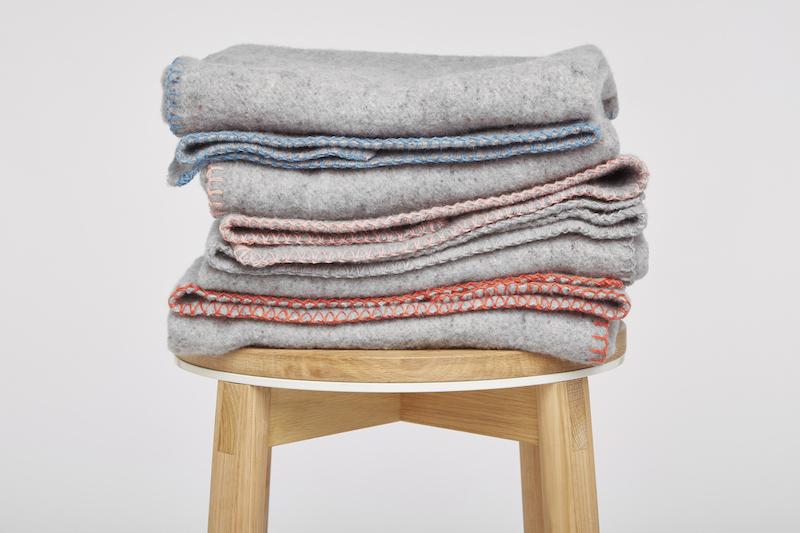
Take back. Look for brands that will take their clothes back when you’re sick of them. Patagonia and H&M offer ‘take back’ schemes and recycle or re-sell your pre-loved items. The above image is of a beautiful, Tasmania-made Seljak blanket that’s created from reclaimed offcuts in the oldest mill in Australia, and can be sent back to re-enter the manufacturing cycle at the end of its natural lifetime – an example of the circular economy at its very best!
Look at labels. The technology to turn garments back into thread is still in its infancy, and at the moment there’s not the commercial ability to turn blended thread into virgin thread. So if you want your clothes to have a chance at a second life, avoid buying blended fabrics.
Give. Take things to your local charity stores. Even when they can’t sell your stuff, they have supply chains that mean your old clothes won’t end up in landfill.
Swap or sell. Look for ways to recycle, either through a clothes swap, eBay or consignment shop, and let others wear the things you no longer want.
See, not too difficult! Just a few simple changes can make a massive difference – and understanding what the circular economy is means you’re pretty much halfway there already… Good luck!
Brighten up your inbox with our not-too-frequent emails featuring Peppermint-related news, events, competitions and more!
explore
We look forward to connecting with you.