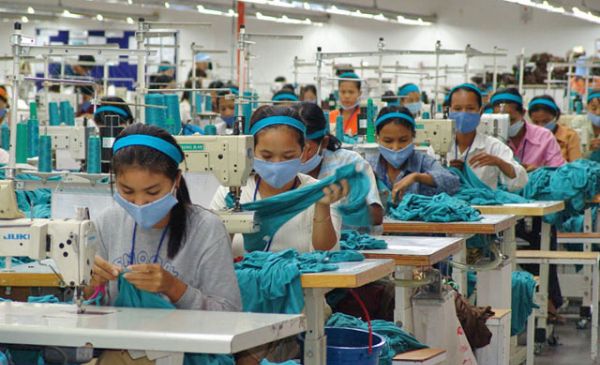

If you’ve been keeping up with the news over the holidays, you may have seen reports of street riots in Cambodia. Last Thursday, a ‘peaceful protest’ gave way to violent clashes between Cambodian workers and armed guards, leaving at least three people dead and dozens more injured or detained. Conflicts are centred on the rights and wages of garment workers, putting the international spotlight once again on the living conditions of the half-a-million Cambodians employed by textile factories in Phnom Penh and other urban centres.
Textile manufacturing is the country’s biggest foreign currency earner; factories here are attractive to many international footwear and apparel brands because labour costs in Cambodia are cheaper than those in China. Reporting on the current living conditions of Cambodian garment workers, Action Aid have revealed that many workers receive a minimum monthly wage of just US$61, with some women working up to 10 hours overtime in peak manufacturing season to meet deadlines.
Backed by unions and the opposition party, protests last week were part of an ongoing campaign by garment workers to increase their minimum monthly wages to the equivalent of US$160. The Cambodian Government has persistently rejected their proposal, deeming the increase ‘unsustainable’ and instead countering with proposed wages of US$80 per month, a figure rejected by unions. Violent clashes ensued as troops attempted to evacuate hundreds of workers from the streets outside their factories west of Phnom Penh. This isn’t the first time textile workers have spoken up on the issue: in 2011, 200,000 workers were reportedly dismissed after requesting their wages be raised to meet the cost of living. After Bangladeshi garment workers (who earn just 14 percent of what is considered a living wage there), Cambodians in the same profession are the second worst paid in the world. Amazingly, the wages of a Cambodian garment worker have declined by 19 percent over the past decade.
Amnesty International has called for an official investigation into last week’s incident; you can keep tabs on their coverage of worker’s rights in Cambodia here.
{Image via Oxfam Australia}.