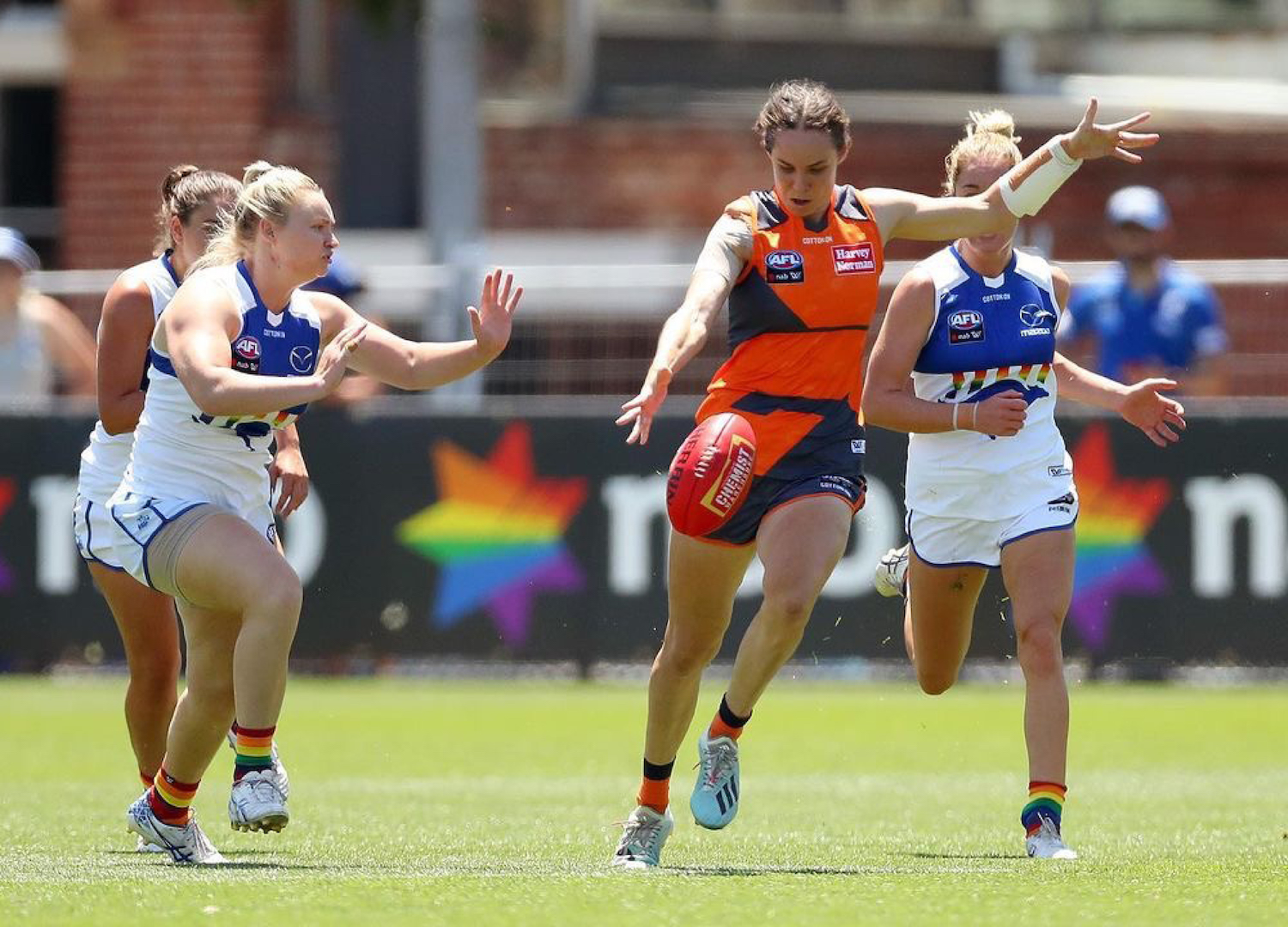
words CHLOE DALTON above VIA INSTAGRAM
While Tillies fever rightly catapulted the Women’s World Cup into living rooms and front pages across the country, athletes have long been fighting for an equal playing field. In her debut book, Girls Don’t Play Sport, Chloe Dalton – a professional AFL and rugby union player who won gold with the rugby sevens at the 2016 Olympics, and the founder of The [Female] Athlete Project – explores the game-changing, defiant rise of women’s sport, and why it matters.
As a young kid, I would sit on the hill at my local rugby club and watch my brothers play. At half-time, I would take a cone out, put the ball on it, and try to kick it from the sideline. I wasn’t too bad at all. Grown men would come up to me and say, “You should play rugby.” I would turn to them, a confused look on my face, and say, “Girls don’t play rugby.”
Sixteen years later, at the 2016 Rio Olympics, I stood on top of the Olympic podium, arm in arm with my teammates, an Olympic Gold Medal around my neck, after defeating New Zealand 24–17 in the rugby sevens’ Games debut.
Many of my own teammates were forced to stop playing the game they loved at 12, because at that age they were no longer allowed to play with the boys.
But throughout my childhood, I couldn’t see female sporting idols on television or in the newspaper, or hear about them on the radio. For decades, women have been underrepresented across all facets of sport, from playing to coaching to administration and management. Many of my own teammates were forced to stop playing the game they loved at 12, because at that age they were no longer allowed to play with the boys. As grown women, they returned to the game to wear uniforms designed for men, use change rooms without appropriate amenities and train on the backfield with inadequate lighting.
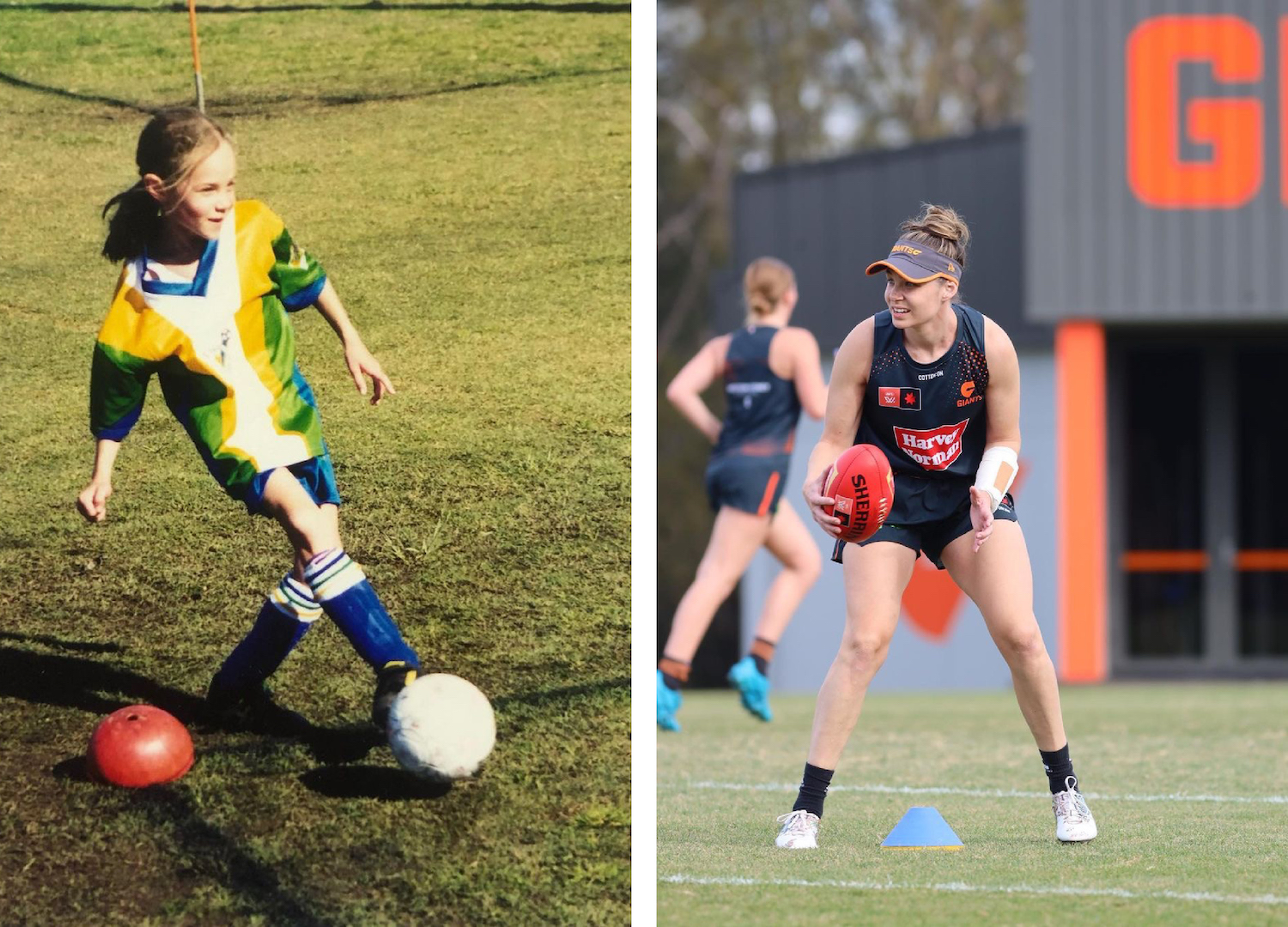
above VIA INSTAGRAM
Some men’s sports, clubs and teams have existed for over a century. I recently saw a post by the Carlton Football Club celebrating three generations of footballers from the same family. One of Carlton’s young players, Jack Silvagni, had become the third footballer in his family to play 100 games for the club, as both his father and grandfather had done before him. As a former Carlton player myself, I couldn’t help but feel so happy for Jack, who gives his all every time he steps out onto the ground. But the second thing that came to mind was that it will be years before the first AFLW player even hits 100 games, let alone her daughter and her daughter’s daughter. Women’s sport is often entire generations behind the men’s game, and yet they are constantly compared in terms of score lines, skill execution, entertainment factor and crowd numbers. It’s like comparing the revenue and success of McDonald’s (which opened in the 1950s) with that of a small, Australian-owned burger business in its infancy. They are completely different propositions.
For decades, men’s sport has been the default. Often, when a new women’s competition is introduced, a ‘W’ is simply added to the default name of the league or club. Think of Australian rules football: we have the AFL, and then we have the AFLW. When Australia’s men’s domestic basketball league was formed in 1979, it was named the National Basketball League. When the Women’s Interstate Basketball Conference became a nation-wide league in 1982, however, it was named the Women’s National Basketball League. Yet the men’s competition has never rebranded to include the word ‘men’s’.
For female athletes, language can be a harmful tool that reminds them that they are not part of the fabric of sport – that their contribution is added in, second string.
To many, I am known as a female athlete who plays women’s sport. Have you ever heard Tiger Woods referred to as a male athlete who plays men’s golf? That sentence sounds ridiculous because it is never used. Yet for female athletes, language can be a harmful tool that reminds them that they are not part of the fabric of sport – that their contribution is added in, second string.
In research conducted by Mikaela Wapman and Deborah Belle through Boston University, 197 psychology students and 103 children aged seven to seventeen were given a riddle: “A father and son are in a horrible car crash that kills the dad. The son is rushed to the hospital. But just as he’s about to go under the knife, the surgeon says, ‘I can’t operate—that boy is my son!’ Explain.”
Only 15% of the children and 14% of the psychology students came up with the answer that the mother of the child was the surgeon.
READ MORE: How Owning Your Power Can Help Build a Better System From the Inside Out
The idea for the research came about when Belle asked her 10-year-old granddaughter to solve the riddle, and found she could not. Her granddaughter said, “How could this be? Well, he could have two fathers.” While that scenario was absolutely a possibility, the fact that the mother didn’t emerge as an option prompted the researchers to look into the gender ‘schemas’ – or generalisations – that help us to explain the complexities of the world. Interestingly, these gender schemas don’t necessarily reflect our personal values or the experiences we, as individuals, have had. This means that even a student whose mother is a doctor won’t necessarily propose that the surgeon in the riddle might be the boy’s mum.
Virginia Valian, a Hunter College psychologist, has noted how people who are presented with a man and a woman with the same CV typically assume the man is more competent. Her work argues that we absorb gender schemas at a very young age. Belle, discussing Valian’s ideas, says that “when it comes to gender, we fixate on women’s reproductive functioning, and we sort of allot competence to men. Experience can have some effect in our schemas, but much less than we might anticipate.” Virginia has also observed that men and women have identical schemas when it comes to gender – which is exactly what the Boston University research found.
I’ve been part of many teams over the last two decades, and in each one there has been a strong sense of belonging and camaraderie amongst my team mates. The sense of greater purpose and community within these teams makes me feel so grateful that I’m able to play sport for a living. But beyond these tight-knit inner circles, women at all levels of sport are often told that they don’t belong. Not necessarily out loud, but in a range of indirect ways. Whether they’re being placed out on the back field with poor lighting, or being part of a club that doesn’t have female change rooms, or being given hand-me-down uniforms from the men’s team, with the excuse that the club doesn’t have enough money to cover specific uniforms for women, women constantly fight against long-held attitudes and stereotypes: “No-one wants to watch women’s sport,” “They’re nowhere near as good as the men,” “You don’t deserve equal pay.”
Disrespectful attitudes about women in sport perpetuate harmful attitudes about women in society. But I believe sport has the power to change people’s attitudes about women as a whole – our strength, our resilience and our success.
Because of these stereotypes, and a number of other factors, few elite sportswomen have crossed the line to become completely professional. Many female athletes work full-time jobs as well as play, and are glorified for the way they balance multiple roles all at once – athlete, employee, role model and sometimes mother.
On social media, female athletes are often targeted for their ability, performance or image. I read comments daily on posts about women’s sport like, “Get back in the kitchen and make me a sandwich.” Disrespectful attitudes about women in sport perpetuate harmful attitudes about women in society. But I believe sport has the power to change people’s attitudes about women as a whole – our strength, our resilience and our success. Many women have pioneered the way for the next generation of young people coming through today. At the T20 Women’s Cricket World Cup in 2020, 86,000 people watched Australia defeat India at the MCG. Over four million people tuned in to watch icon Ash Barty win the Australian Open in 2022, the most watched women’s singles final since records began in 1999. According to ESPN, in 2022, six of the top 10 “most marketable” college basketball players in the USA were women. In 2022, the AFLW saw more than one million people pass through the gates. This top-tier success has translated at a grassroots level, too: between 2016 and 2021, the number of women’s and girls’ football teams in Australia has grown from 983 to more than 2500.
The game has changed. It’s time for women in sport to receive equal opportunity, pay, representation and respect.
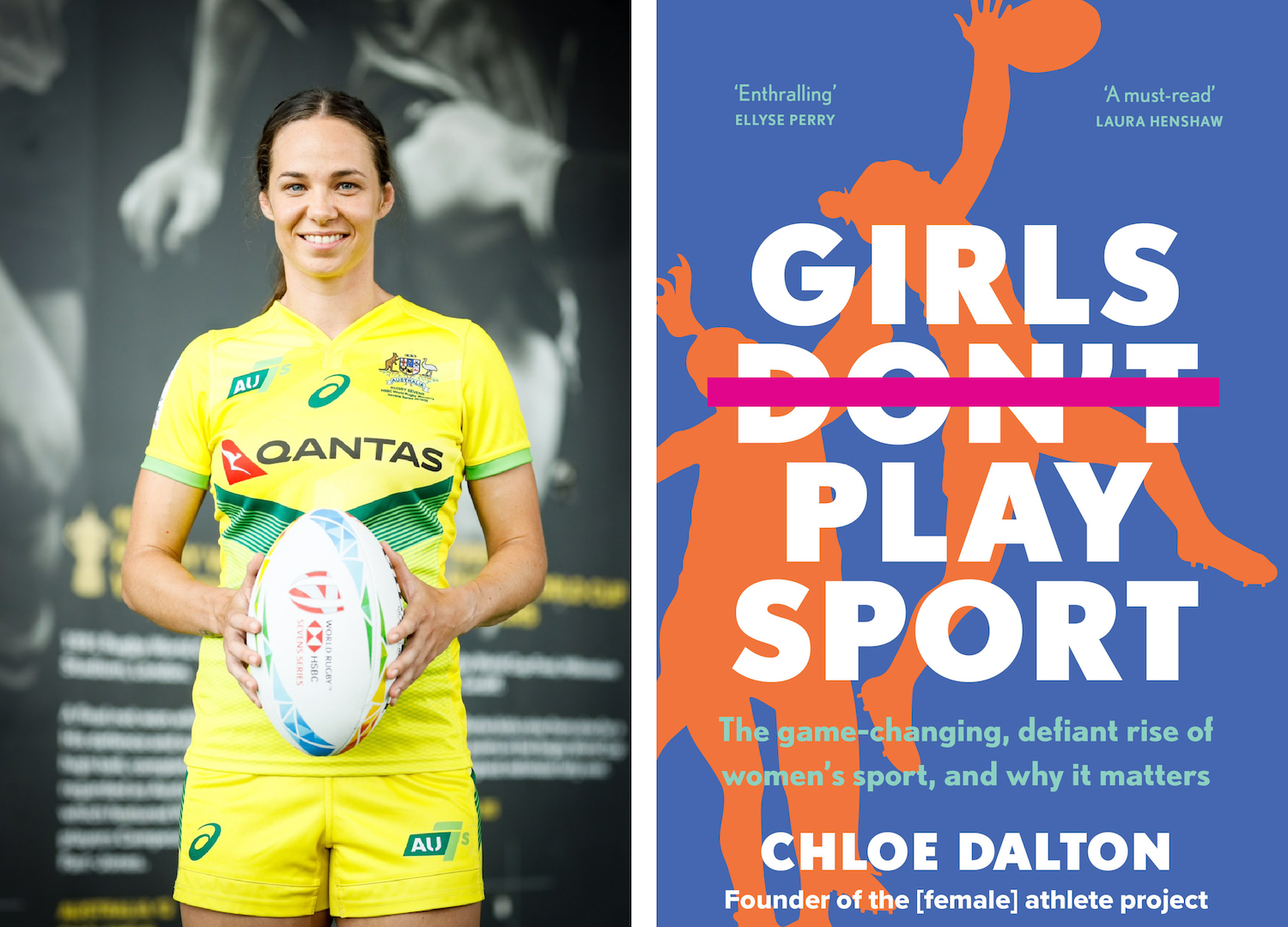
This is an extract from Girls Don’t Play Sport – The Game-Changing, Defiant Rise of Women’s Sport and Why It Matters by Chloe Dalton (Allen & Unwin, August 2023).
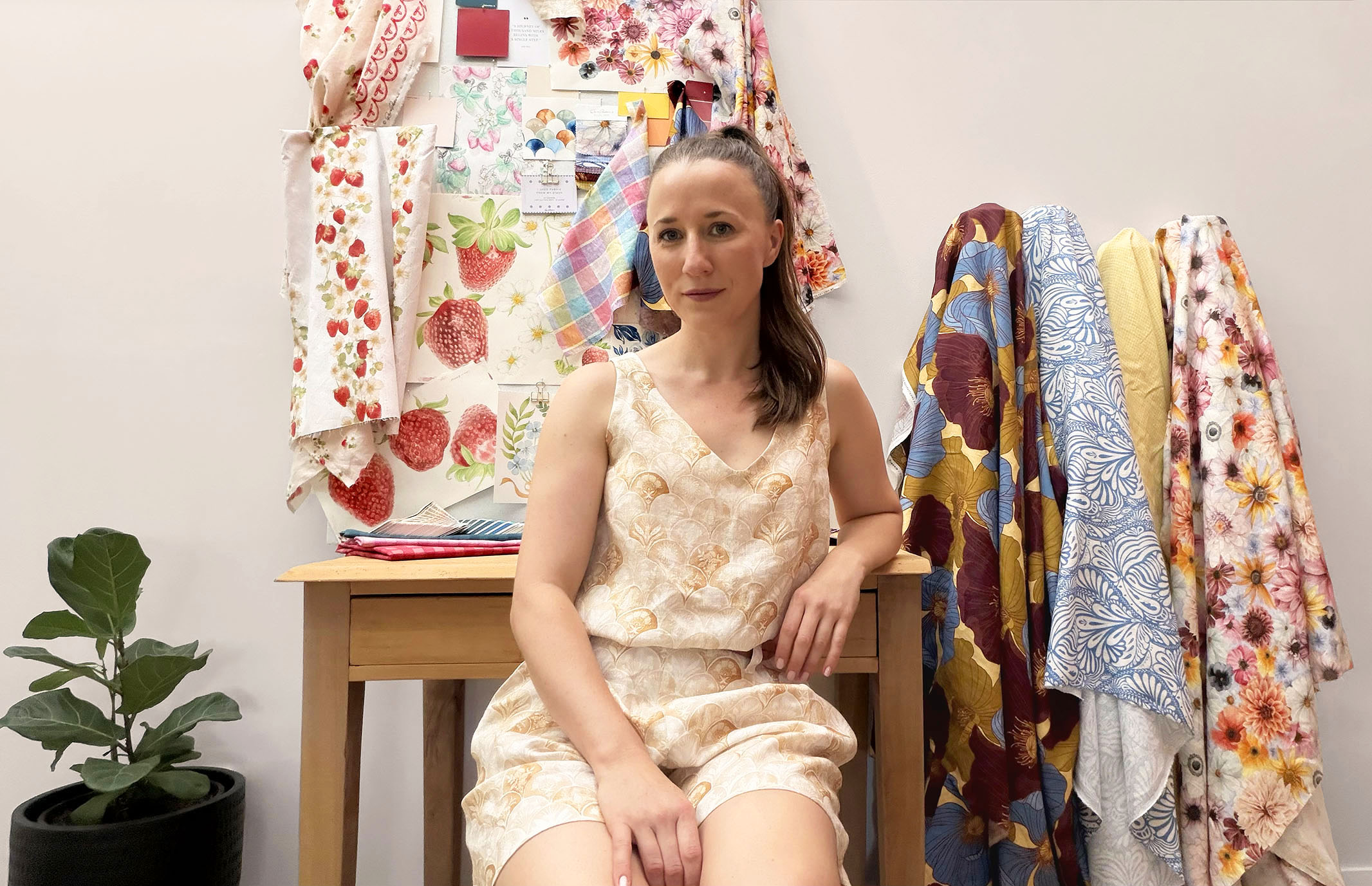

“My piece of advice for makers and designers? Run your own race… make sure your key decisions stay anchored in your brand’s core beliefs.”
- Bec Bligh
Quick show of hands: who’s opened a water bottle expecting a refreshing sip… and instead been greeted by the unmistakable whiff of uh-oh?
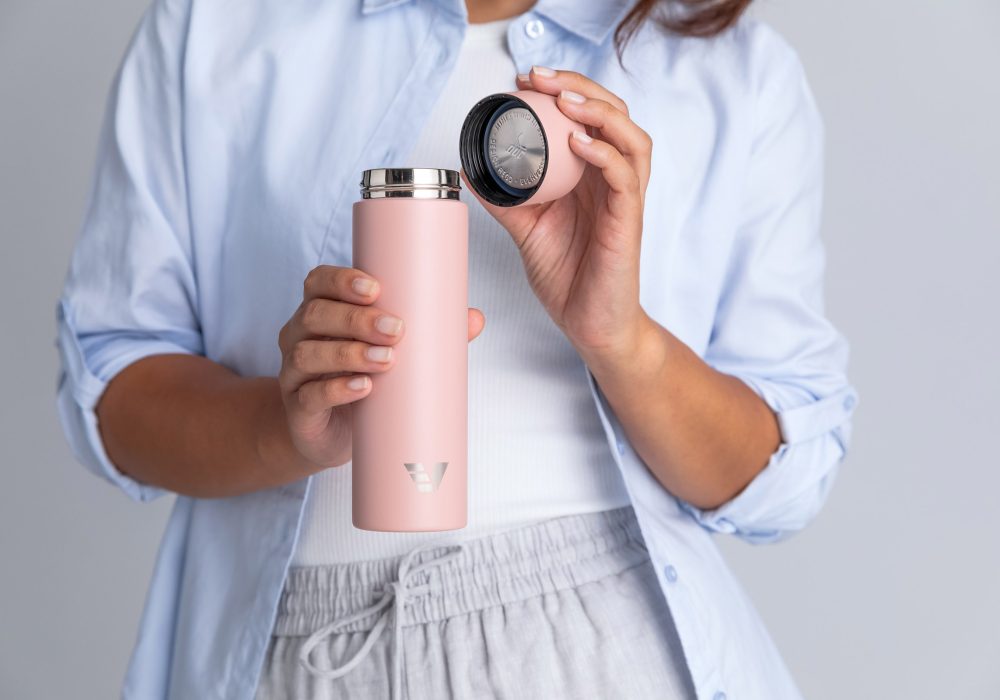
Because for something that follows us everywhere (desk, car, hikes, yoga…), the humble drink bottle is strangely prone to becoming a science experiment. Hard-to-clean corners and gaskets. Mystery smells. Bec Bligh and her husband Tim know it well. A six-month sailing trip along the Queensland coast left them with a lifetime of memories and one stubborn annoyance: mouldy water bottles they couldn’t properly clean.
So they did something about it.
Enter @EverVessel. Thoughtfully designed borosilicate glass and stainless steel bottles that keep things beautifully simple: durable materials, wide openings, easy-to-clean parts and none of the techy gimmicks that tend to age badly. Turns out simplicity, done well, is pretty powerful stuff. (Their many design awards agree!)
And lately they’ve added a little extra delight: the Artist Series, where creatives like Paola Castro, Ben Miners and Martin Thompson transform these everyday companions into tiny travelling artworks. There are more colabs in the works, too: hydration, but make it joyful! 🎨💧
We chatted with Bec about the sailing trip that started it all, the philosophy behind Ever Vessel, and why the most sustainable product is often just the one you keep using.
Tap the link in our bio to read the full conversation. 🚰
#EverVessel #ReusableWaterBottle


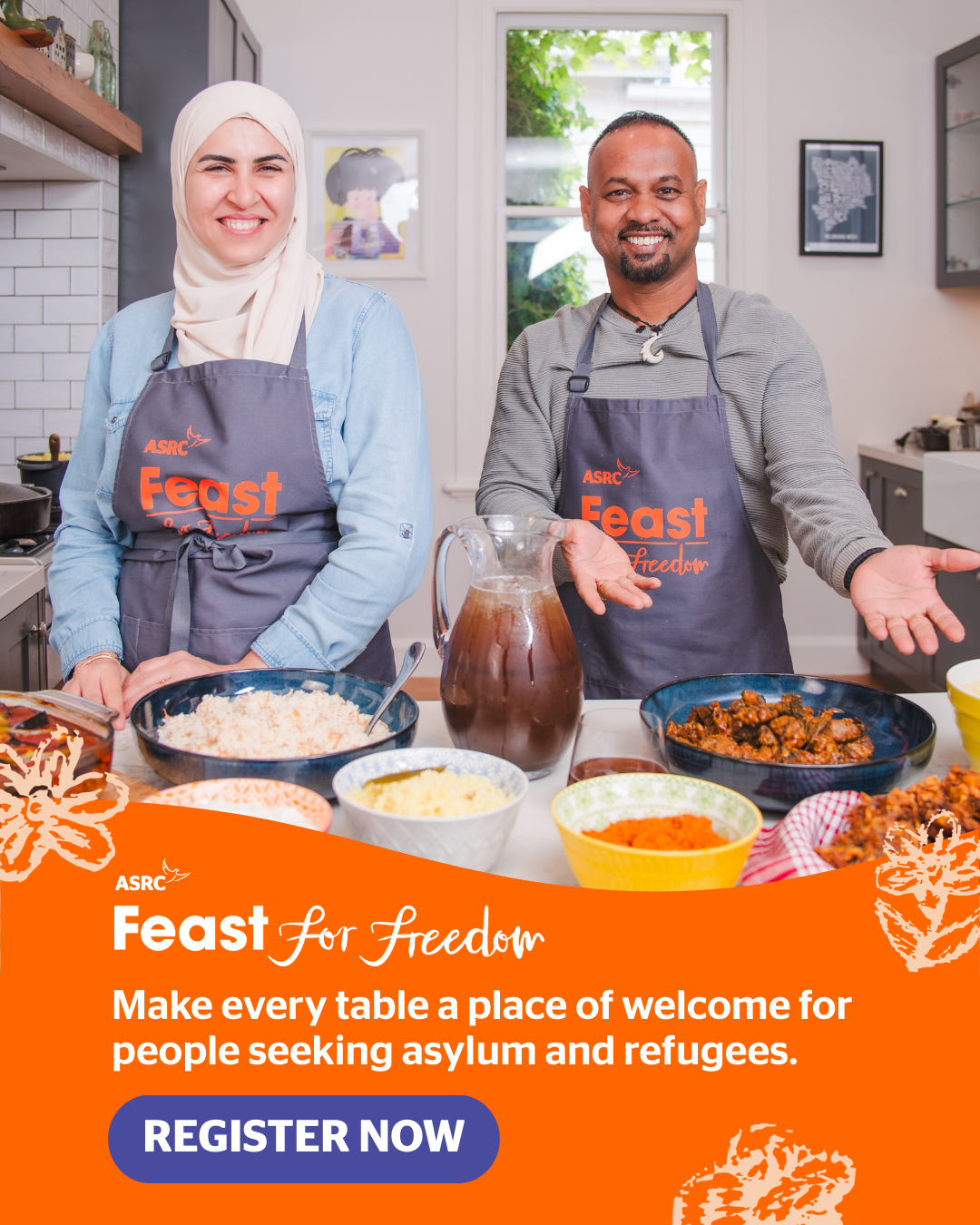
Pull up a chair… there’s room at this table!
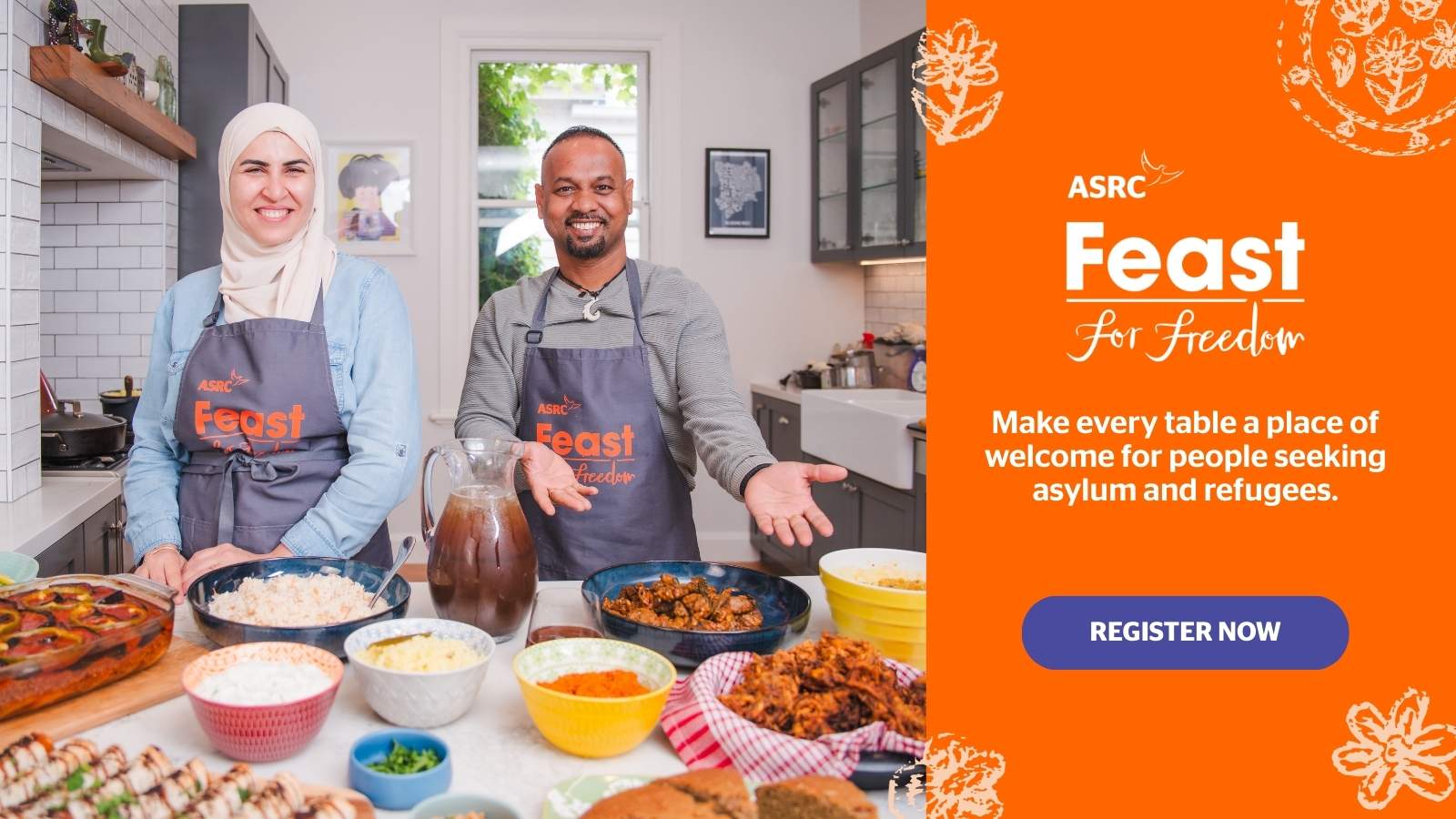
For the first time, Feast for Freedom is bringing people together for a spectacular long-table dinner as part of the Melbourne Food & Wine Festival.
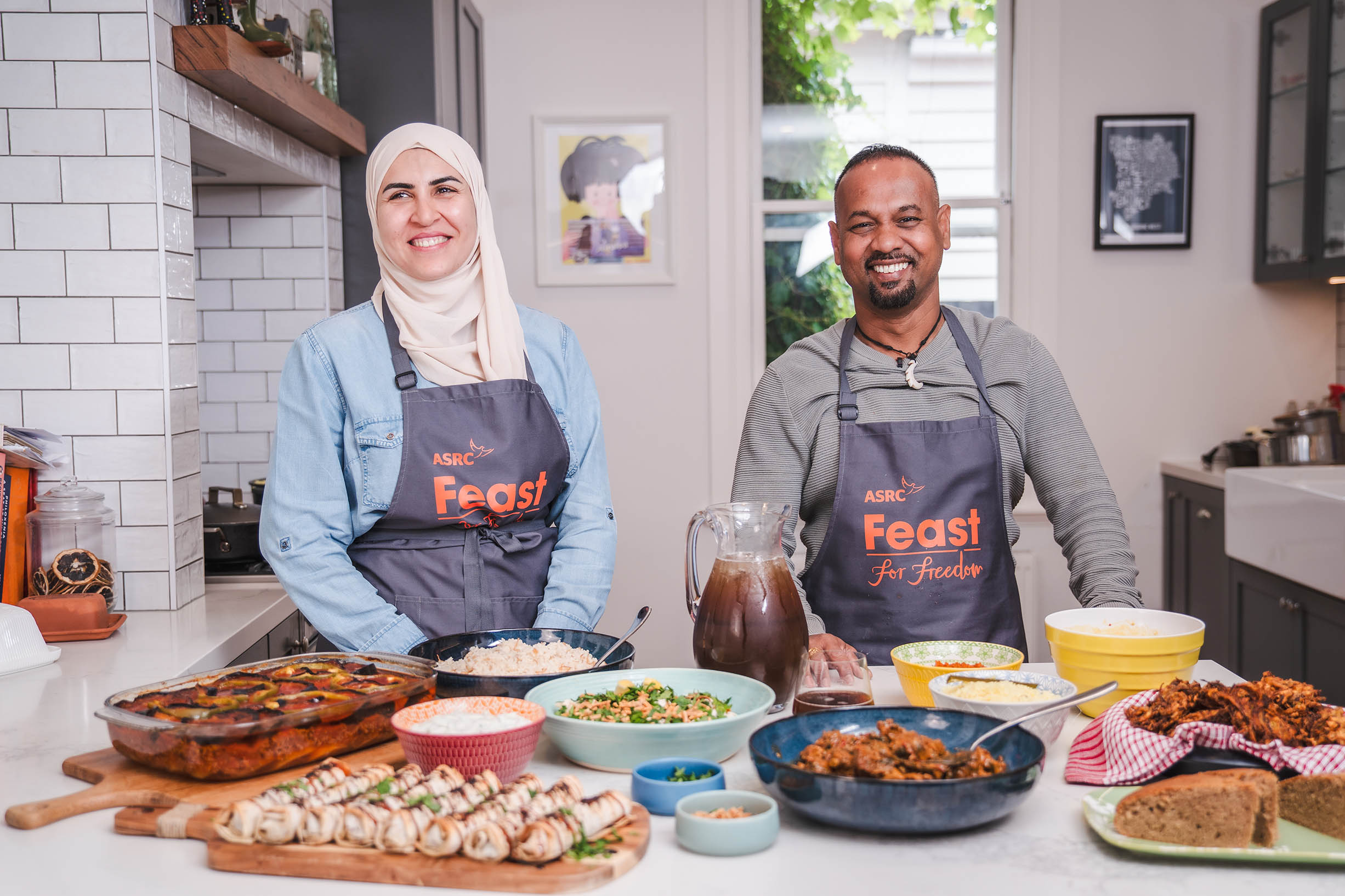
A Longer Table is exactly what it sounds like: one beautiful shared table inside the Asylum Seeker Resource Centre (@Asrc1), piled with generous dishes inspired by this year’s hero cooks, Noha and Nige.
From 6 to 9pm on Wednesday, 25 March, this is what you can expect:
🍽 A three-course shared feast
🍷 Matched drinks
🎶 Live entertainment
✨ A room full of good humans
Your ticket doesn’t just buy you a delicious dinner. It supports the ASRC’s vital work and helps create a fairer future for people seeking asylum.
Seats are limited, and long tables have a way of filling up quickly – head to @MelbFoodAndWine’s website to book now: feastforfreedom.org.au/mfwf
#FeastForFreedom #MelbourneFoodAndWineFestival #LongTableDinner #FoodForChange

Sew versatile! 🪡
Another great make from Lisa from @SunnySewsEveryday:
My #PeppermintWaratahWrapDress is finished and I’m so proud of it. It has been designed not to flap open and flash your pants in the wind, so I feel confident it will be a great wheelchair or standing dress in English weather.
#PeppermintPatterns #WrapDress #WrapDressPattern

Frame your face with the Peppermint Bucket Hat!
Stay safe and stylish in the sun with your very own self-sewn and self-drafted wide-brimmed bucket hat. This beginner-friendly sew is perfect for a sunny day. Get out your pencils – this pattern is created using equations and maths!
This DIY project was featured in Issue 53 and now you can access it for the lovely low price of only $5.
Sun-safe chic is always in style. ☀️
Find it via the link in our bio!
Photos: @KelleySheenan
#PeppermintPatterns #PeppermintBucketHat #BucketHat #BucketHatPattern #DIY

✨ INSTANT CLASSIC ✨
The Peppermint Myrtle Shift Dress is a beginner-friendly make with a few special details based on the ever-stylish shift shape – the perfect dress you need in your wardrobe right now!
Myrtle cuts above the knee with options to customise the length. Don’t think she’s reserved for hot weather either: try a heavier-weight fabric to turn your Myrtle into a pinafore-style garment for layering.
For our fabrics we chose two from our lovely sewing partner @Karmme_Apparel – the bold Rottnest Stripes in a lightweight, soft-drape cotton, and the quality linen in the handpainted Mexico Collection.
Get making the Myrtle – the only question is, can you stop at just one?
Link in bio 🪡
Fabric: @Karmme_Apparel
Sewist: @Laura_The_Maker
Photos: @KelleySheenan
Models: @SerahSews and @Pins_And_Tonic
Location: @ShareTheDignityAustralia
#PeppermintMyrtleShiftDress #PeppermintPatterns

It’s time to Feast!
Some recipes travel a long way before they land on your table to delight your taste buds. This year’s Feast for Freedom invites us to gather our friends, cook something delectable and raise funds for the incredible work of the Asylum Seeker Resource Centre (@Asrc1) while we’re at it.
The 2026 Feast features recipes shared by two remarkable cooks: Noha, who brought the flavours of Palestine with her when she arrived in Australia, and Nige, a Sri-Lankan Tamil cook whose journey with food began in the most unexpected of places.
You can host your own Feast up until 30 April – simply register online and get planning! Host a dinner, organise a workplace lunch, or gather your community… However you do it, the idea is simple: cook, connect and celebrate the cultures and stories that shape Australia.
Want to find out more? Head to the link in bio to meet Noha and Nige, learn more about their stories, and discover a delicious recipe to try.
#FeastForFreedom #PeppermintMagazine #FoodForGood #ASRC
