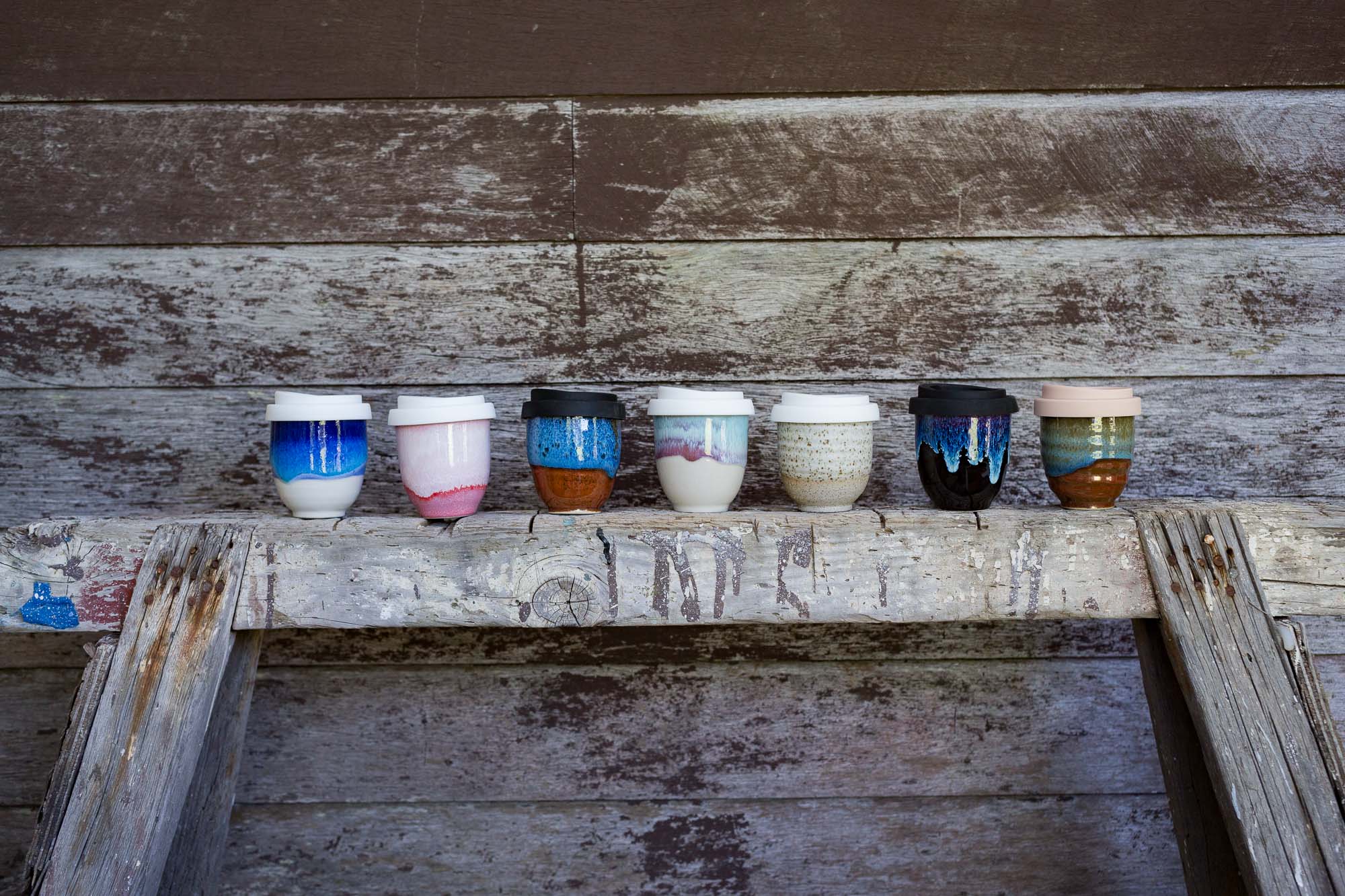
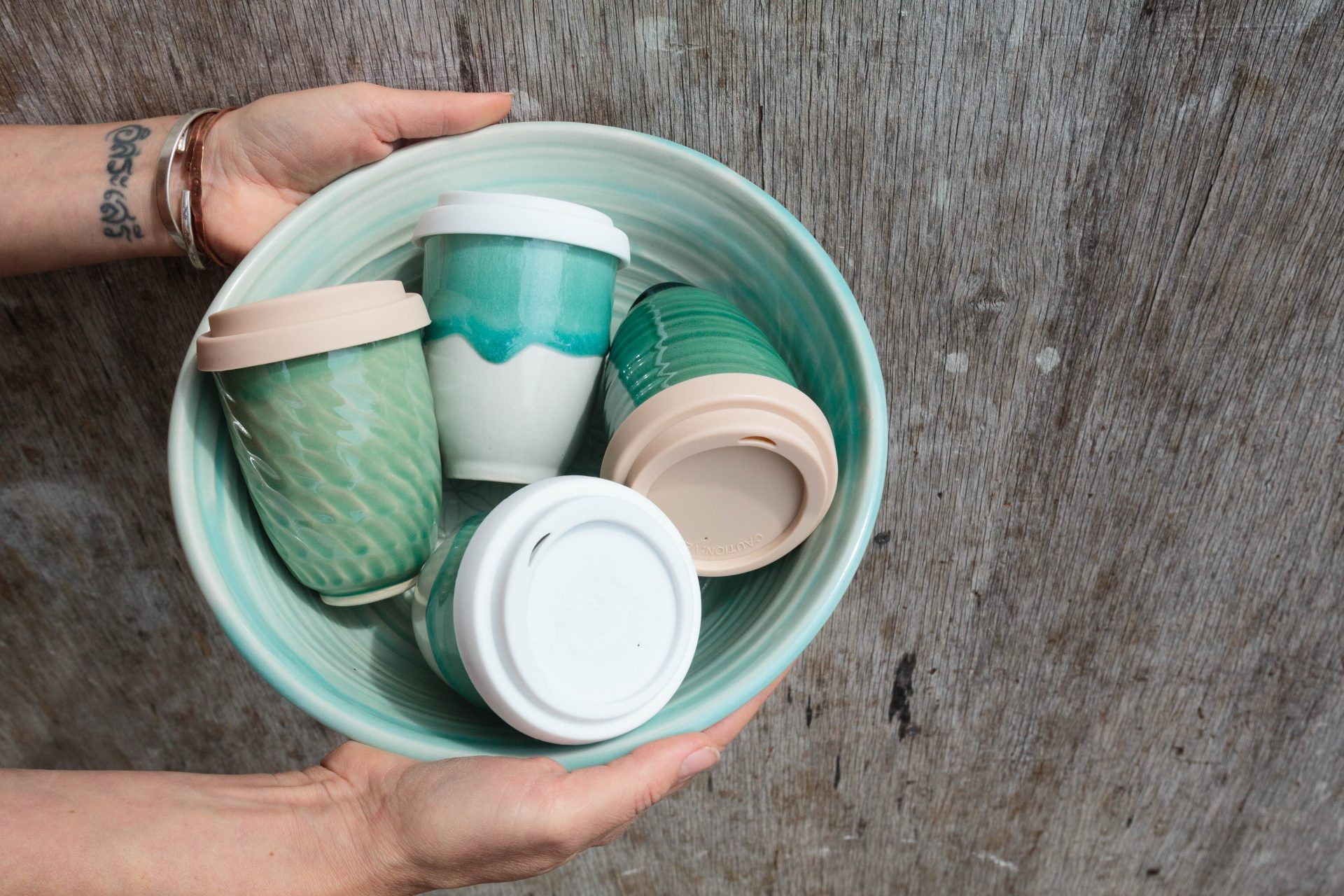
Aiming to save the earth one cup at a time, Renton Bishopric and Clare Botfield create beautiful reusable ceramic coffee cups (and now also gorgeous portable ‘planet bowls’) through their Sunshine Coast-based company, Pottery For The Planet. We caught up with Clare to hear more about the purpose and passion behind the brand…
Why did you start Pottery For The Planet?
Renton and I both campaigned hard for various environmental causes in our local area, organising and attending rallies, running fundraisers in the form of events and selling things we’d made. I’d been working in busy cafes for years as a barista, and was really concerned about the amount of throwaway cups I was having to put coffee into – this was a time when BYO cups weren’t a thing, so you didn’t see anyone bringing their own cup to a cafe.
I’d been pestering Renton to put his pottery skills to use creating a beaker with a lid, but he wasn’t interested because he was more focused on making ceramic art pieces with messages about the environment. In 2013, he created his piece Coal For Breakfast?, which spoke about Australia’s precious fertile farmlands being destroyed for coal mining. This piece won the Queensland Regional Art Awards that year, and so we decided we should jump on the media hype – we designed and created 100 limited-edition matching brekky bowls that we sold to raise funds for a local group fighting to stop a coal port development in Keppel Bay. These ended up being the first products we made under the Pottery For The Planet name. They raised a good sum of money for the cause, and so we talked about other projects we could do – we were excited to have found a way to design and create our handmade things for something we were both passionate about.
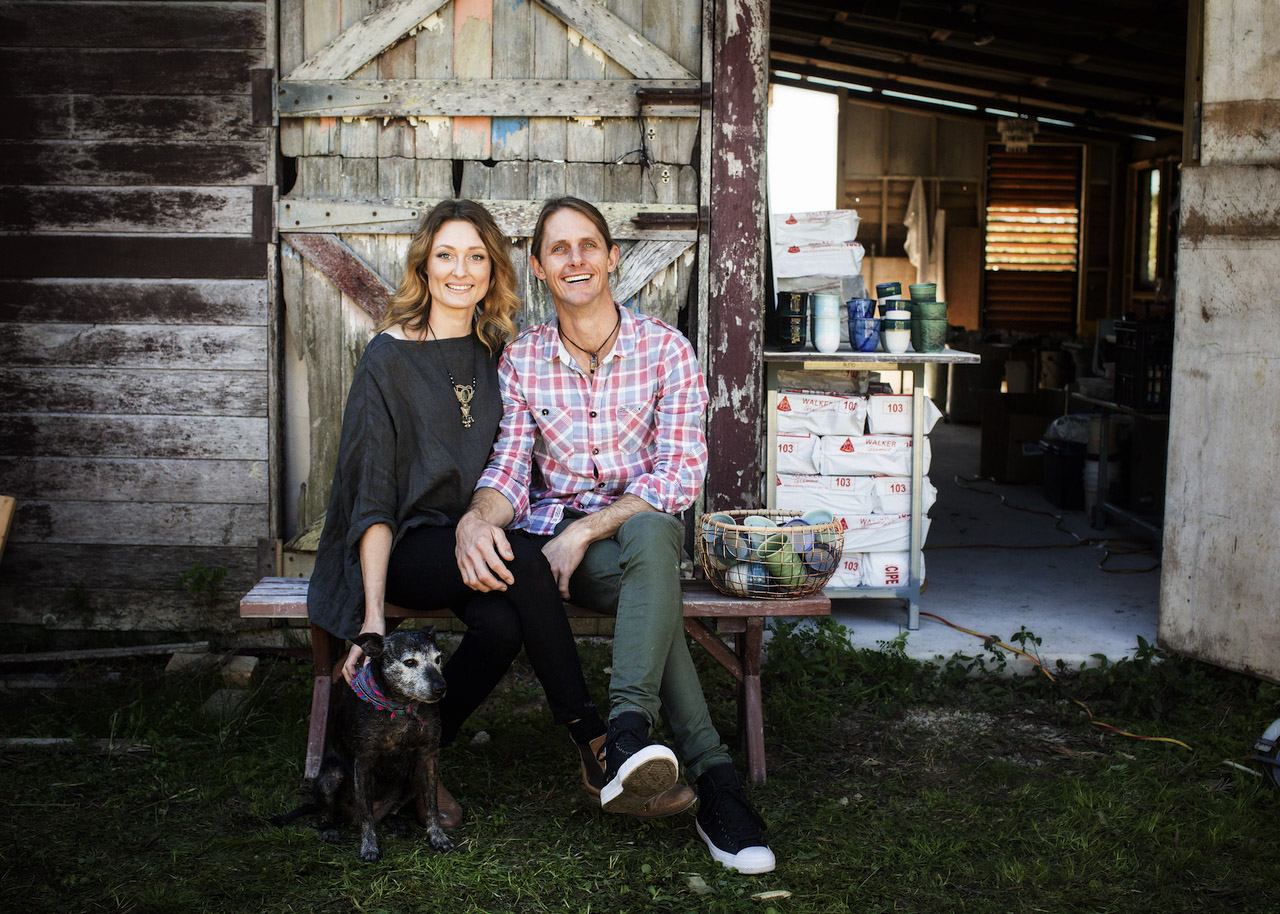
By 2016, we’d moved from the tiny country town of Byfield to the Sunshine Coast, and I was really noticing the massive amount of waste – there were coffee cups piling up in the public bins in our new neighbourhood. I pestered Renton again about making some coffee cups with lids and, after seeing all the waste in our local area, he finally agreed. I came up with some design ideas, colourways and branding and marketing, and together with our friend Stephen Roberts (one of our potters at Pottery for the Planet), through trial and error, we created some beautiful prototypes. We were all so thrilled to see how much people loved the product – cafes were contacting us directly, keen to get the cups on their shelves to help with the coffee cup waste issue.
How is each piece made?
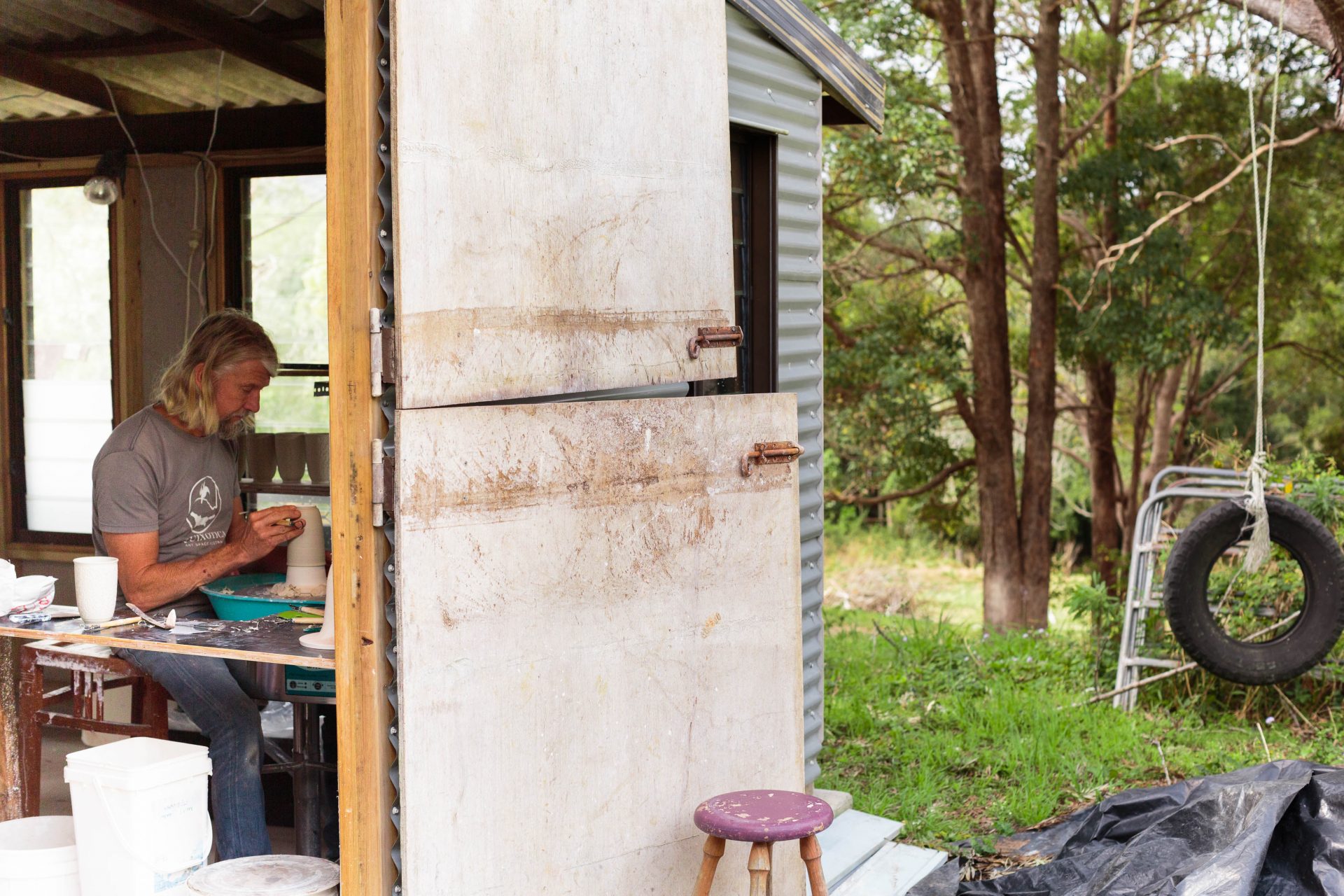
Some of our cups are wheel-thrown and some are made using a mould, but regardless of the technique, each and every one is made by hand. The cups are dried and fired once and then glazed. All of our glazes are our own recipes mixed from pure minerals and tints. The glazed cups are then loaded back into the kilns and fired again where the minerals melt to form the beautiful colours on the surface, and the clay is vitrified and turned to stone. Once the kilns are cooled, the cups are unpacked one by one and hand-sanded, checked, sorted and fitted with their lids. It’s a very hands-on and tactile process from the moment the clay is kneaded by the potters to the time our team packages them up carefully to be sent to customers.
What’s the inspiration behind your gorgeous glazes?
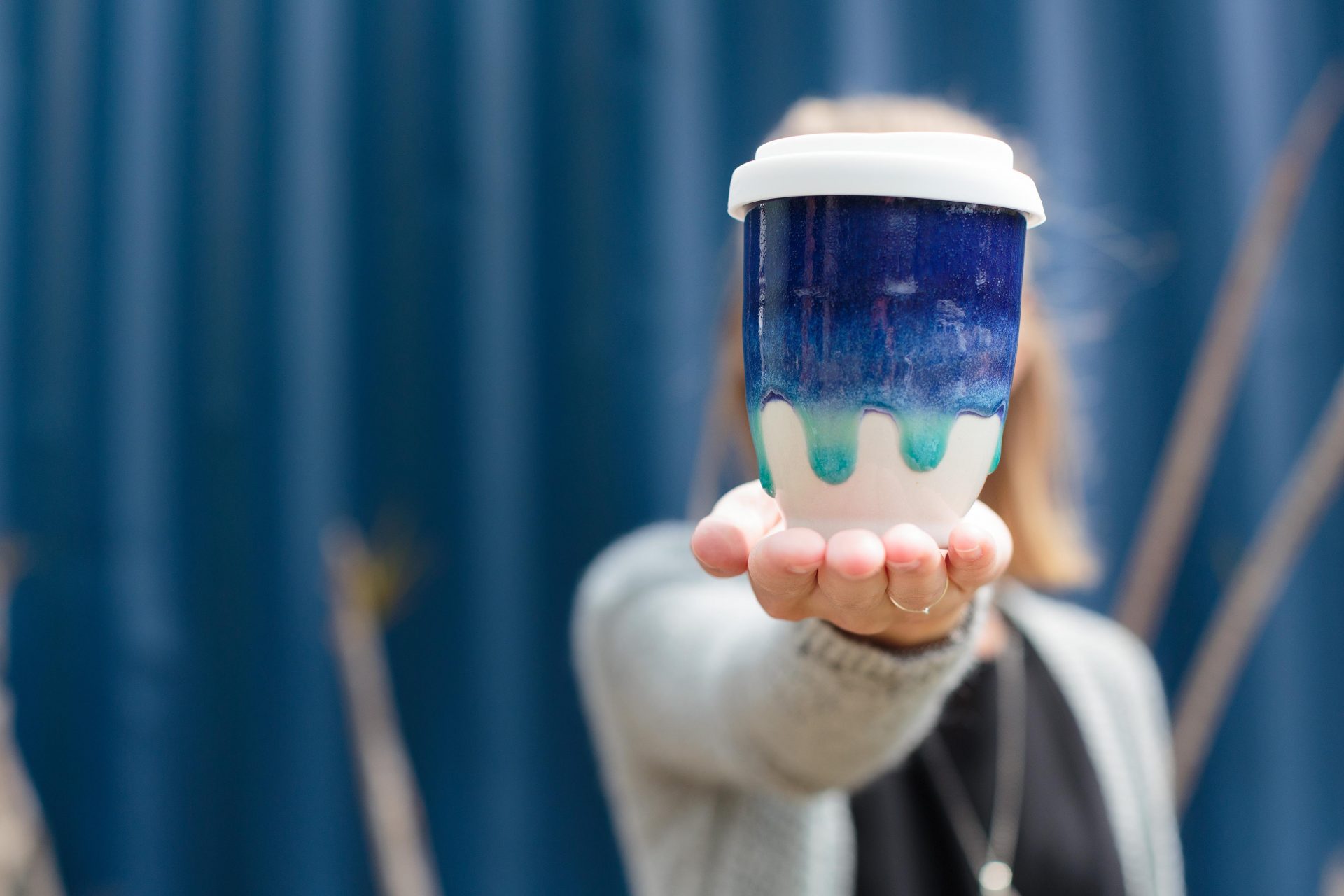
Our glazes mostly come about through an experimental process of mixing different minerals and trying different blends in different layers. The boys are always mucking around popping little experiments into every firing, and we all get so excited when a new colour begins to emerge. Some of the glazes have come about because we’ve wanted to create something inspired by different scenery or places in the natural environment, such as our Coral Dreaming and Ocean Bliss designs, while others have happened because potters are passionate about their glazes and the beautiful effects they can achieve. The boys love to geek out getting the perfect surface and colour using certain types of ingredients, like our Shino Yaki style, for example, which came from Stevie’s love of the Japanese aesthetic.
What’s your workspace like?
Busy and crowded! We’ve been very fortunate to rent a cute old horse stables on a friends property for years. It’s ramshackle and packed to the rafters, and we accommodate all kinds of critters from mice to pythons and possums. Our production area for potting and glazing is very organised and clean and tidy – the boys have pots stacked everywhere at all times and space is limited. The warehouse and dispatch areas are a mishmash of benches and shelves from Gumtree and Ikea. Our much-loved little horse stables is rustic and beautiful and makes a gorgeous backdrop for photos, and we love sitting with a view of the mountain in the paddock while we eat our lunches. It’s a bit of a tight squeeze, so next year we’ll be moving most of what we do into a new bigger shed in Noosa.
What do you love most about what you do?
What I love most is that we’ve created something that’s fun and challenging – we’re doing what we love, but most importantly I feel like we’re helping and giving a little back to Mother Earth. We’ve been working hard trying to help change the culture and make single-use products a thing of the past, and it’s so rewarding to watch people – lots and lots of people – begin to make the change. The other thing I love is all the great people I get to work with. We have an amazing team of very special men and women working with us, as well as a whole string of wonderful stockists.
PHOTOS COURTESY OF POTTERY FOR THE PLANET


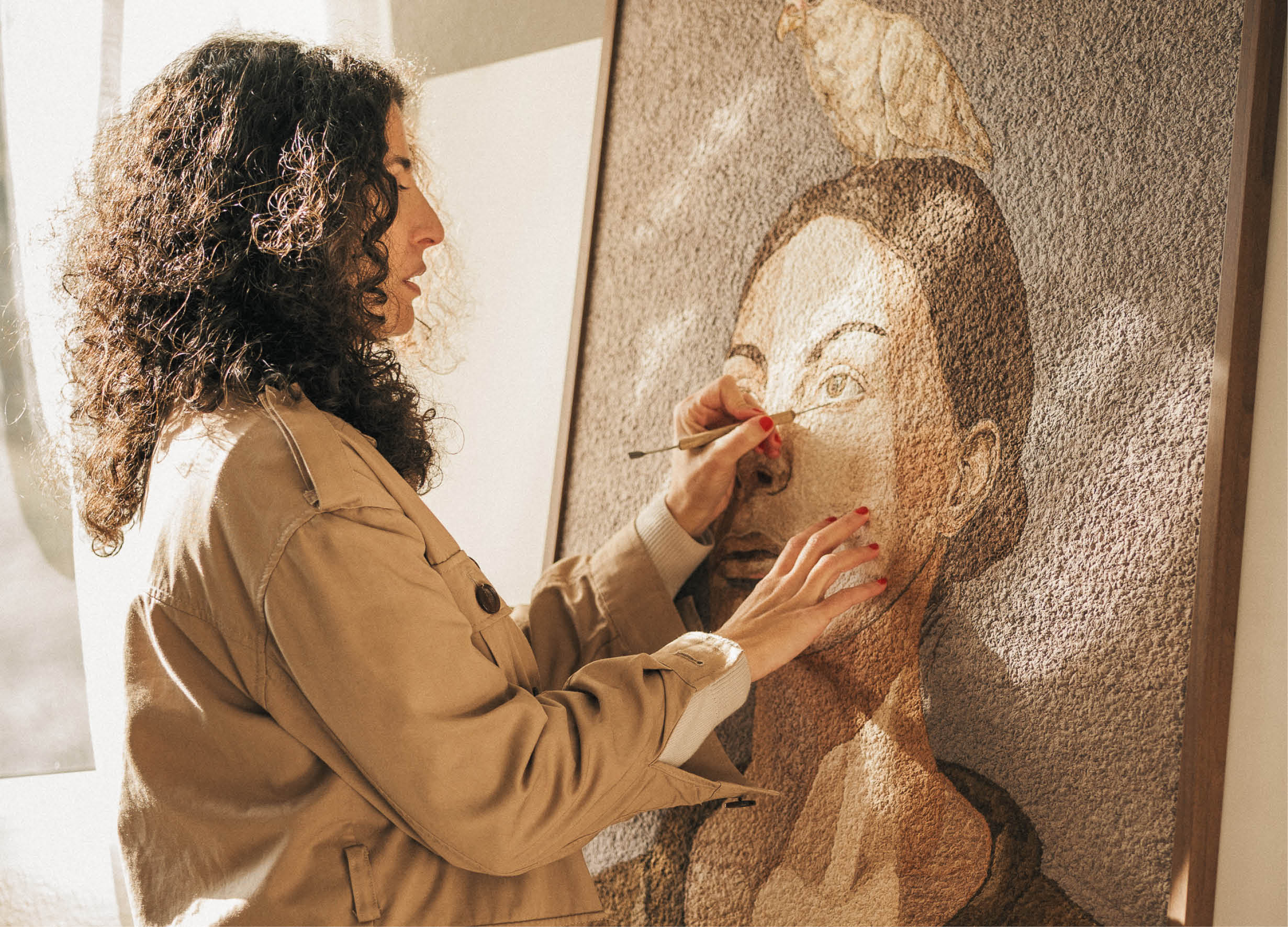
Between 2000 to 2015, global clothing production doubled... while the duration of garment use decreased by 36%.
We are throwing away clothing at a faster rate than ever before. How can we tackle this problem?
✨️ WEAR
Be an outfit repeater - wear your items of clothing as long as possible. Learn to style your garments in various ways. Loved clothing lasts.
✨️ SHARE
If you really need to move it along, share the love with friends - hold a clothing exchange night! Or organise a timeshare with a friend where you swap a few favourite pieces of fashion. If you really can`t find a new home for it, then donate to an op shop or charity.
✨️ CARE
The care of your clothing – washing, drying and ironing – can account for approx 30% of a garment`s total carbon footprint. Hand wash, line dry, wash in cold water, and only wash when necessary.
✨️ REPAIR
Mending – and making – slows down fast fashion buying habits. Repairing used to be common practice, until disposable fashion took over. Extending the life of clothing by just nine months can reduce carbon, water, and waste footprints by 20–30%. Fixing doesn`t need to just be utilitarian – get creative with visible mending!
*Fact from The United Nations Environment Programme
#PeppermintMagazine #WearShareCareRepair #SustainableFashion


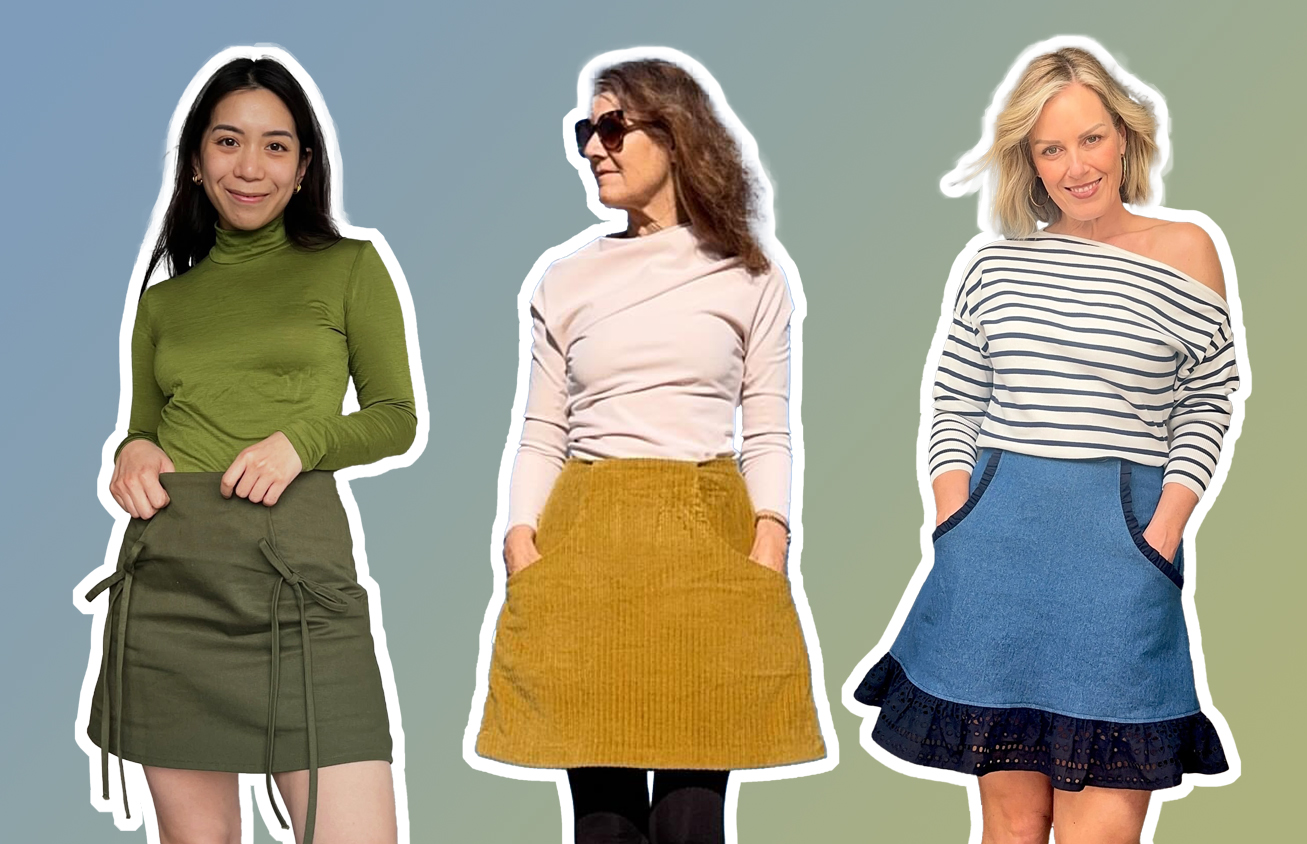
Have you whipped up the Acacia A-Line Skirt yet? 🪡
Accessible to beginner and experienced sewists alike, its classic style makes this skirt a wardrobe staple and a pattern you can happily play on repeat. Curved front pockets and the fun exposed-zip detail at the centre back make this style pop! The Acacia is a blank canvas, awaiting inspiration – add contrast top stitching, trim the pockets with bias binding or even change the length. We’ve chosen the smooth, clean lines that come from facing the waist, with back darts to ensure a neat fit on the hip. *chef’s kiss*
This pattern was made with the support of the lovely folk at @WeftAndWarpFabrics 🫶🏼 The team at Weft and Warp graciously sent three sewists the fabric of their choice to whip up their own Acacia A-Line – the results are super sweet!
Head to our website to see the makes from @The.Sewcialite @HandmadeByCarolyn and @You_CanSew - link in bio!
#PeppermintAcaciaAlineSkirt #PeppermintPatterns #WeftAndWarpFabrics #MeMade

Polka dots for days…
We love this Tansey Top by @_Rubys_Threads_ - the ultimate simple but stylish top you need in your rotation now!
Pattern: #PeppermintTanseyTop
Fabric: Japanese cotton @RawFibre
#MeMade #PeppermintPatterns

How`s your long weekend going? Working hard on your PhD? 🪡✂️🧵
Image from JoellsLeatherWorks on @Etsy
#ProjectsHalfDone #SewingPile #ProjectPile

In case no-one has told you lately, Emma Giacalone says you`re a good egg. (And we happen to agree).
This incredible mini egg embroidered 3D artwork was created by @Emma_Giacalone_Textiles, a textile artist in Gloucestershire, UK.
"When we buy an item of clothing, a label is attached telling us how to look after it to keep it at its very best. My mission is to create little care instructions to help to remind us to lead our happiest life."
INGREDIENTS: Freehand machine embroidered onto 100% cotton, using Egyptian cotton thread, and wool felt backing.
#EasterArt #GoodEgg #TextileArt

No ordinary wrap dress! 💃
Wrap dress wardrobe malfunction? Not with the Peppermint Waratah Wrap Dress pattern! We designed the Waratah to make sure this never happens.
Enjoy a few BTS videos from this super fun shoot. Maybe some inspo for Easter weekend sewing?
MODELS/SEWISTS: @Melt.Stitches, @KatieMakesADress @Tricky.Pockets @Laura_The_Maker
Head to the link in bio for the #PeppermintWaratahWrapDress 🪡
#PeppermintPatterns #SewingPattern #MeMade #WrapDress
