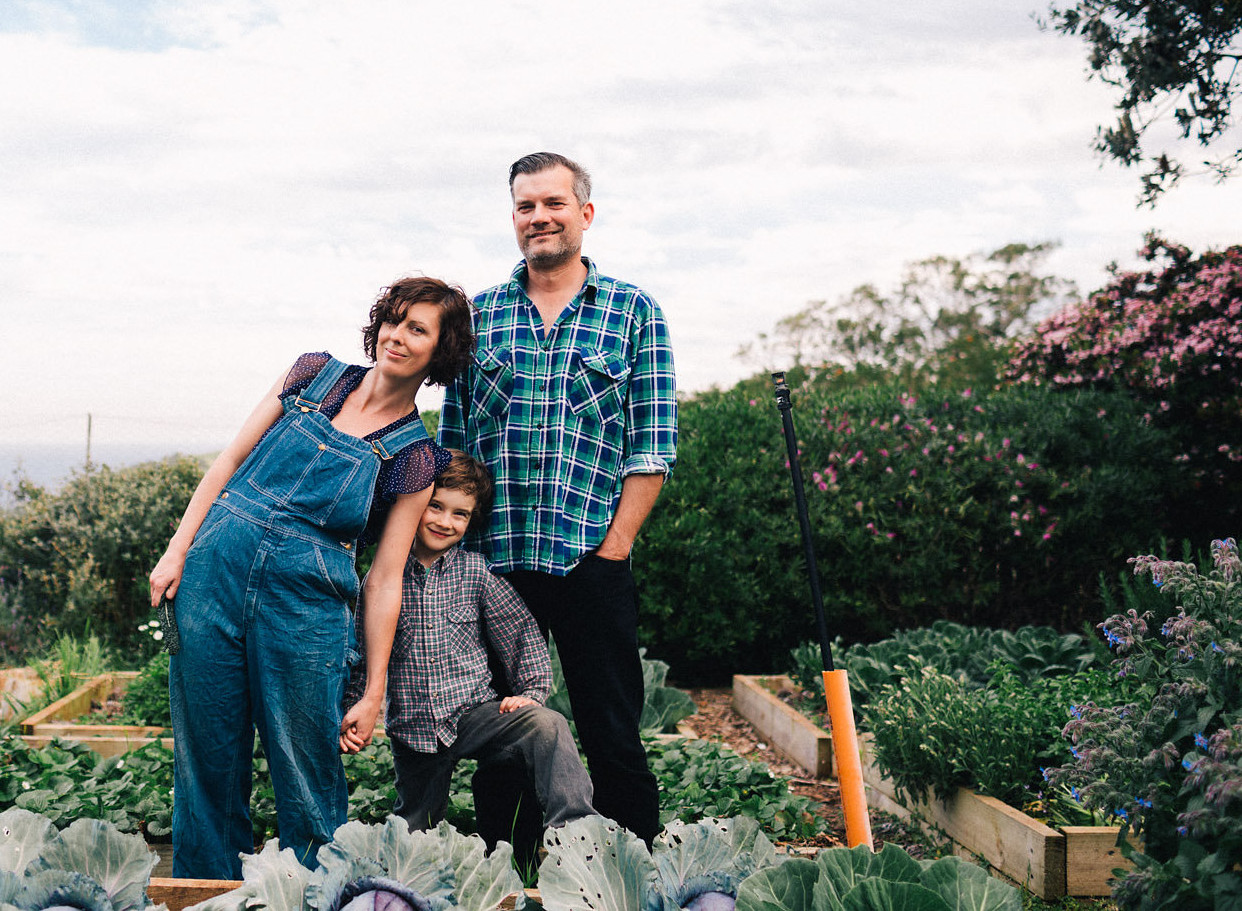
As we have stumbled our way through this pandemic, past supermarket shortages and panic buying, it’s become evident just how important food security is and how self-sufficiency may provide the answer.
Enter: the permaculture lifestyle. More than just ‘backyard gardening’, permaculture is an attitude that can reap many rewards. Sure, it won’t happen overnight (what does?) but there are many low-hanging fruits we can all pick by allowing the permaculture principles to guide our thinking, our choices, and ultimately our newly formed positive habits.
So… where do we begin with permaculture?
Nick Ritar is the co-founder and primary educator at Milkwood Permaculture, one of the OG Australian permaculture education organisations that is “dedicated to teaching and sharing permaculture skills, for living like it matters”. Milkwood has been teaching everything from permaculture design to mushroom cultivation for more than 13 years – and currently also runs live programs online – and boasts a strong team including ecologist and permaculture co-originator David Holmgren.
“When I first discovered permaculture, I considered myself environmentally aware,” Nick says. “I had been a vegan for some time and I was reducing my waste.”
However, for Nick at least, sustainability had always been painted as a way of “stopping negative behaviour”; a constant portrayal of humans as the problem. “That idea is pervasive and can be ineffective – people get down about it,” he says.
He discovered that permaculture, as a way of living, goes far beyond just growing your own food and was drawn to its three guiding principles: earth care, people care and fair share.
“We are part of nature, so if we can get in sync with nature the outcomes are really positive for everyone,” Nick says. “We get to live a better life, not because we are trying to reduce our waste, but because we’re making habits that bring us joy and that are interlinked.
“The question we [need to] ask is, ‘How can I create the most beautiful set of habits that makes something like buying a product in a disposable packet seem out of place?’, like a note that’s off-key. It doesn’t take long before the new habits start to add up and interlock, and the things which don’t align become a pain point to solve.”
Part of the transition to a permaculture lifestyle is about starting with small, slow solutions. “Never go for big, fast change, as there’s more of a chance it will backfire,” Nick shares. “[When you are] trying to implement change in a culture, the only way forward is the long game. It’s not about worrying about one instance, but about focusing on how we can gradually shift into a positive, harmonious culture.”
So… how can you get started at home?
With many of our daily routines thrown out the window, now is a great time to start new positive habits. Whether you’re renting, own your own place, live in an apartment, or are just time-poor, here are Nick’s top low-investment actions we can all take on any stage of our permaculture journey.
Grow some greens
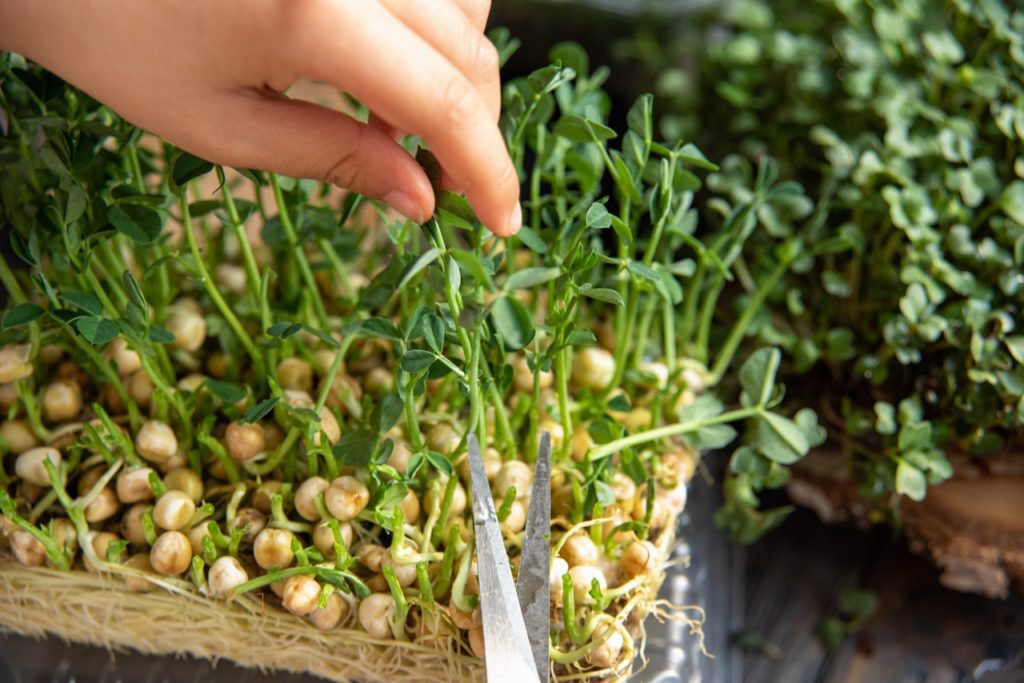
From sprouts in a jar, to microgreens in a seedling tray on the kitchen windowsill, to lettuce planted in the backyard, greens are the top grow-your-own produce for their nutrient density and money-saving factors. Once you start, growing greens can quickly become a regular habit as you plant and harvest over and over.
“Greens are the most nutrient-dense foods and some of the hardest to store, so eating freshly picked is best,” Nick says. “Per kilo they are very expensive, and they drag you into the shop regularly because they don’t keep long.”
By managing your expectations and setting your sights lower, Nick says “knowing you’ll get a good return on your work, which will in turn steward your enthusiasm.”
Rethink your transport habits
While you wouldn’t normally think transport had anything to do with permaculture, the benefits of taking public transport or jumping on your bicycle go beyond just cutting emissions or getting exercise.
“There are multiple benefits you get [when you stop] driving a car, like engaging with your local community and getting to know your neighbours,” Nick says. “This [can] then lead to conversations about sharing your greens!”
Resprout your veggies
You may have seen photos of people’s kitchen benches with little dishes, jars and trays filled with vegetable off-cuts. This is an easy and free way to grow more veggies, in very little space. Carrots and herbs are a great place to start, and you can plant onions and leeks straight away with the roots still intact.
Commit to making your lunch each day
According to Nick, this is a powerful habit to form. “Our everyday food choices are very important – where our food comes from is really critical,” Nick says.
“People end up in a food court eating bad food – that’s costing a lot, both for their health and the environment, and the experience is left behind after you leave. Making your own lunch each day for work gets you into using your own reusable containers, and is a great way to tie in your new habit of growing greens.”
“The message is slowly getting through, but we all need to be aware of social constructs too and remember that the most important resource to bring our lives value is community.”
At the end of the day, the journey to living self-sufficiently is one that’s best shared. Maybe you’re working to reduce your waste and trying to cut plastic from your life, but the people around you don’t seem to be getting the message. Even after running a permaculture education business for many years, Nick says when he and wife Kirsten had their son they were still showered with plastic toys from the family.
“The message is slowly getting through, but we all need to be aware of social constructs too and remember that the most important resource to bring our lives value is community,” he says.
“It’s about letting go of the black-and-white about stuff: being forgiving but also living through your values.”
WORDS: ASHLEIGH STALLARD IMAGES: MILKWOOD








Between 2000 to 2015, global clothing production doubled... while the duration of garment use decreased by 36%.
We are throwing away clothing at a faster rate than ever before. How can we tackle this problem?
✨️ WEAR
Be an outfit repeater - wear your items of clothing as long as possible. Learn to style your garments in various ways. Loved clothing lasts.
✨️ SHARE
If you really need to move it along, share the love with friends - hold a clothing exchange night! Or organise a timeshare with a friend where you swap a few favourite pieces of fashion. If you really can`t find a new home for it, then donate to an op shop or charity.
✨️ CARE
The care of your clothing – washing, drying and ironing – can account for approx 30% of a garment`s total carbon footprint. Hand wash, line dry, wash in cold water, and only wash when necessary.
✨️ REPAIR
Mending – and making – slows down fast fashion buying habits. Repairing used to be common practice, until disposable fashion took over. Extending the life of clothing by just nine months can reduce carbon, water, and waste footprints by 20–30%. Fixing doesn`t need to just be utilitarian – get creative with visible mending!
*Fact from The United Nations Environment Programme
#PeppermintMagazine #WearShareCareRepair #SustainableFashion


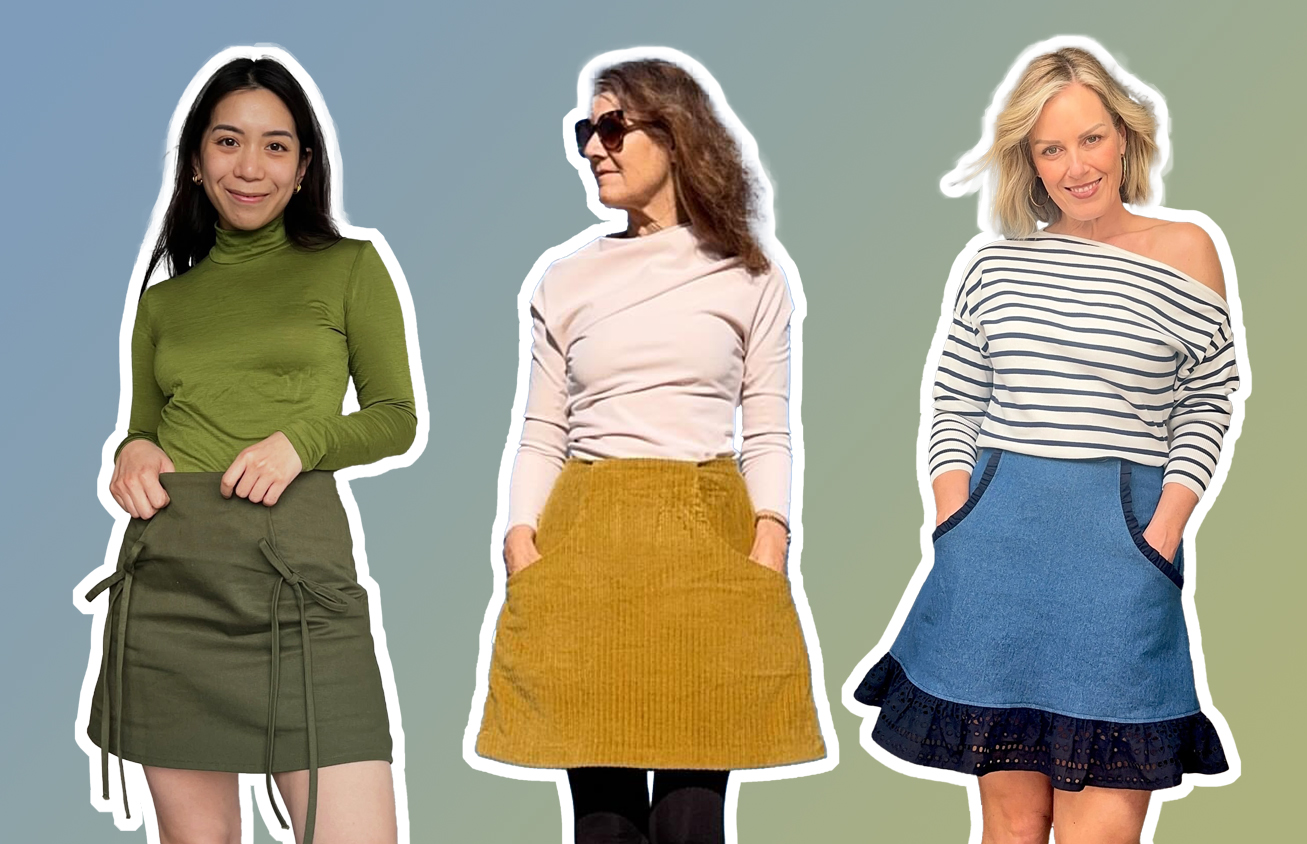
Have you whipped up the Acacia A-Line Skirt yet? 🪡
Accessible to beginner and experienced sewists alike, its classic style makes this skirt a wardrobe staple and a pattern you can happily play on repeat. Curved front pockets and the fun exposed-zip detail at the centre back make this style pop! The Acacia is a blank canvas, awaiting inspiration – add contrast top stitching, trim the pockets with bias binding or even change the length. We’ve chosen the smooth, clean lines that come from facing the waist, with back darts to ensure a neat fit on the hip. *chef’s kiss*
This pattern was made with the support of the lovely folk at @WeftAndWarpFabrics 🫶🏼 The team at Weft and Warp graciously sent three sewists the fabric of their choice to whip up their own Acacia A-Line – the results are super sweet!
Head to our website to see the makes from @The.Sewcialite @HandmadeByCarolyn and @You_CanSew - link in bio!
#PeppermintAcaciaAlineSkirt #PeppermintPatterns #WeftAndWarpFabrics #MeMade

Polka dots for days…
We love this Tansey Top by @_Rubys_Threads_ - the ultimate simple but stylish top you need in your rotation now!
Pattern: #PeppermintTanseyTop
Fabric: Japanese cotton @RawFibre
#MeMade #PeppermintPatterns

How`s your long weekend going? Working hard on your PhD? 🪡✂️🧵
Image from JoellsLeatherWorks on @Etsy
#ProjectsHalfDone #SewingPile #ProjectPile

In case no-one has told you lately, Emma Giacalone says you`re a good egg. (And we happen to agree).
This incredible mini egg embroidered 3D artwork was created by @Emma_Giacalone_Textiles, a textile artist in Gloucestershire, UK.
"When we buy an item of clothing, a label is attached telling us how to look after it to keep it at its very best. My mission is to create little care instructions to help to remind us to lead our happiest life."
INGREDIENTS: Freehand machine embroidered onto 100% cotton, using Egyptian cotton thread, and wool felt backing.
#EasterArt #GoodEgg #TextileArt

No ordinary wrap dress! 💃
Wrap dress wardrobe malfunction? Not with the Peppermint Waratah Wrap Dress pattern! We designed the Waratah to make sure this never happens.
Enjoy a few BTS videos from this super fun shoot. Maybe some inspo for Easter weekend sewing?
MODELS/SEWISTS: @Melt.Stitches, @KatieMakesADress @Tricky.Pockets @Laura_The_Maker
Head to the link in bio for the #PeppermintWaratahWrapDress 🪡
#PeppermintPatterns #SewingPattern #MeMade #WrapDress
