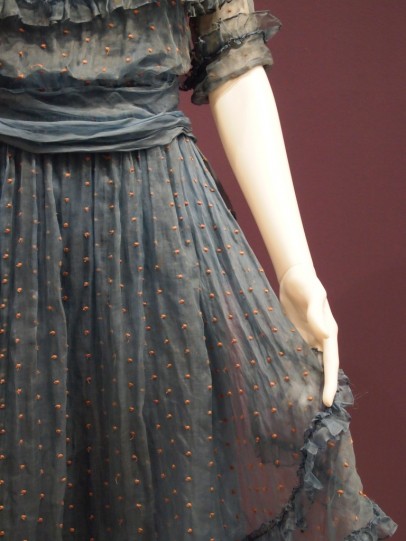







From the fashions of Peru to the garments of Switzerland, there are more than a few common threads that link the wonderful world of clothing. The Liverpool City Library’s latest exhibition, United By Colour: Vintage Fashion From Around the World, investigates the element of colour. The 60 garments and accessories on display are vibrant, vivid and all part of the Darnell Collection, Australia’s largest private collection of vintage clothing. Around 23 different countries are represented, all with their own colourful histories to tell. We asked the curator of the Darnell Collection, Charlotte Smith, to tell us more about this exhibition and the beautiful clothes it includes.
This exhibition is themed around ‘colour’. What can colour symbolise or reflect in fashion?
Colour can symbolise economic prosperity or pessimism, world events (like world wars), cultural and social traditions, seasons, national pride, social events, roles in society and a persons social position among many reasons.
Do you think that fashion can be a universal language?
Yes, but I think fashion is interpreted to suit each country. For example, by the early 50s every woman wanted to wear Dior’s New Look, a very feminine and European style, suited to wools and heavy silks. When he licensed his designs for manufacture in Australia, different fabrics were used to suit the Australian climate – lighter in weight and in colours suitable for seasons in the Southern Hemisphere.
How do you feel about the Collection being on public display? Do you think it’s important to share it with others?
My godmother, Doris Darnell, from whom I inherited the collection, was passionate about sharing the clothes and their stories. I am as passionate about this too. Fashion is not only about beautiful clothes and accessories, but it is about social history and, in the case of the Darnell Collection, recording women’s progress in society over the past 200 years by what they wore.
Apart from making a fashion statement, what do you think are some of the benefits of buying vintage clothing?
Wearing vintage means you can dress as an individual, secure in the knowledge you won’t see someone else wearing the same outfit. Buying vintage is also an environmental choice – reducing the number of garments ending up in the tip. But for me, buying vintage continues the life of a dress or hat or handbag – a rather nostalgic thought!
Do you have a favourite piece in the Collection – anything you wish you could keep for yourself!?
Rather than having a favourite piece – difficult to choose one thing from 6000+!, but I do love the sixties fashions. I have some wonderful pieces by Pucci, Courreges, Guy Meliet and many without labels, all from the 60s and made from a wonderful diversity of fabrics from polyester to wool to PVC. I would like to keep all of these.
You can see part of the Darnell Collection on show until November 20 at Liverpool City Library. Its pre-loved clothing at its absolute finest!
Brighten up your inbox with our not-too-frequent emails featuring Peppermint-related news, events, competitions and more!
explore
We look forward to connecting with you.