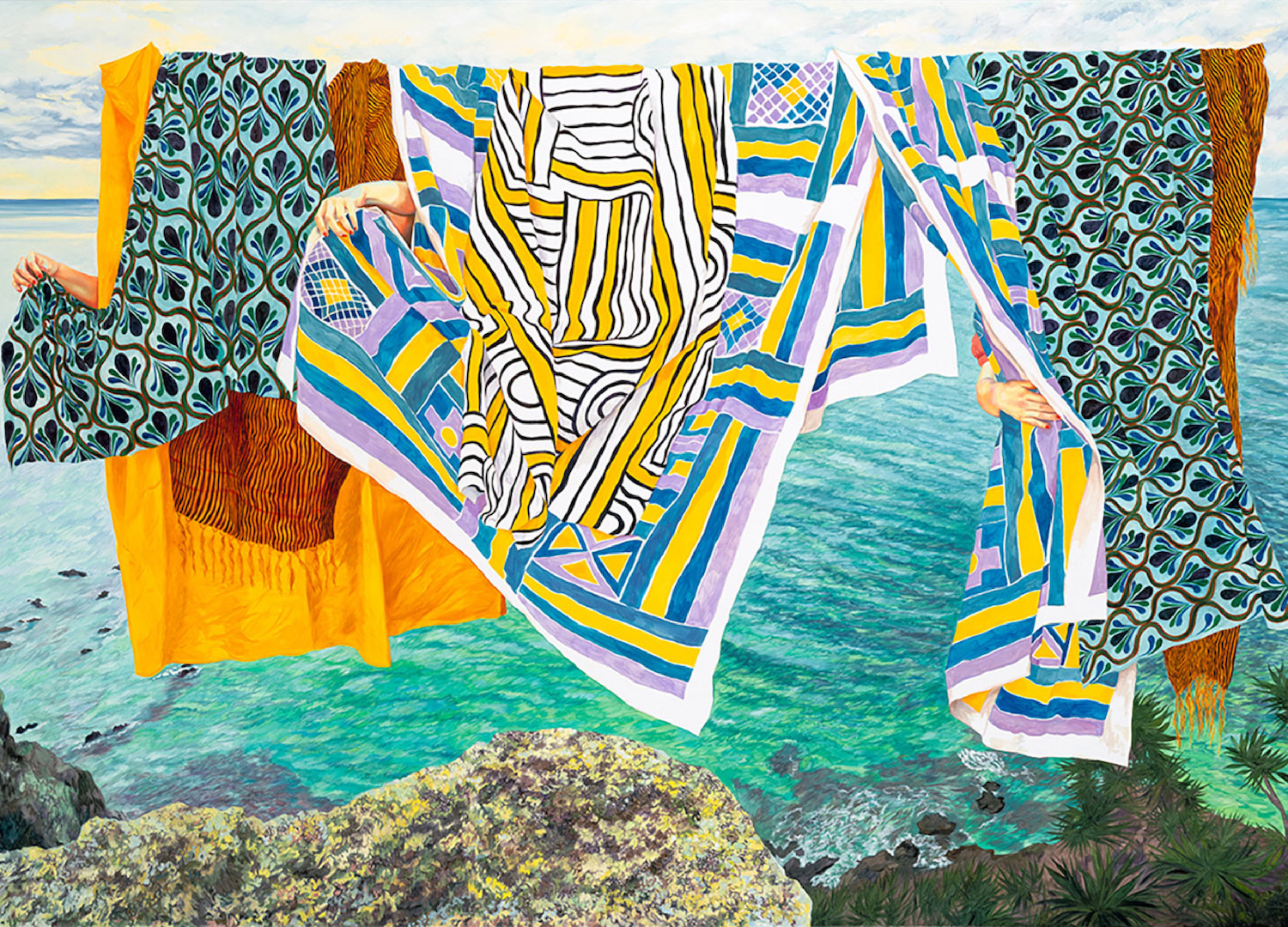
photos JAN MURPHY GALLERY above THE SEA BY MONICA ROHAN
A powerful force for change, art can make a deep and moving impact on our hearts and minds. With so many talented creatives in Australia moving and shaking to make the world a better place – and because Earth without art is just ‘eh’ – we’ve introduced a new digital series called Art with Heart to showcase the superstars in our local art scenes.
The latest work from Brisbane-based artist Monica Rohan tells a story of climate uncertainty. Known for her intimate and intricate style, she cloaks vast Australian vistas with vintage textiles in a new series of oil paintings called Disappearing Act, showing at Jan Murphy Gallery from 26 April to 13 May.
“Disappearing Act examines feelings of anxiety and concern toward landscapes under threat,” Monica says. “In these paintings, curtains of patterned textiles are drawn back by disembodied hands, creating portals to seemingly idyllic environments beyond. Against the depth of these vistas, the fabrics flatten into abstract designs that hinder and distract the eye, drawing attention to the way paintings mediate our experience of the landscape. This tension between the textiles and what they conceal transforms the landscape into an ambiguous, uncanny space that oscillates between anxiety and calm.”
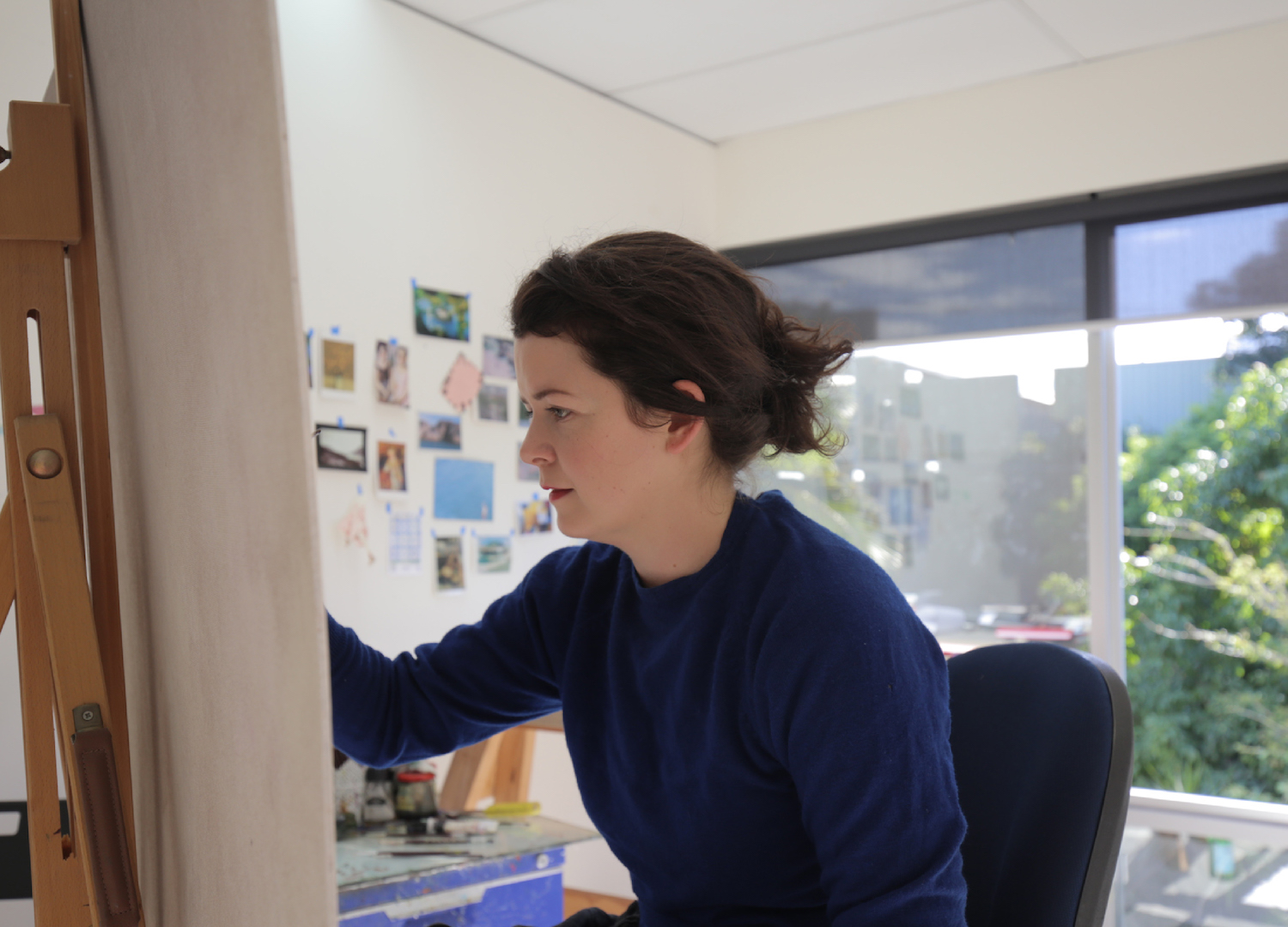
How did you come to be an artist?
I was always obsessed with drawing and painting and my parents supported and encouraged my interest. As a kid, it was a great way to while away the many hours waiting for my big brothers’ cricket games to end. At high school, I had a superb art teacher who communicated the value of critical thinking through art, and who championed me to continue studying art at uni. Since graduating, I’ve been very lucky to be supported by the excellent Jan Murphy Gallery in Brisbane and Sophie Gannon Gallery in Melbourne.
I enjoy getting lost in the expanding patterns I paint; it’s very meditative for me.
Tell us about your creative process…
I spend a lot of time out in the landscape gathering images, as well as exploring op-shops and antique stores for clothes, tablecloths and fabric remnants. I plan compositions by roughly collaging images together. In the studio, I have a fairly traditional oil painting practice. I enjoy getting lost in the expanding patterns I paint; it’s very meditative for me.
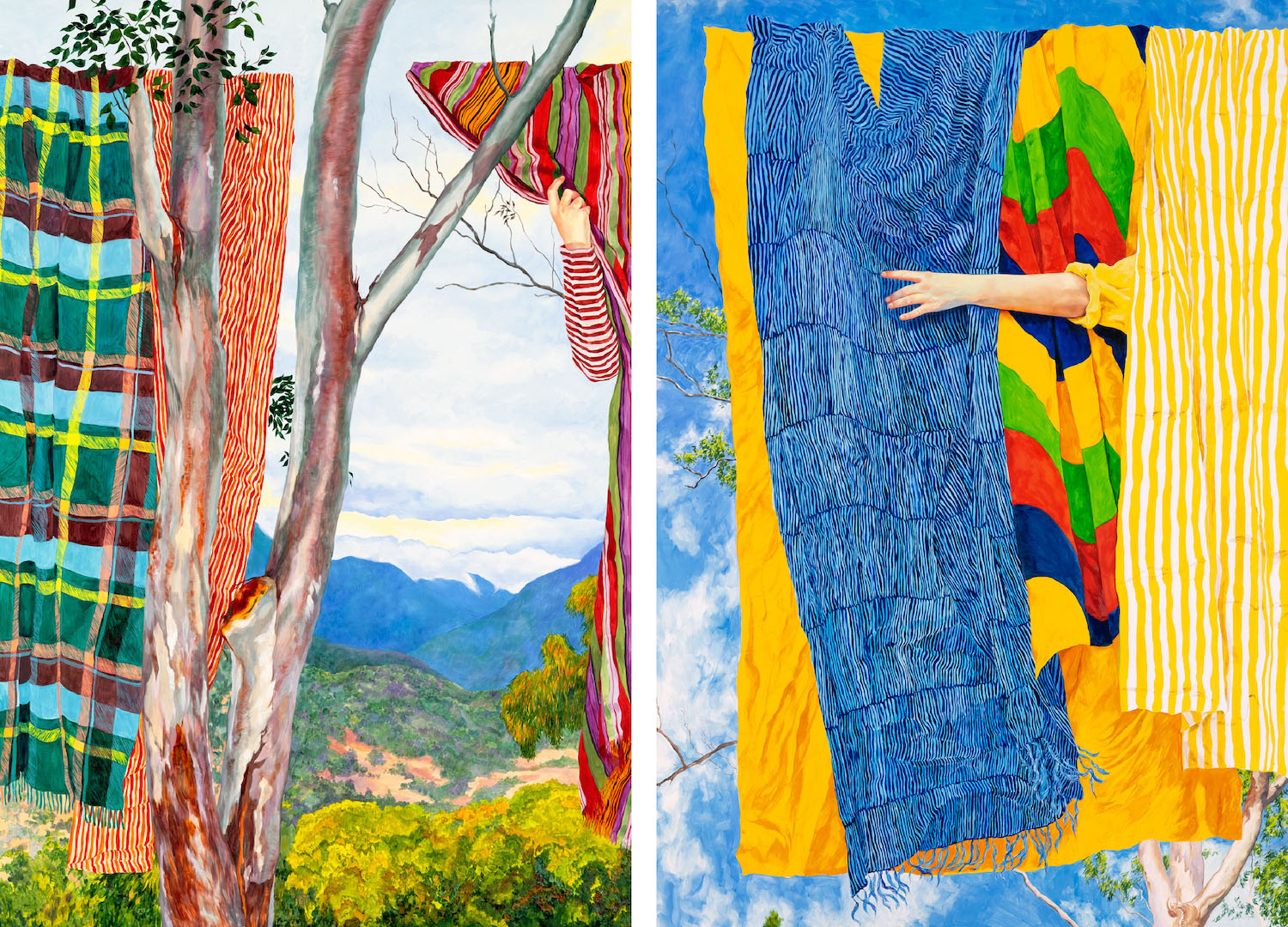
left RIDGE BETWEEN MOUNTAINS BY MONICA ROHAN right TAKEOVER BY MONICA ROHAN
Where do you find inspiration?
Being in nature is a huge inspiration; my husband and I do a lot of hiking and camping. In contrast, I also draw a lot from my domestic environment – the comfort and familiarity of home. I also visit as many different local exhibitions as I can, there’s a lot of vitality in the Brisbane art community that can be a huge boost when you’ve been cooped up alone in the studio.
READ MORE – Art with Heart: Can a Single Photo Help Protect the Natural World?
What motivates you to create?
Being an artist is my dream career, but it’s still a job and having the structure of regular exhibitions really helps to get me into the studio every day. Paintings start long before the brush touches the canvas; I have new ideas brewing months in advance and there’s an excitement and anticipation to finally realising them as a painting that is very addictive.
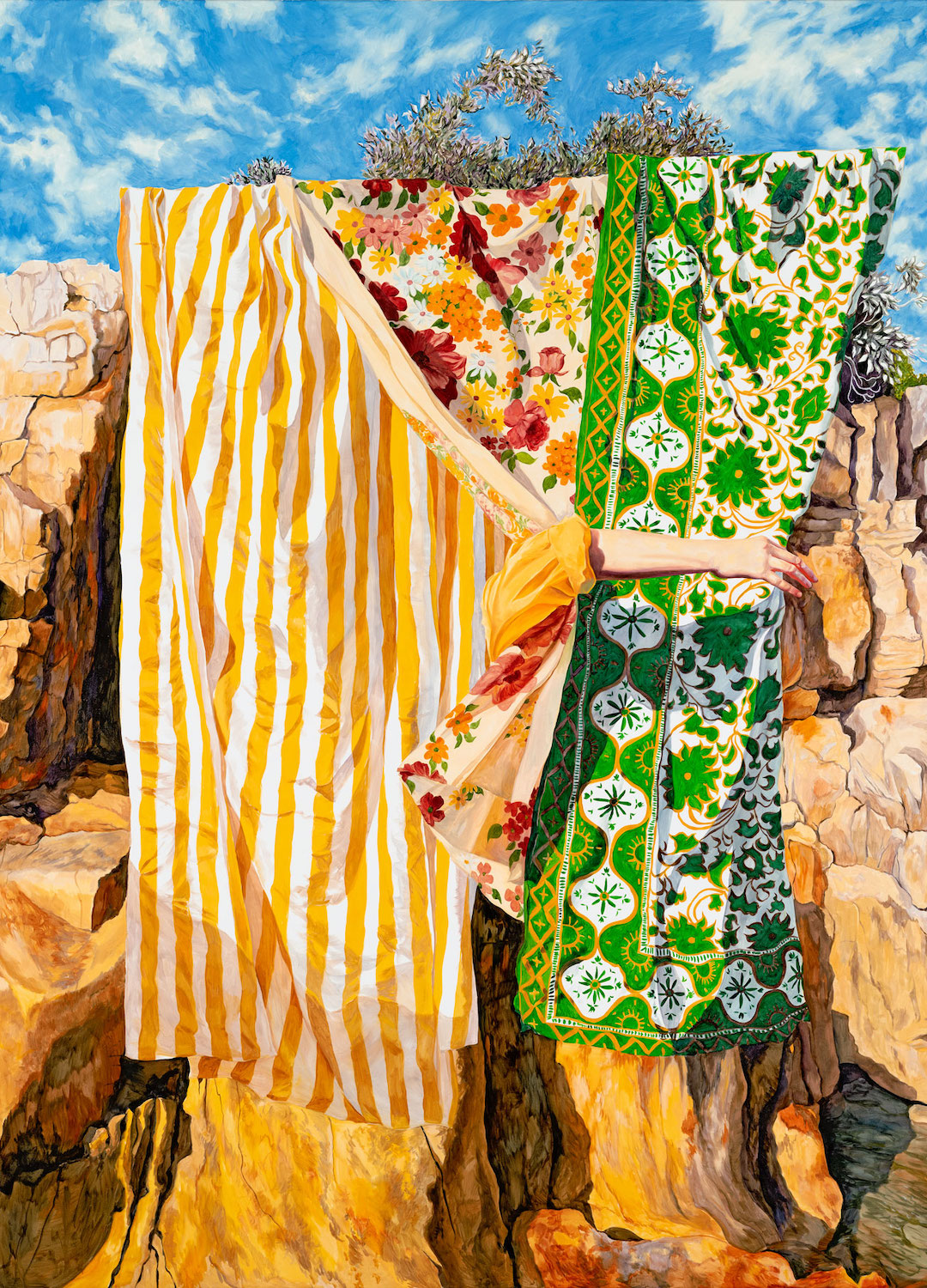
above INTERFERENCE BY MONICA ROHAN
Has your style/practice changed over time?
It’s evolved quite organically; there are visible strands you can see weaving in and out over time. Patterns in nature and textiles, self-portraiture and surrealist tendencies all reoccur. Early on, my subjects floated on a white background, so incorporating landscapes to fill the surface was a big transition. Recently, I have been making much larger works on canvas and I’m really enjoying the shift in scale.
I wouldn’t want to imagine a society without art, of all kinds. It’s a way of storytelling, sharing and experiencing different perspectives.
Is there something you can’t live without in your studio?
I listen to a lot of podcasts while I work – it helps to keep distracting thoughts at bay and occupy the part of my mind that isn’t making the decisions while I paint. It’s nice to feel as though you’re learning something too. Also big windows for light and breeze and having a connection to the outside world.
Why do you think art is important to society?
I wouldn’t want to imagine a society without art, of all kinds. It’s a way of storytelling, sharing and experiencing different perspectives.
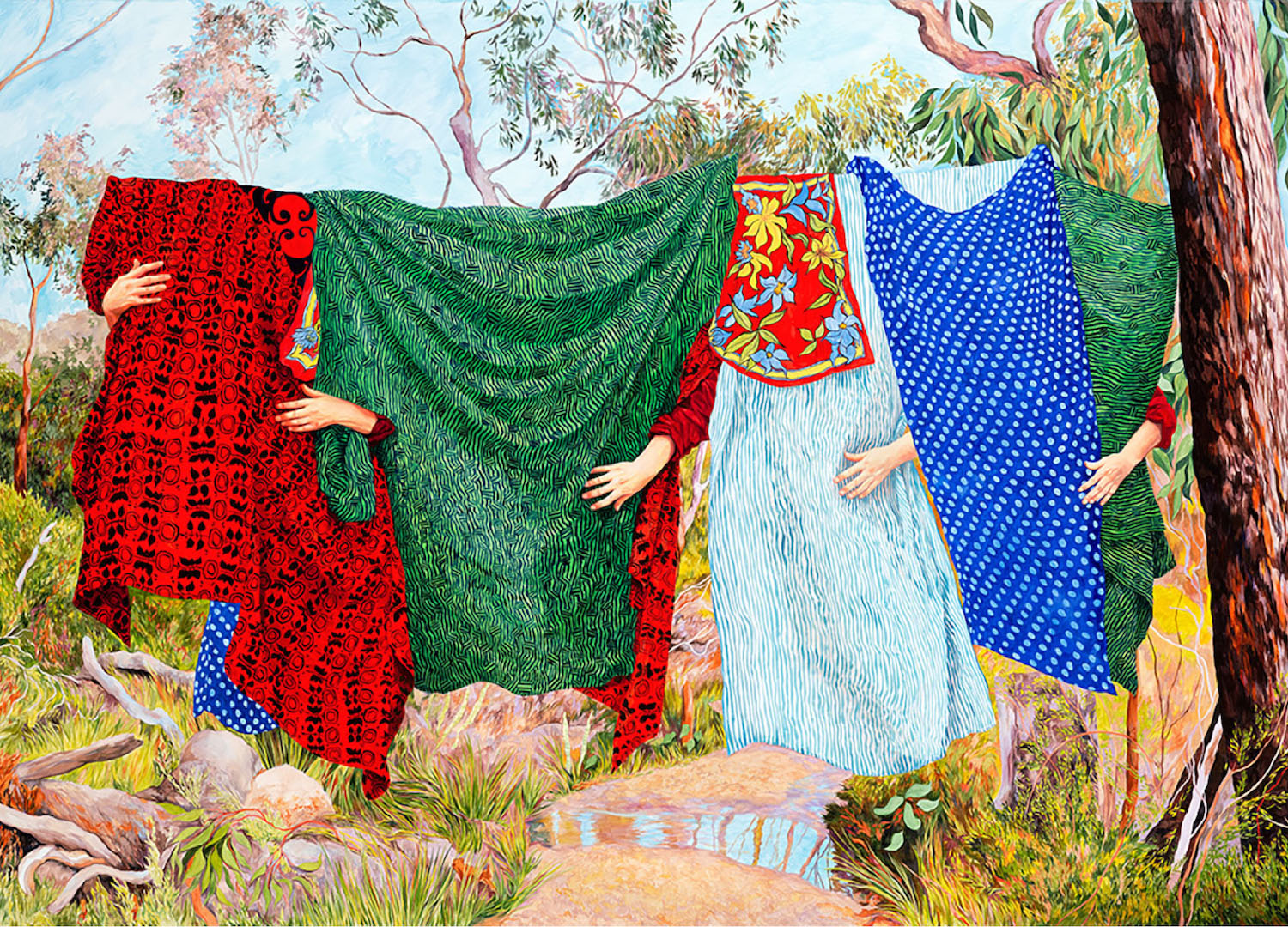
above THE TRACK BY MONICA ROHAN
What could society do to better support artists?
I think a great initiative recently is the ‘Arts are Newsworthy’ petition by the artists Nina Sanadze, Mia Salsjö and Tai Snaith. It’s a campaign to have the arts included as part of daily news segments which I think is an important first step in acknowledging the value and enrichment art contributes to everyday life.
What are you working on currently that excites you?
I have been planning some nocturnes/night scenes which I’m excited to start painting. The darkness presents so many new challenges for me that I look forward to exploring.
Who are your biggest artistic influences?
I’m influenced a lot by my peers: painters such as Dana Lawrie, Holly Anderson and my gallery mate Lucy Culliton. More broadly artists like Cressida Campbell, Grace Cossington Smith and everything from Edouard Vuillard and Paula Rego to Erwin Wurm and Pipilotti Rist.
What would be your dream project/ultimate goal?
Just being able to keep doing what I do – longevity please! I’d love to do a hefty book one day. Currently, I’m trying to organise some international residencies.
WANT MORE ART CONTENT? RIGHT THIS WAY