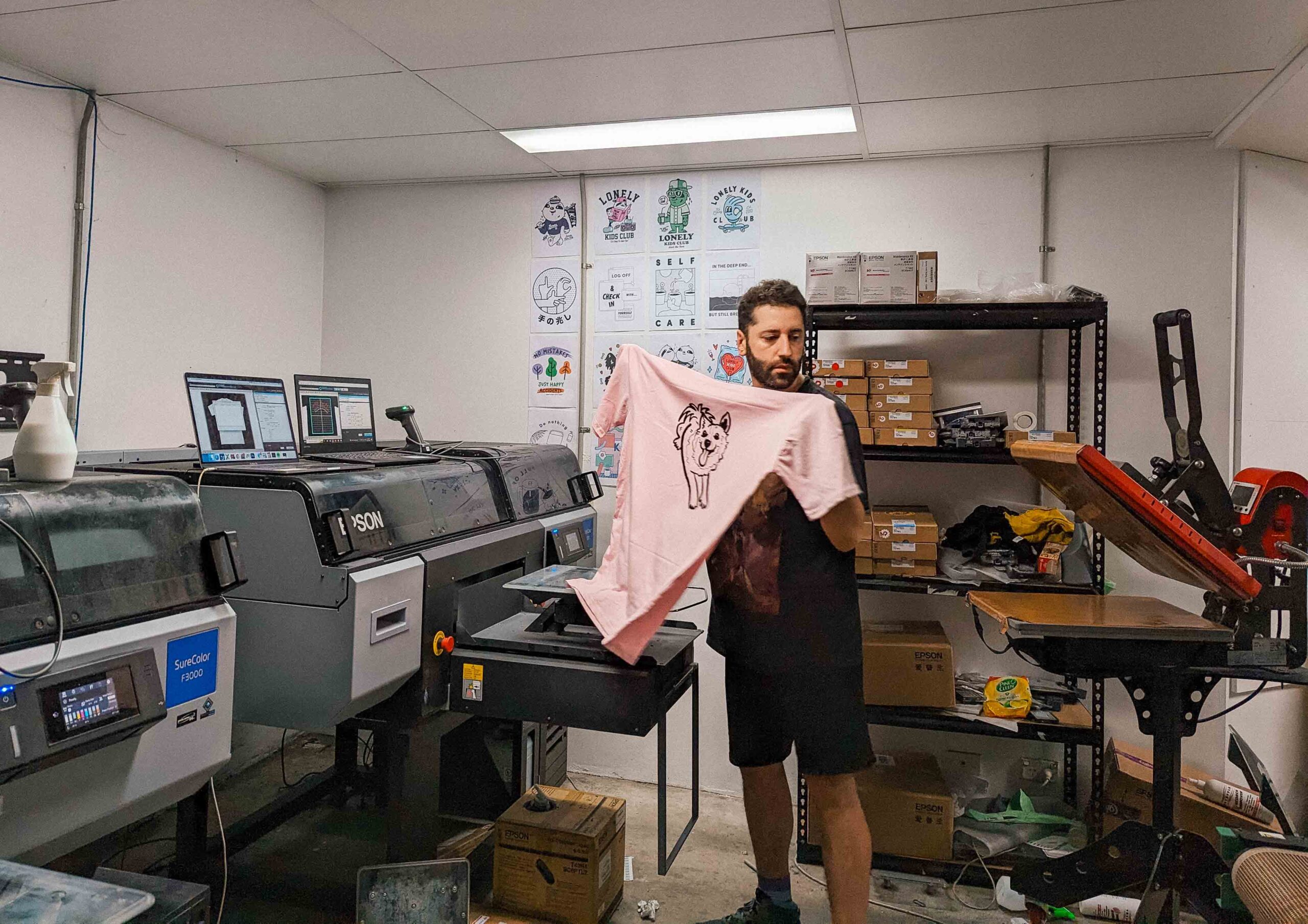
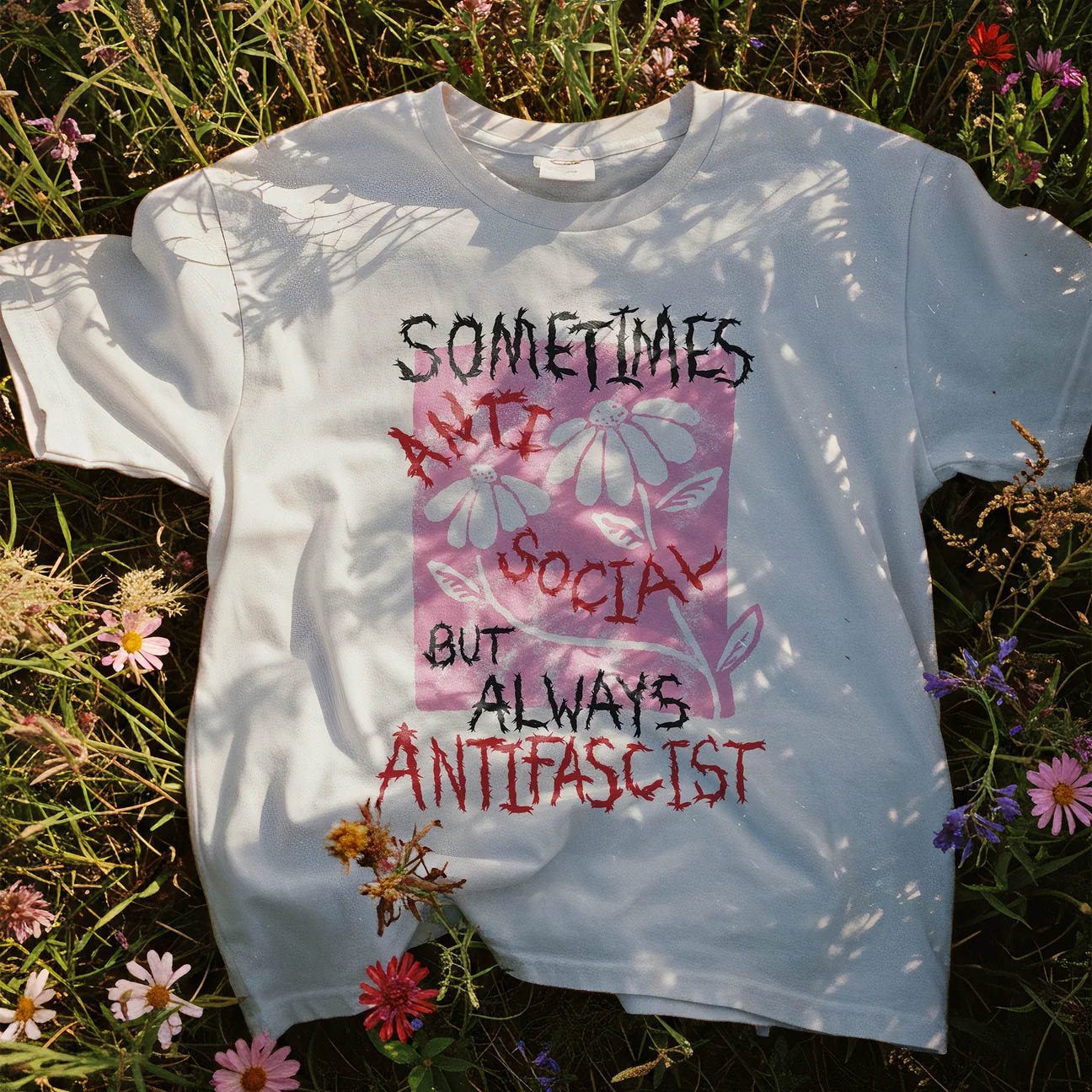
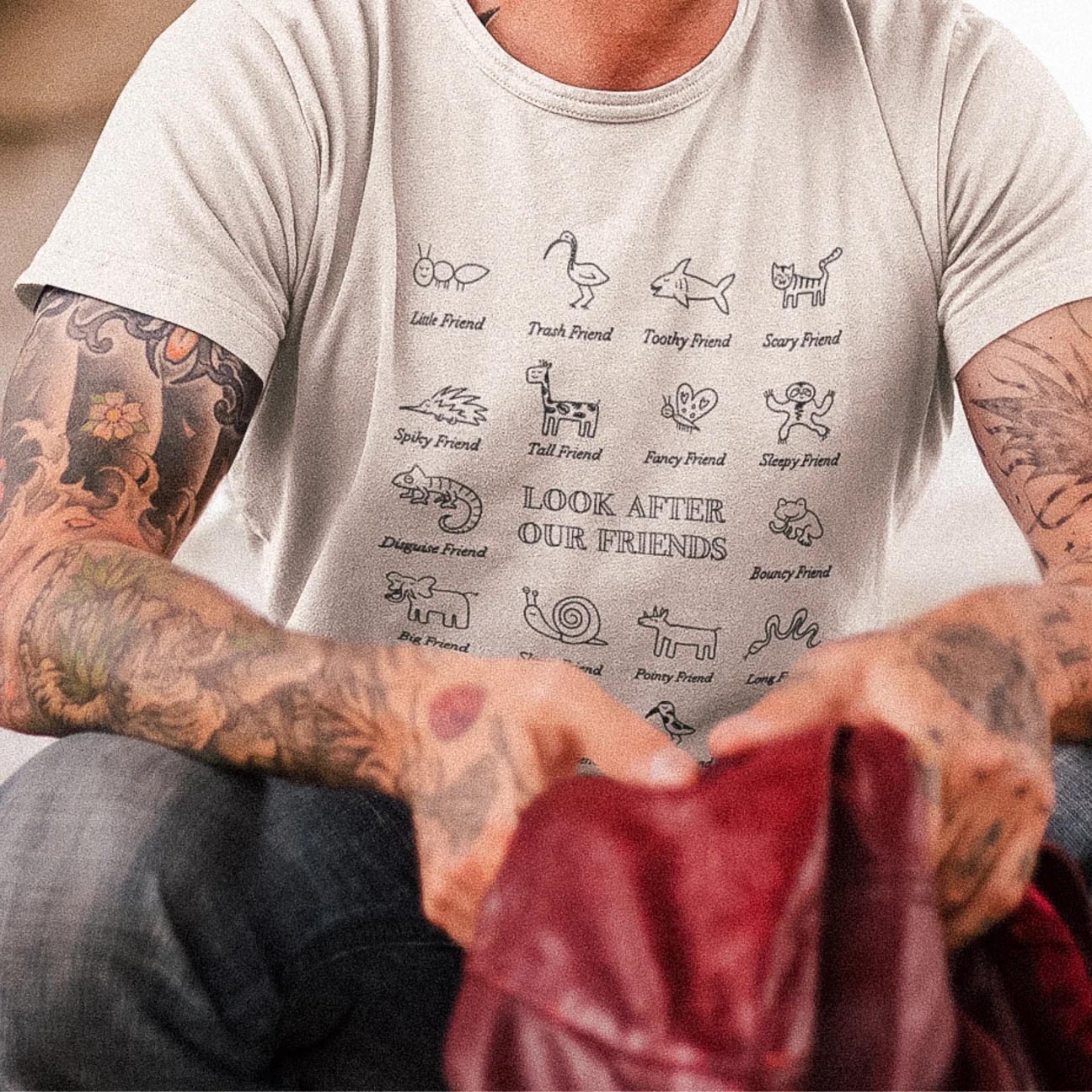
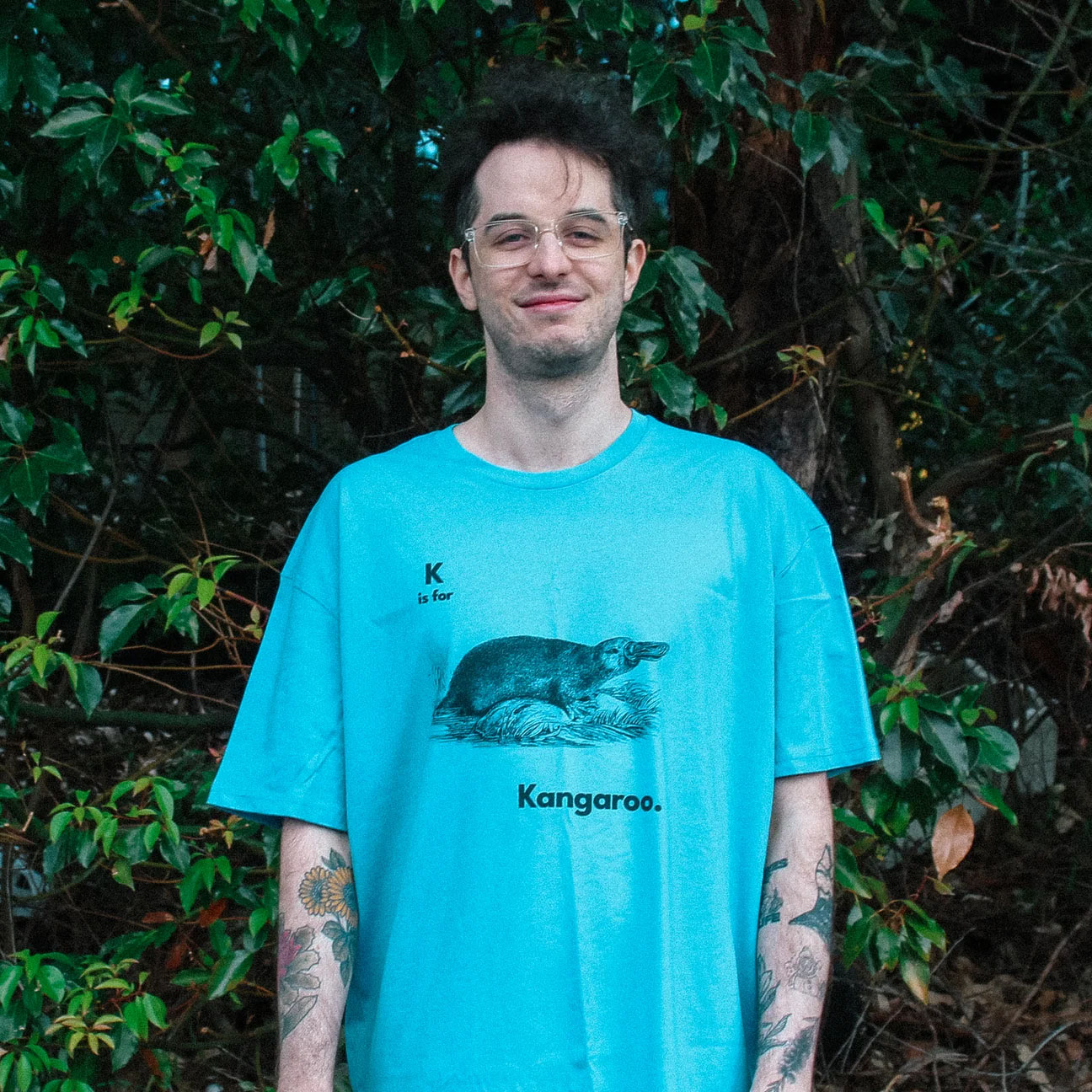
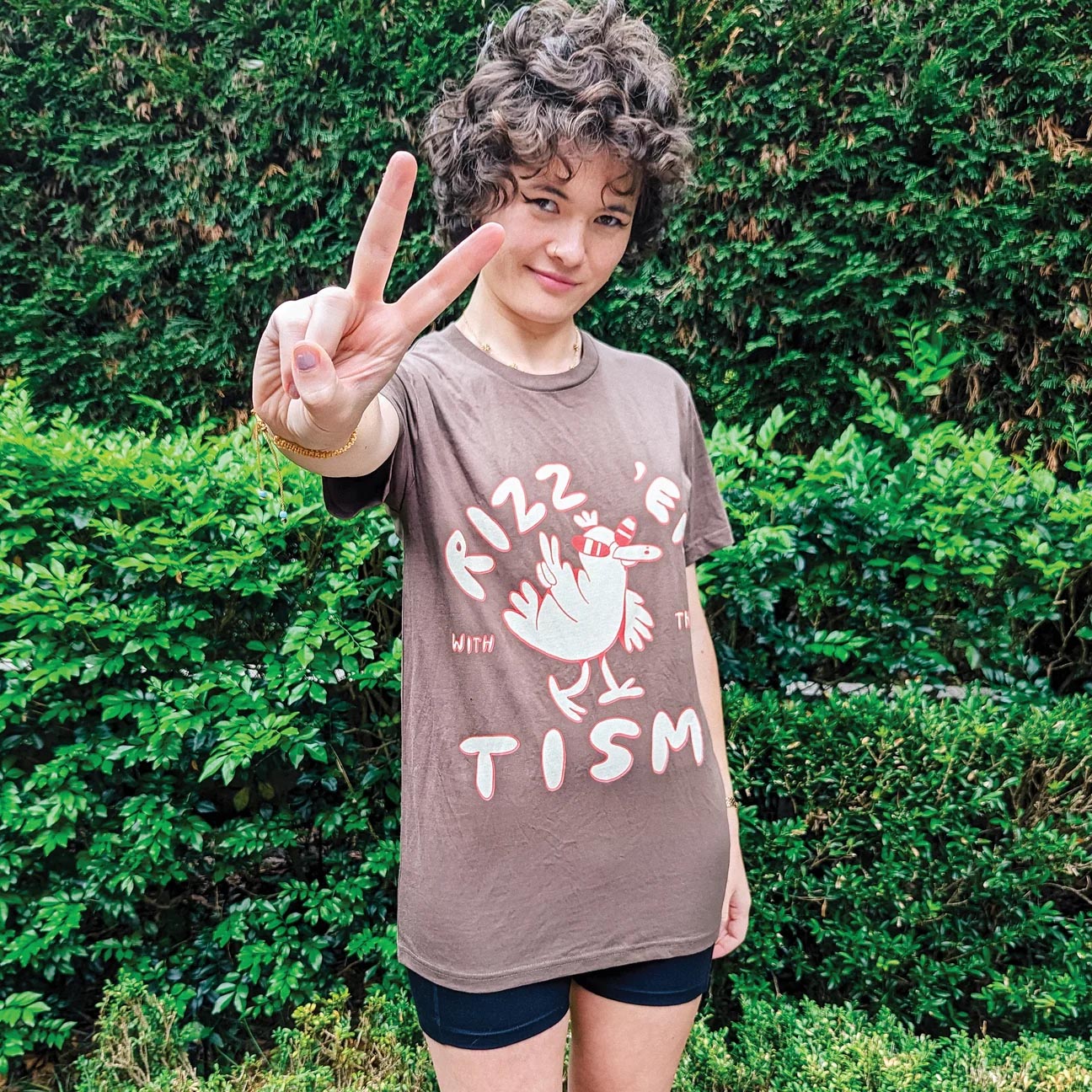
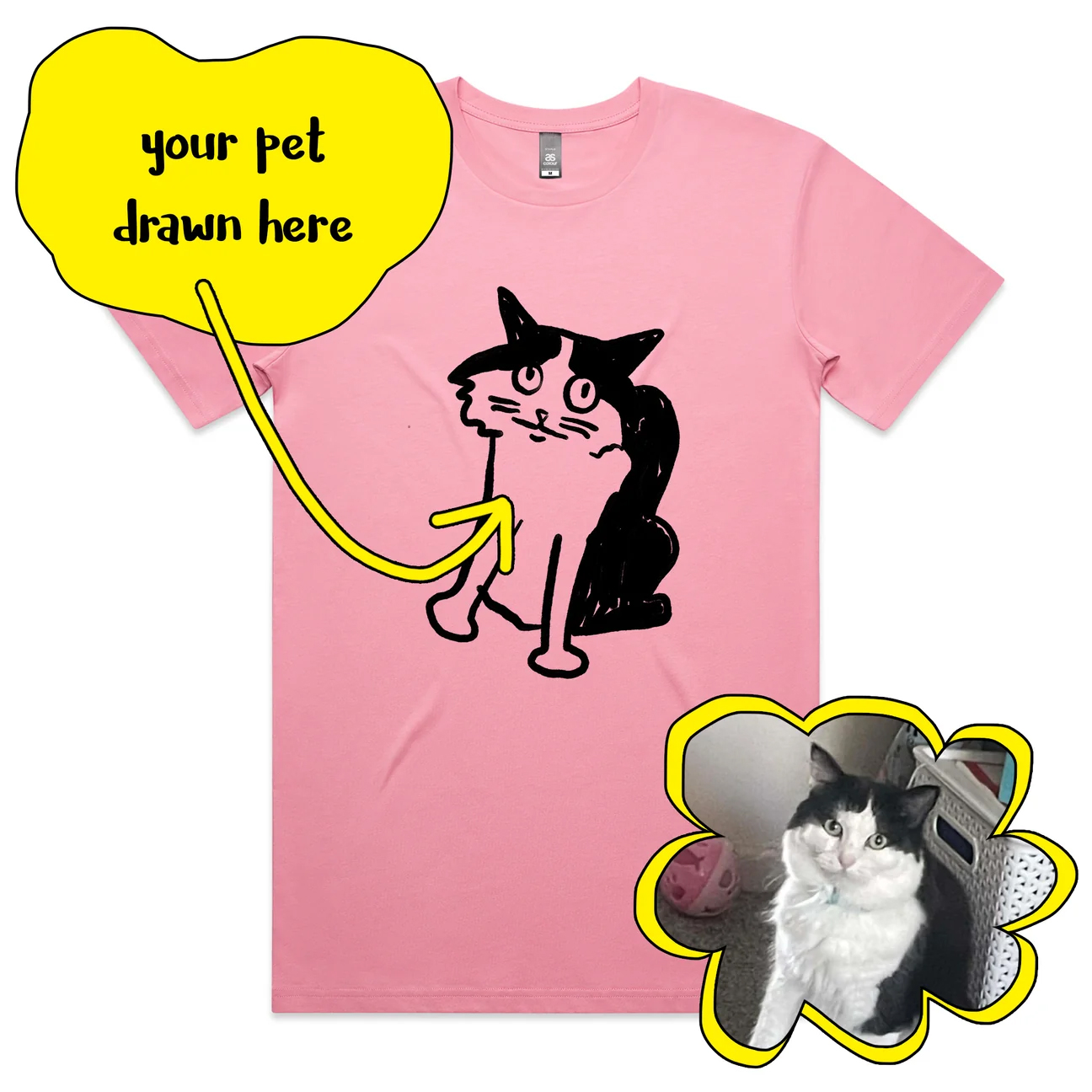
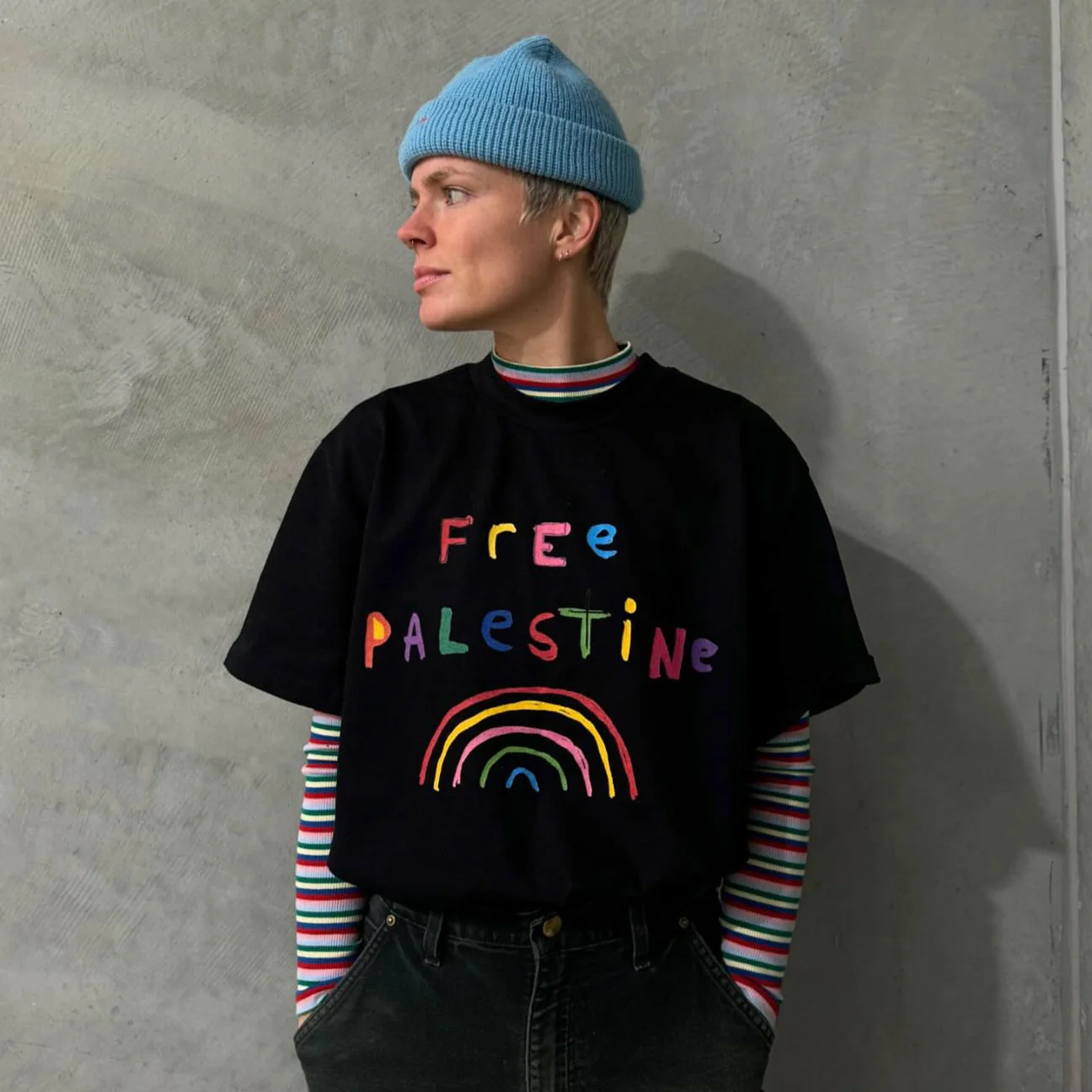


Slow fashion sounds fairly serene. Our Sydney studio generally isn’t. On a busy day, the printers are humming, the heat press is beeping, our curing tunnel is making a grinding noise, and the production queue is longer than anyone would like. But every item in that queue has already been ordered by an actual person. That last part is what matters, and why we want to handle every garment individually in-house.
I started Lonely Kids Club in 2011 because I loved graphic Tees and wanted to make the sort of clothes I couldn’t find elsewhere. It also helped me break through my social anxiety. We were tiny (or maybe just tinier?) then, and while the studio has grown, we’re still completely independent. Since the beginning, we’ve printed each garment to order in Australia. Rather than ordering 500 finished tees and crossing our fingers, we hold blank garments and only add a design once somebody buys it.
That changes where waste sits in the business. The usual fashion model relies on predicting what people will want months ahead. When that prediction is wrong, it becomes piles of discounted stock, or clothes that may never be worn at all.
With print-to-order production, a design can be popular, extremely niche or loved by four people and someone’s mum. If nobody orders it, no finished garment has been wasted. It also means we can keep designs available for longer instead of treating anything from last season as radioactive. We have room to make strange, specific things without needing to convince ourselves that 300 people will definitely want one.
To be clear, made to order doesn’t mean impact-free. We still make a physical product. We use garments, ink and energy, and we send parcels around the country. Our blank garments are made overseas, and we don’t describe them as Australian made. We source them through AS Colour because they publish detailed information about their factories and supply chain, and use independent auditing and certification programs.
The printing, finishing, checking, packing and shipping then happens with our team in Artarmon. A dark tee is pressed, pre-treated, cured, pressed again, printed and cured again before it goes anywhere near a mailer.
That distinction matters to me. Ethical fashion has collected so many vague phrases that it can be hard to tell what a business is actually saying. “Designed in Australia” might only mean a graphic was emailed overseas. “Locally made” can mean several different things. I’d rather explain the slightly less tidy reality than use a bigger claim we haven’t earned.
Keeping production in our own studio gives us control over the parts we can influence. We use water-based, OEKO-TEX certified inks, carbon-neutral electricity and carbon-neutral shipping. Orders go out in biodegradable satchels with recycled paper inserts, and we don’t wrap every garment in its own plastic bag. We can also look at every print before it leaves. If something is crooked, marked or just not good enough, the person checking it is standing a few metres from the person who printed it. There isn’t a three-week email chain with a factory on the other side of the world.
Ethical fashion has collected so many vague phrases that it can be hard to tell what a business is actually saying.
There are trade-offs. Customers need to wait while we make their order. Printing one ethical graphic Tee or tote at a time in Sydney costs more than committing to a huge run offshore, and busy periods can get proper hectic. The model asks more from our team and our customers than pulling a ready-made tee from a warehouse shelf. But it also means we aren’t building unsold clothing into the business and pretending a clearance sale will solve it later.
After 15 years, I don’t think slow fashion needs to be beige, humourless or especially glamorous. The design on the front can still be a magpie in lycra or a very tired sloth. What matters is everything that happened before the parcel arrived: who made the garment, what was printed onto it, how many were produced and whether anyone actually wanted them.
We’re still learning and changing things as better options become available. But the basic idea has held up: make the item after it has a home, be honest about where each part comes from, and stay close enough to the process to be responsible for it. For us, slow fashion is a very busy room making one order at a time.
Brighten up your inbox with our not-too-frequent emails featuring Peppermint-related news, events, competitions and more!
explore
We look forward to connecting with you.