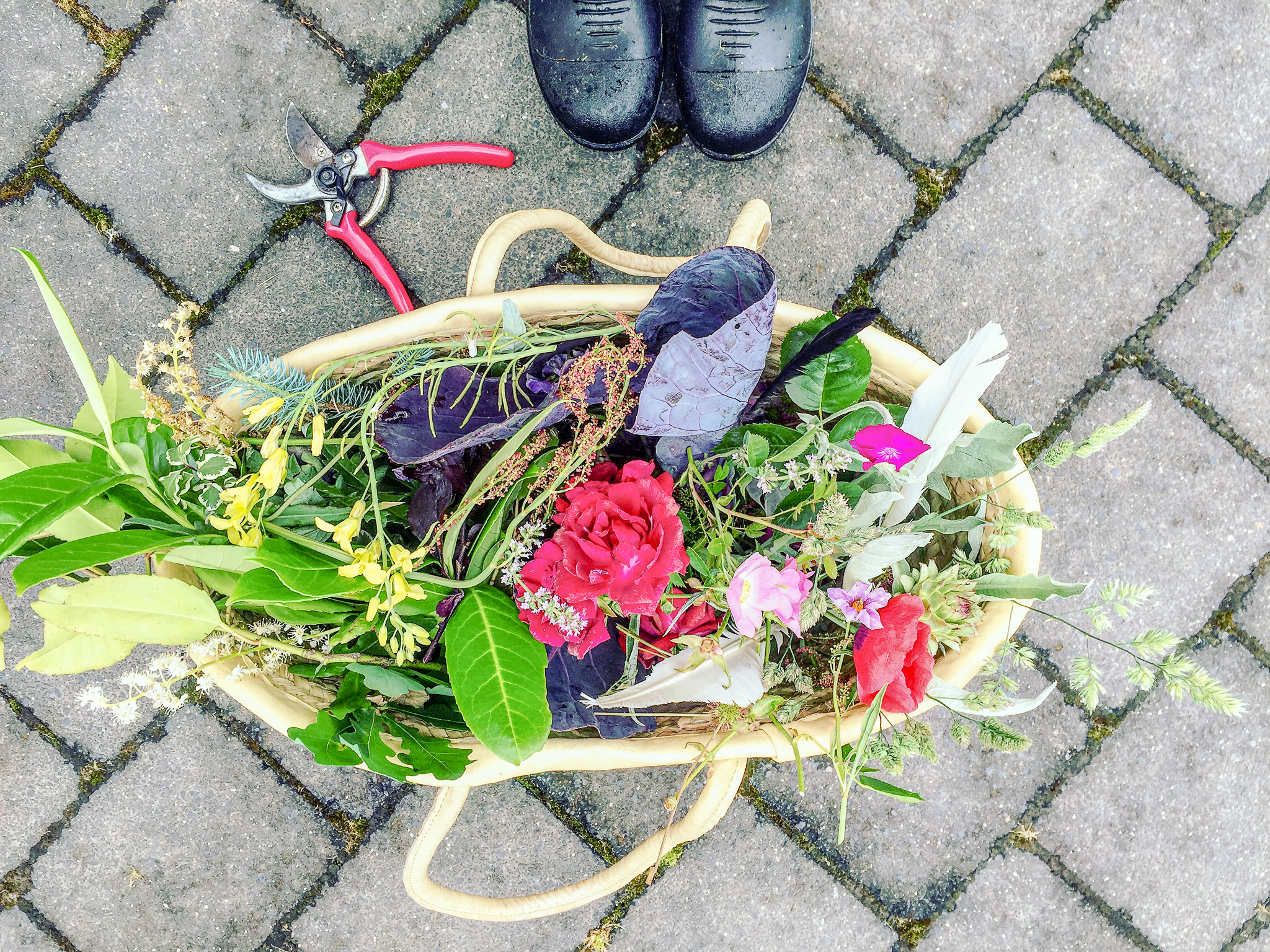
Sustainable living advocate Rebecca Sullivan has made an art form of natural living, with books on everything from edible flowers to using herbs for health and wellbeing, as well as running a ‘Granny Skills’ program that brings communities of women together to preserve the culture, skills, knowledge and traditions of our elders. Here, she shares her very simple, very lovely method for creating natural dye that can be used as watercolour paint – let us know how you get on!
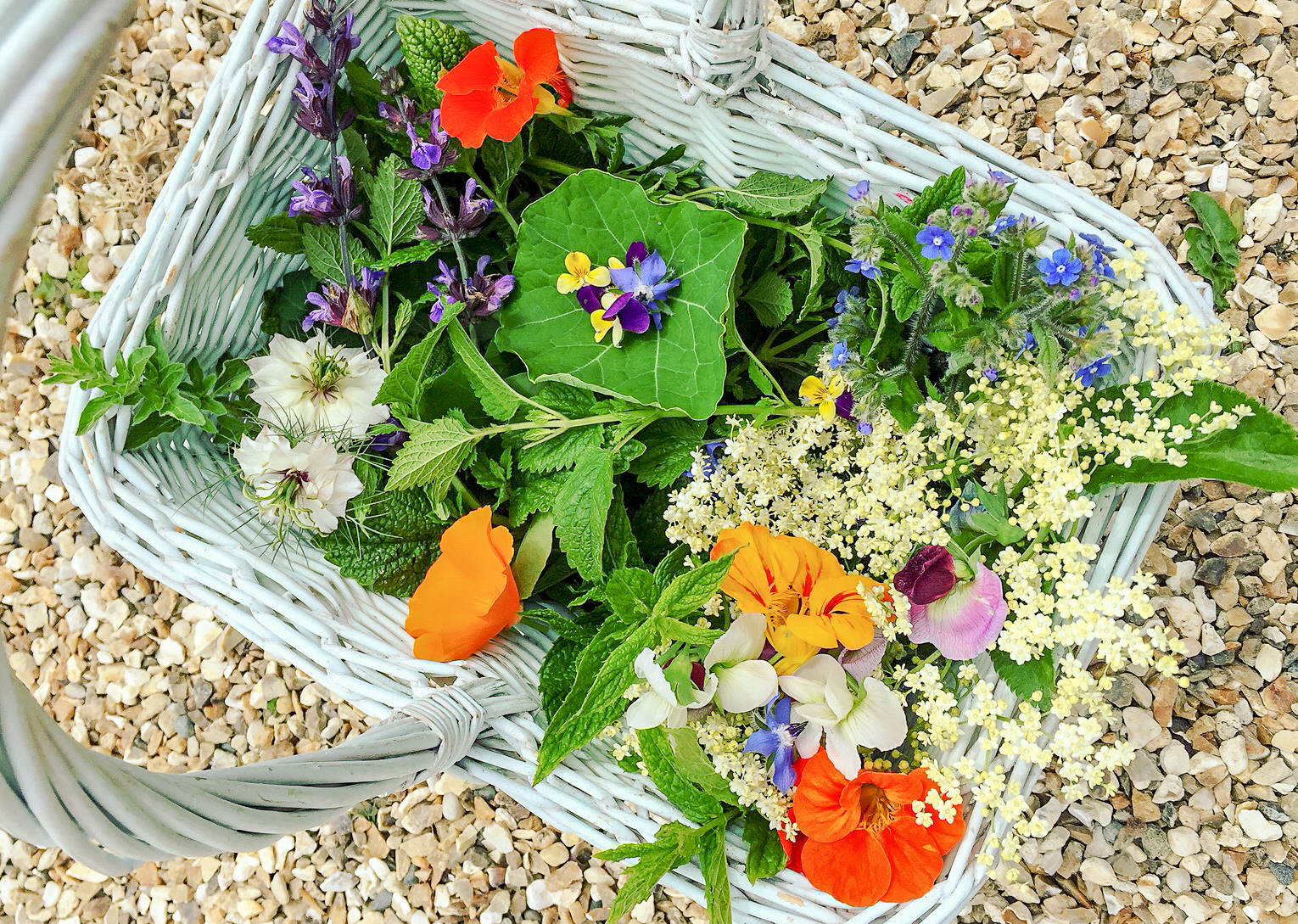
I firmly believe flowers are magical, and not just to look at – they give us flavour in cooking, marvellous smells in our homes and nourishing medicine when we’re ill. As if that wasn’t enough, their petals give us colour that lasts long after the flowers start to wilt – because instead of throwing ageing blooms into the compost, you can give them a second life by turning them into dye.
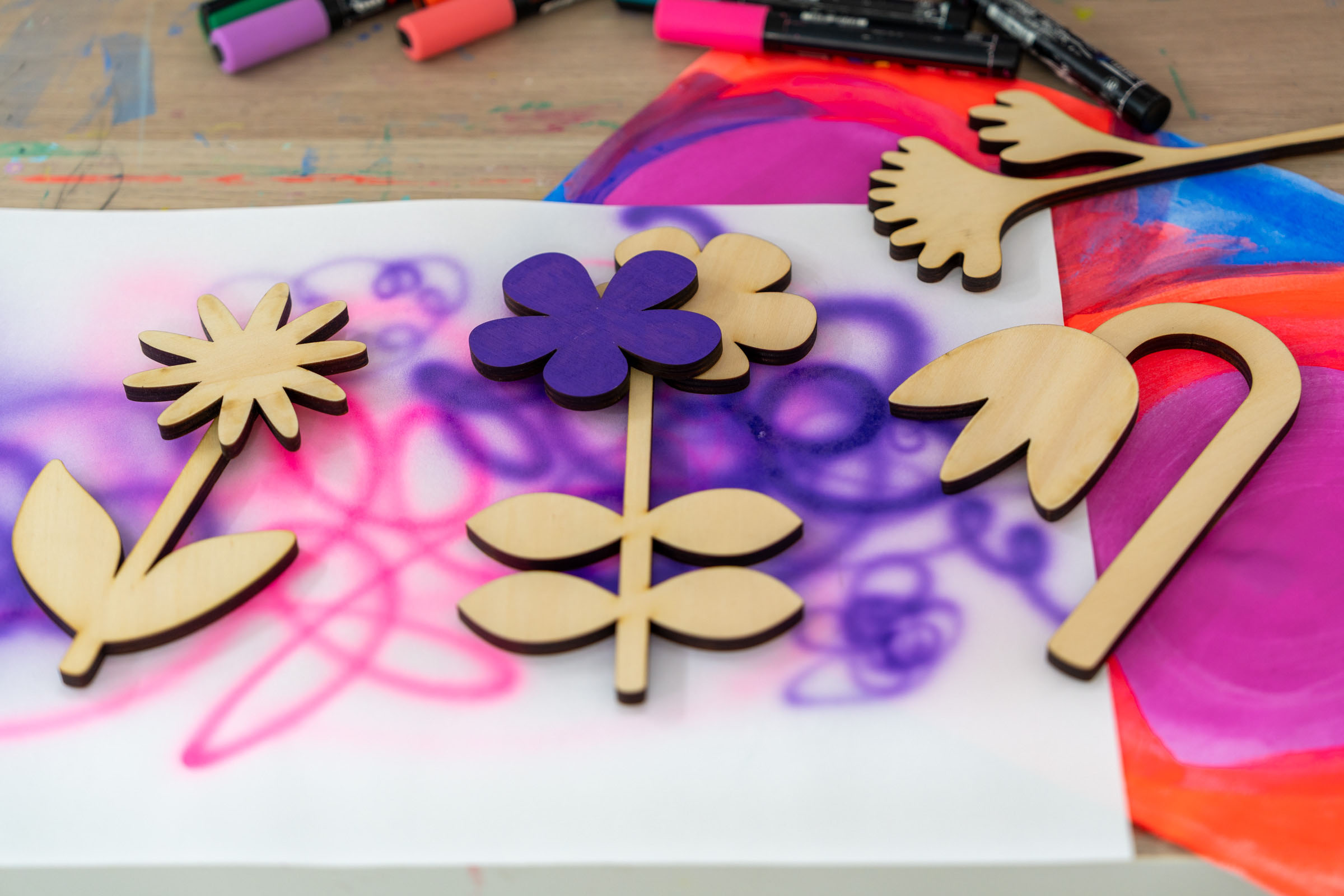
Natural dyeing is the process of drawing colour from natural sources such as plants, roots, berries, vegetables, bark, leaves and petals, and it’s taken place for thousands and thousands of years. There are lots of forms of dyeing using natural substances – but if you’re new to it all, the easiest place to start is solar dyeing. Simply by picking some of your favourite coloured flowers and harnessing the sun’s power, you can make dye in every colour of the rainbow! Then you can use the dye for everything from colouring your clothes to making non-toxic watercolour paints for your kids.
What you’ll need
Sunshine – choose a sunny spot in your home!
Jars with lids – ideally use ones leftover from your pantry.
Mordants – this fixes the colour. Here I’m using leftover white wine (if there is such a thing!)
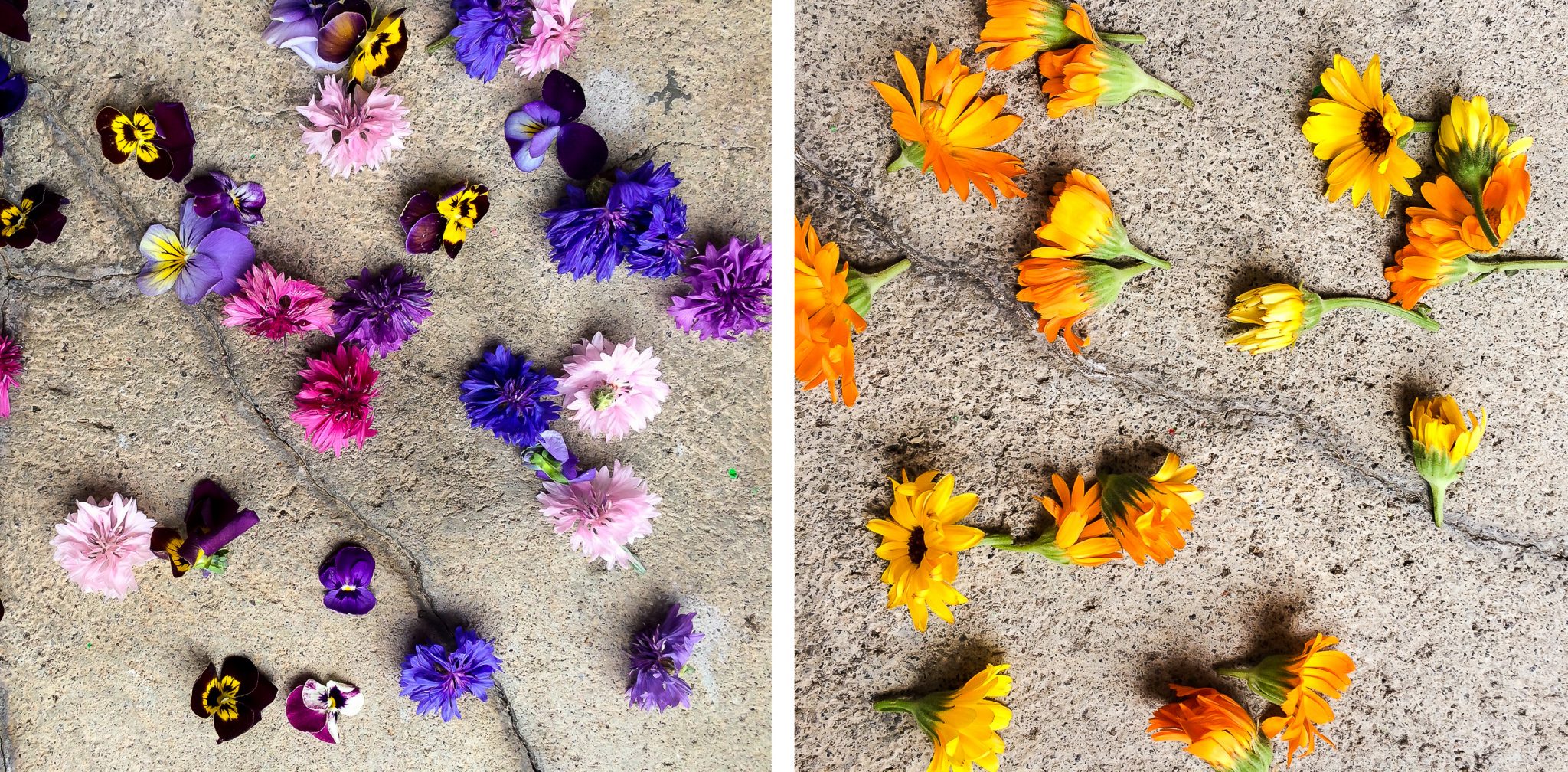
Colour – this is where the flowers come in! Choose ones with colourful petals (white is a no-no!) – I love using irises, roses, marigolds, geraniums, gerberas and herb flowers, but you can basically use anything from your garden that releases liquid when squished.
Patience and a good shake!
Method
Have a wonderful time picking petals from your favourite plants. I’d suggest starting with a handful of each colour you want to create, always leaving enough behind for regeneration and wildlife. Shake any excess critters from the flowers before bringing them inside.
For every handful of flowers you’ll need a small jar (500ml is best) with a lid. Make sure it’s clean and dry.
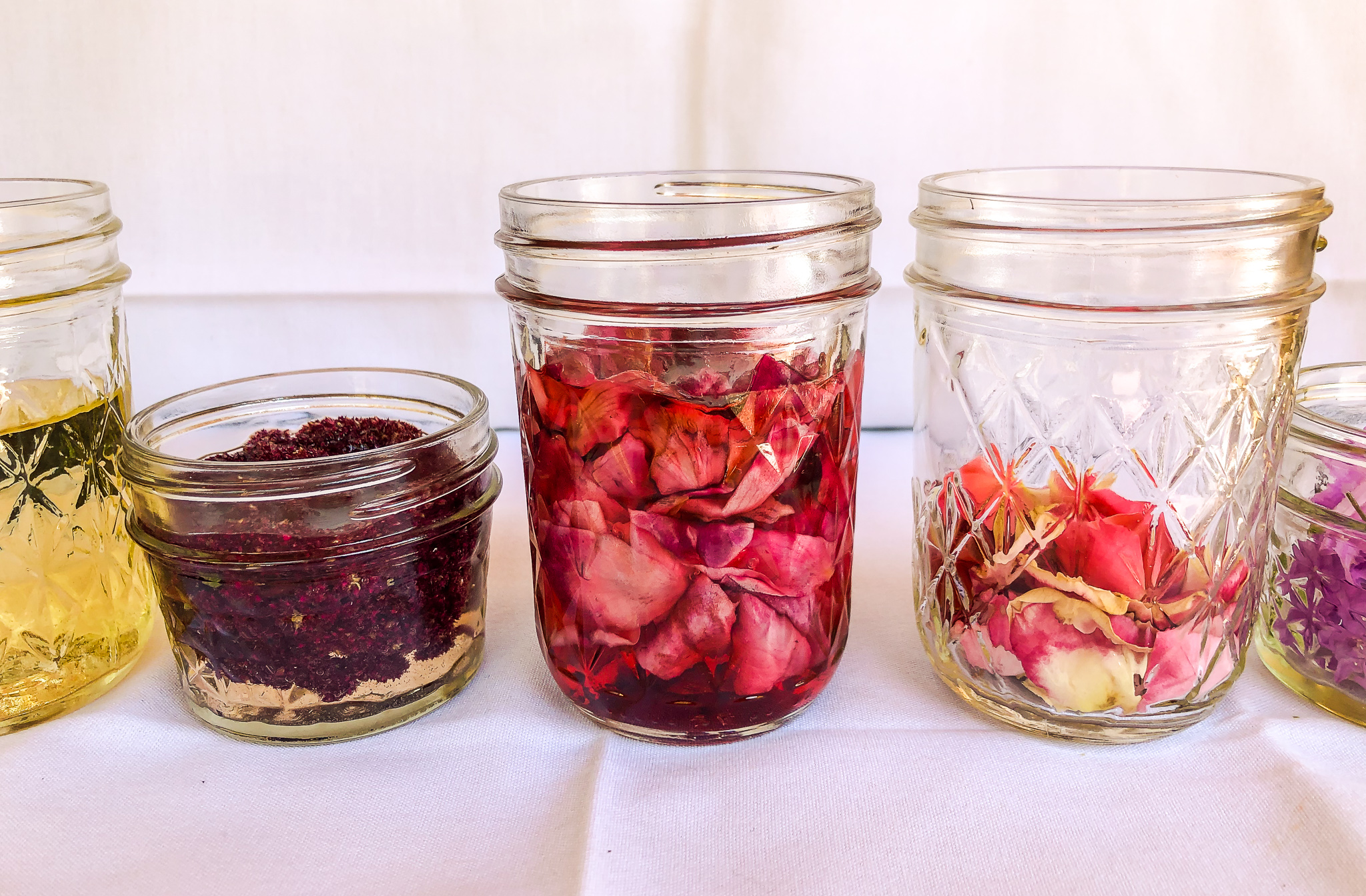
Pick the petals from your flowers and place them into the jar, then top up with enough white wine to just cover the petals. Put the lid on and then pop it in your sunny spot.
For a couple of weeks, shake your jar and watch as the sun draws the colour from the petals. Leave for up to a month, then strain and use the liquid as a dye!
NOTE: This amount of dye is plenty for painting a few beautiful pictures, but it’s not enough to dye a substantial amount of clothing – think of it as more of a test run for you to see how it works and how much you can get from it.
WORDS AND PHOTOS: REBECCA SULLIVAN