words EMILY LUSH photo JOSH GRIGGS
With the support of Fairtrade Australia New Zealand, small-scale growers in PNG are tackling climate change and social issues one cup of coffee at a time.
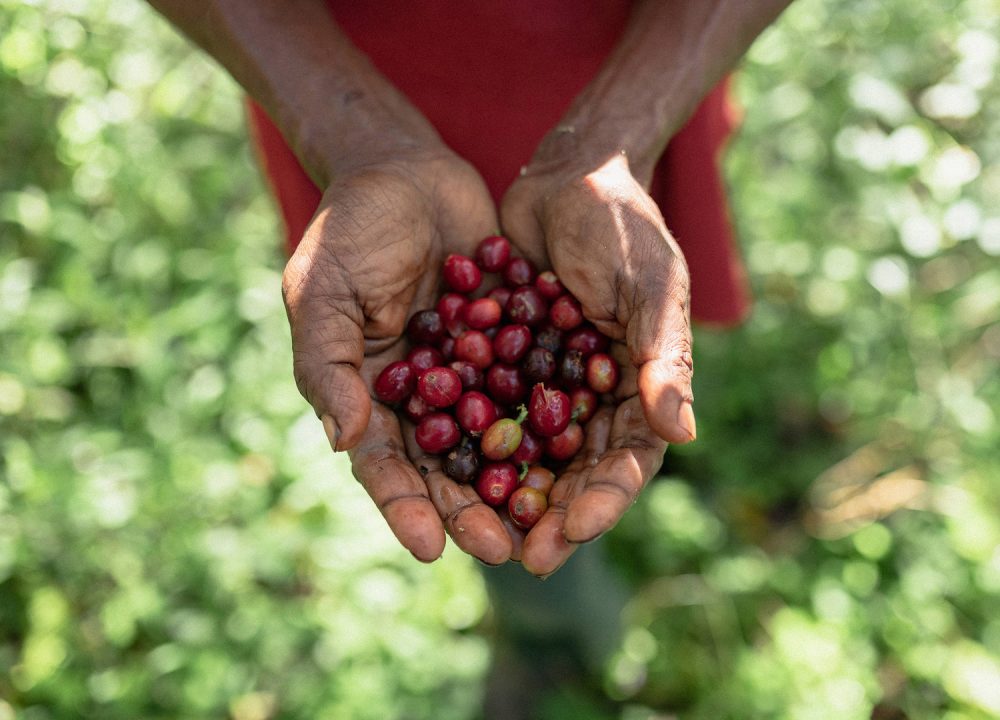
Growing wild in the highlands and foothills of Papua New Guinea, coffee shrubs are often referred to as ‘money trees’. One of the country’s most profitable non-mineral exports, it’s the smallholder farmers that are driving production.
Poor infrastructure and uncertainty from climate change weigh heavily on these growers, who already have less bargaining power because of their smaller yields. These are the main challenges for the Unen Choit Cooperative Society, a group of about 1750 coffee farmers who live on the Huon Peninsula.
Here, coffee cherries are hand-picked and sun-dried. From the farms, green beans are transported to Wasu, then to the port town of Lae to be hulled, graded, sorted by weight and shipped to their final destination. The complex operation is complicated by Unen Choit’s remote location: Wasu is a light plane flight or seven-hour boat ride from Port Moresby. The mountain villages where farmers grow the coffee are even more isolated.
Molock Terry, manager of the co-op and a second-generation coffee farmer himself, understands the challenges. Since leading Unen Choit to Fairtrade certification in 2016, his focus has been on improving infrastructure to enhance cash flow for farmers at the bottom of the value chain.
Backed by Fairtrade Australia New Zealand, Unen Choit’s beans are purchased at the Fairtrade Minimum Price. Calculated to meet the living wage, this usually exceeds market value. The co-op also benefits from the Fairtrade Premium, added to the purchase price, with funds reinvested into the community.
Looking after the environment has become an integral part of the job. The environment is our future.
Funding a wet coffee mill, storage sheds, transport trucks and new offices has helped substantially increase their annual out- put. It’s a huge improvement since the days when Molock’s late father farmed the land. By forward-planning and accommodating for market fluctuations, the team have invested in their future rather than living harvest to harvest.
With rigorous certification standards and strong values, co-op members often refer to Fairtrade as their ‘government’. “Our key motivation was the Fairtrade Premium, which is in line with Unen Choit’s mission to work cooperatively to develop our communities,” Molock says. “As a Fairtrade producer, we abide by good governance practices including fairness to all and especially gender equality.”
It’s life-changing for these rural communities that have traditionally relied on the land. “The coffee and agricultural industries have so much potential to help solve the ever-increasing unemployment problem in PNG,” Molock affirms.
Fairtrade’s work to help co-ops like Unen Choit invest in clean energy, protect forests and access carbon credits is also critical to the future of the industry. “Looking after the environment has become an integral part of the job,” Molock says. “The environment is our future.”
Keep an eye out for the Fairtrade logo to get your fair coffee fix! Here are a few ethical brands to help fill your cup…
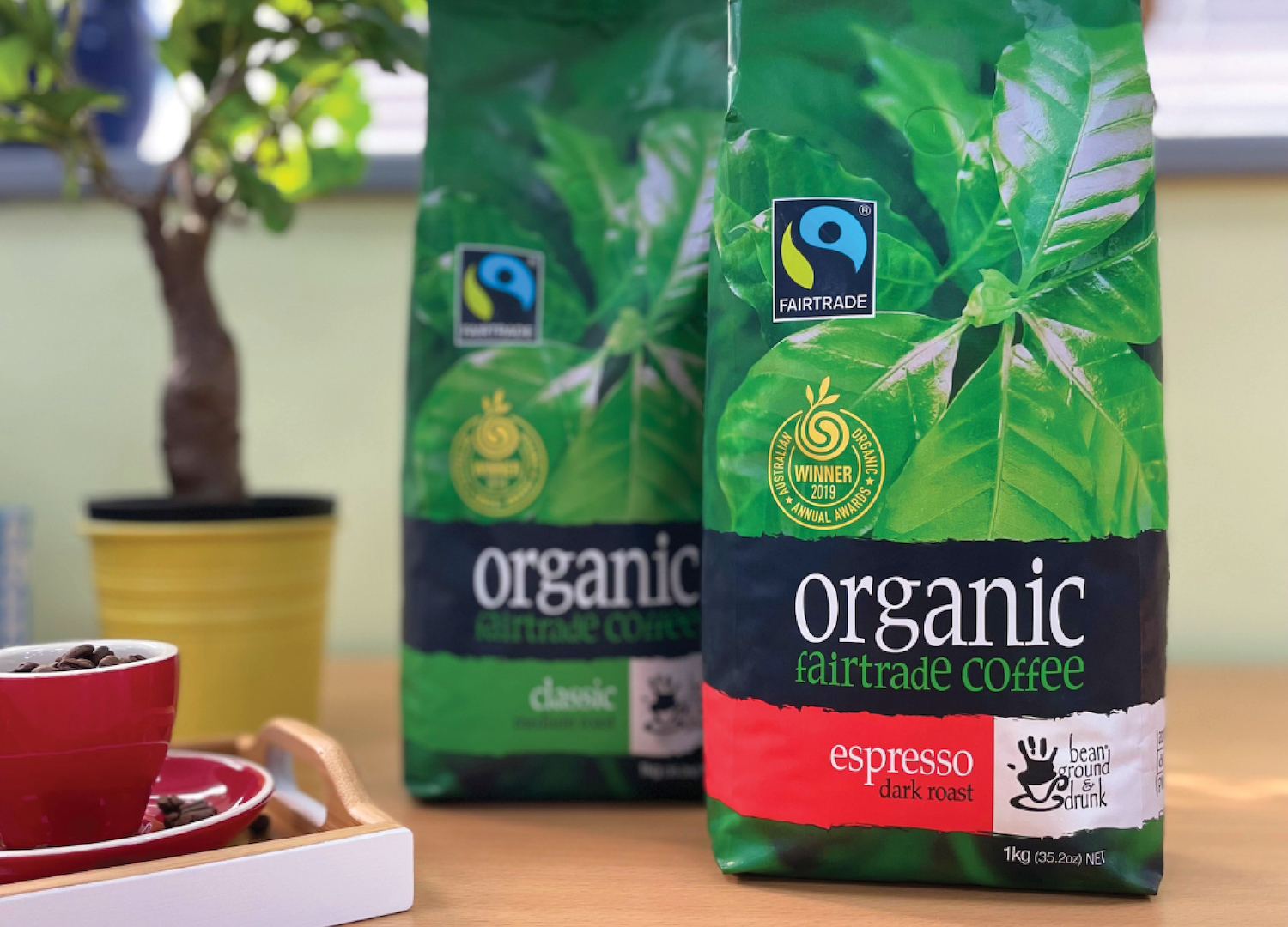
Bean Ground & Drunk
Founded in 2001, Bean Ground & Drunk’s 100% Arabica Fairtrade blend is sourced from ethical growers world- wide before being prepared at The Bean Alliance in Melbourne – an Australian manufacturing facility certified to roast organic. Choose from classic, espresso and decaffeinated (via the Swiss Water method) beans, to be ground and drunk for your daily cuppa!
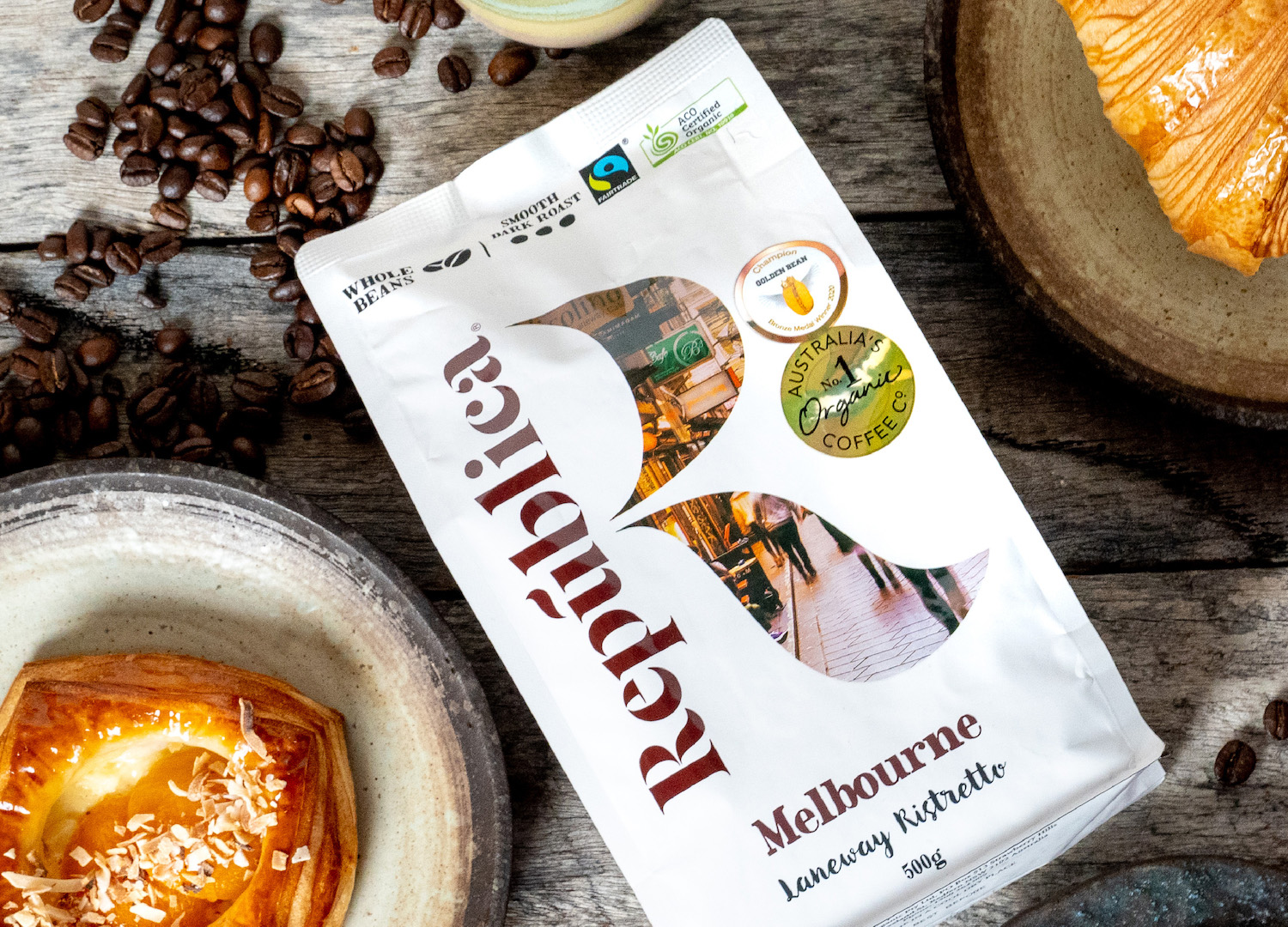
República
A trip home to Colombia, accompanied by some bad-tasting coffee, led former journo Jacqueline Arias to start ethical coffee company, República. With her ethos “ethics with impact” stamped on every bag, Jacqueline and her Certified Organic, Fairtrade brand are passionate about ensuring coffee farmers are guaranteed a fair deal while not compromising on taste.
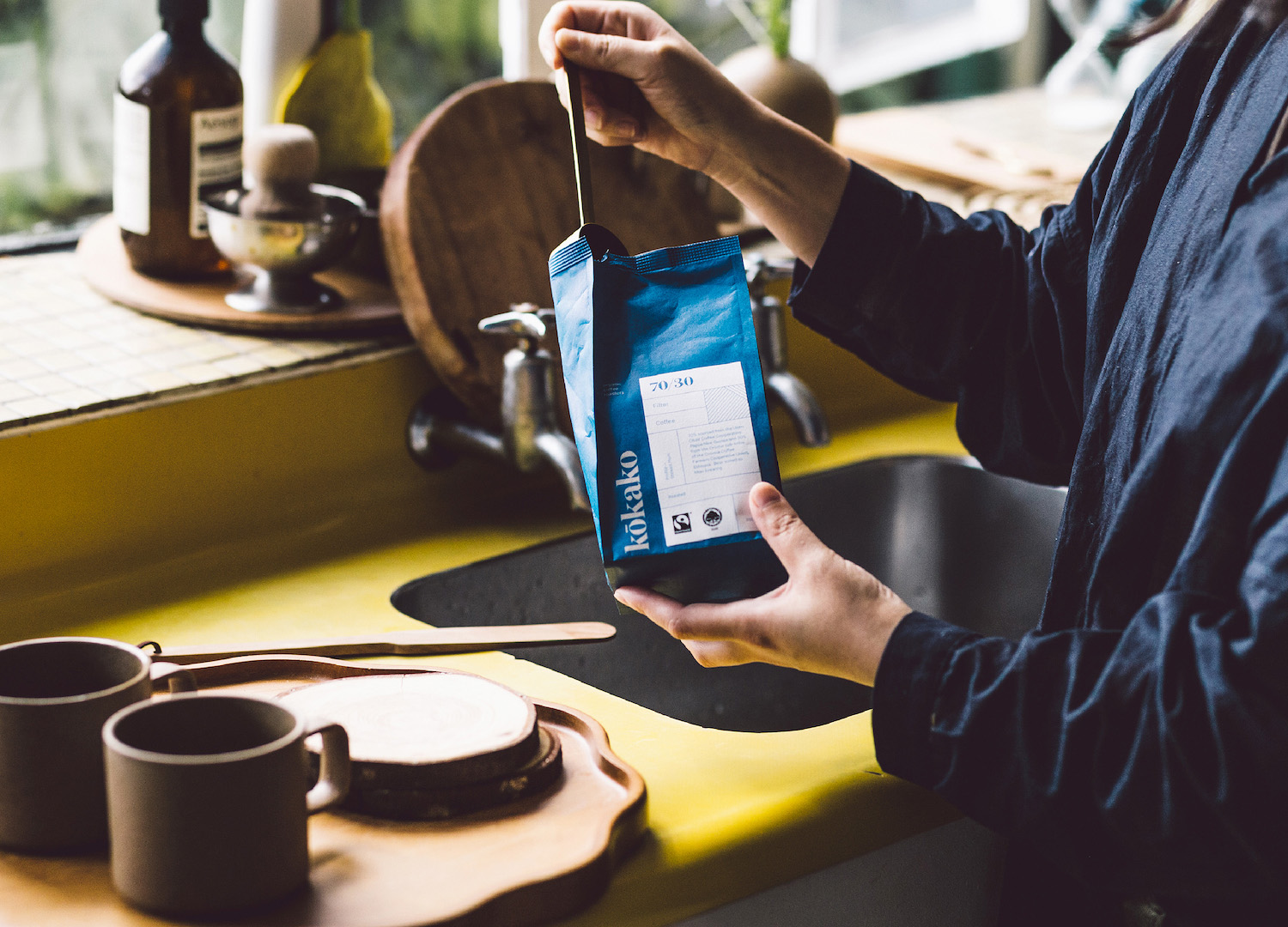
Kōkako
Kōkako never stops grinding when it comes to keeping its beans sustainable. Steadfastly organic since its inception in 2001 and Fairtrade certified since 2010, the brand went one step further in 2016, partnering with Fair Climate Fund to produce a climate-neutral coffee, forecasting its yearly coffee production and offsetting the carbon emissions with Fairtrade carbon credits.
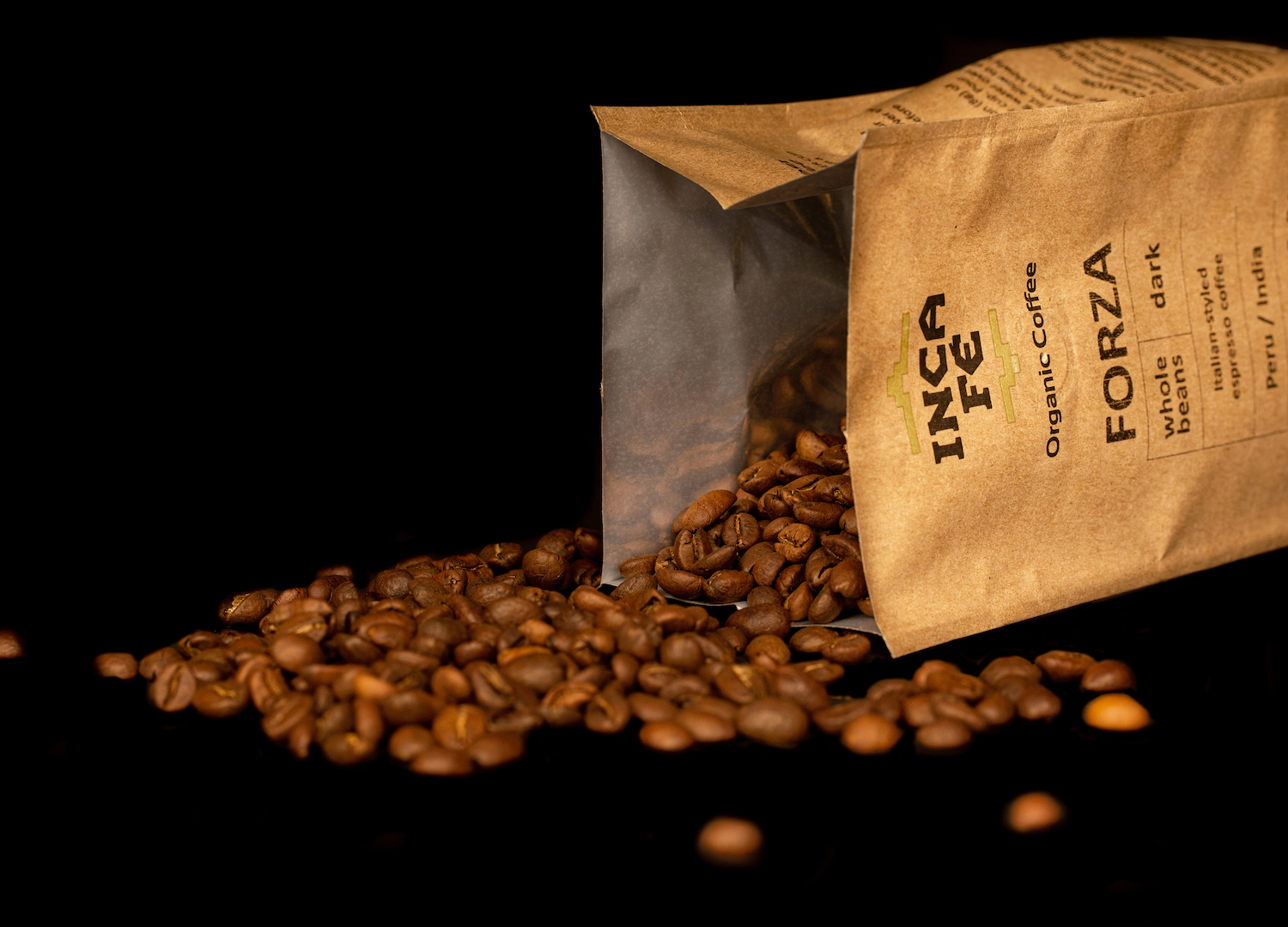
IncaFé
IncaFé’s mission is to cultivate plants in native environments that suit their needs rather than forcing them to grow where they don’t belong. The brand’s six flavour-packed blends are all Biogro organic and fully traceable from bush to cup, and the brand works directly with local grower cooperatives in Peru, Indonesia and Ethiopia to help budding coffee industries bloom.
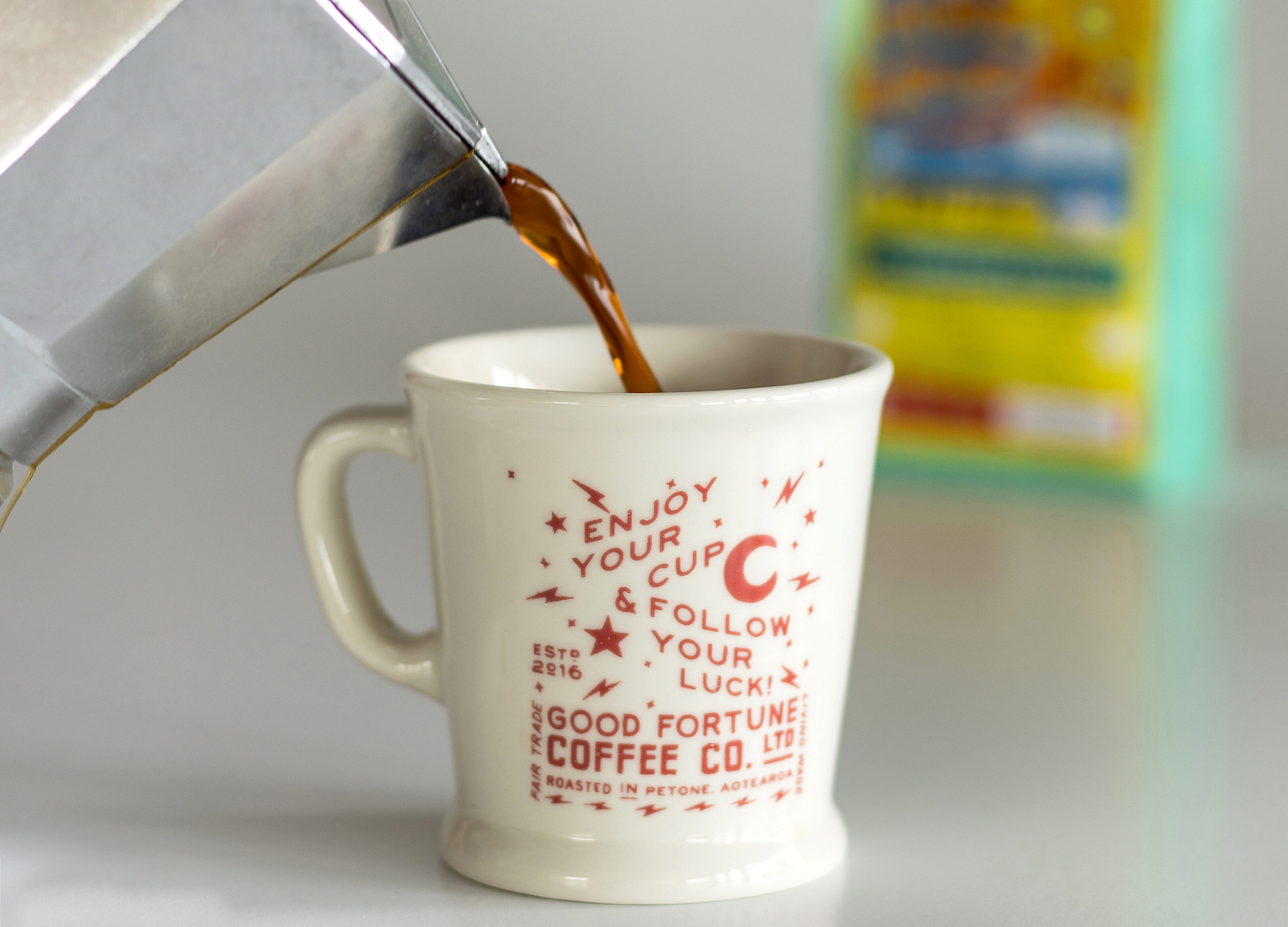
Good Fortune Coffee Co
Good Fortune Coffee Co doesn’t just taste good, it looks good too, boasting eye-popping designs and a complementary range of merch. The creative for- tune-fixers from this Wellington-based brand have been leading the pack in the Land of the Long White Cloud since 2016 and are fully accredited with organic and Fairtrade certifications – making every delicious sip even more drinkable.
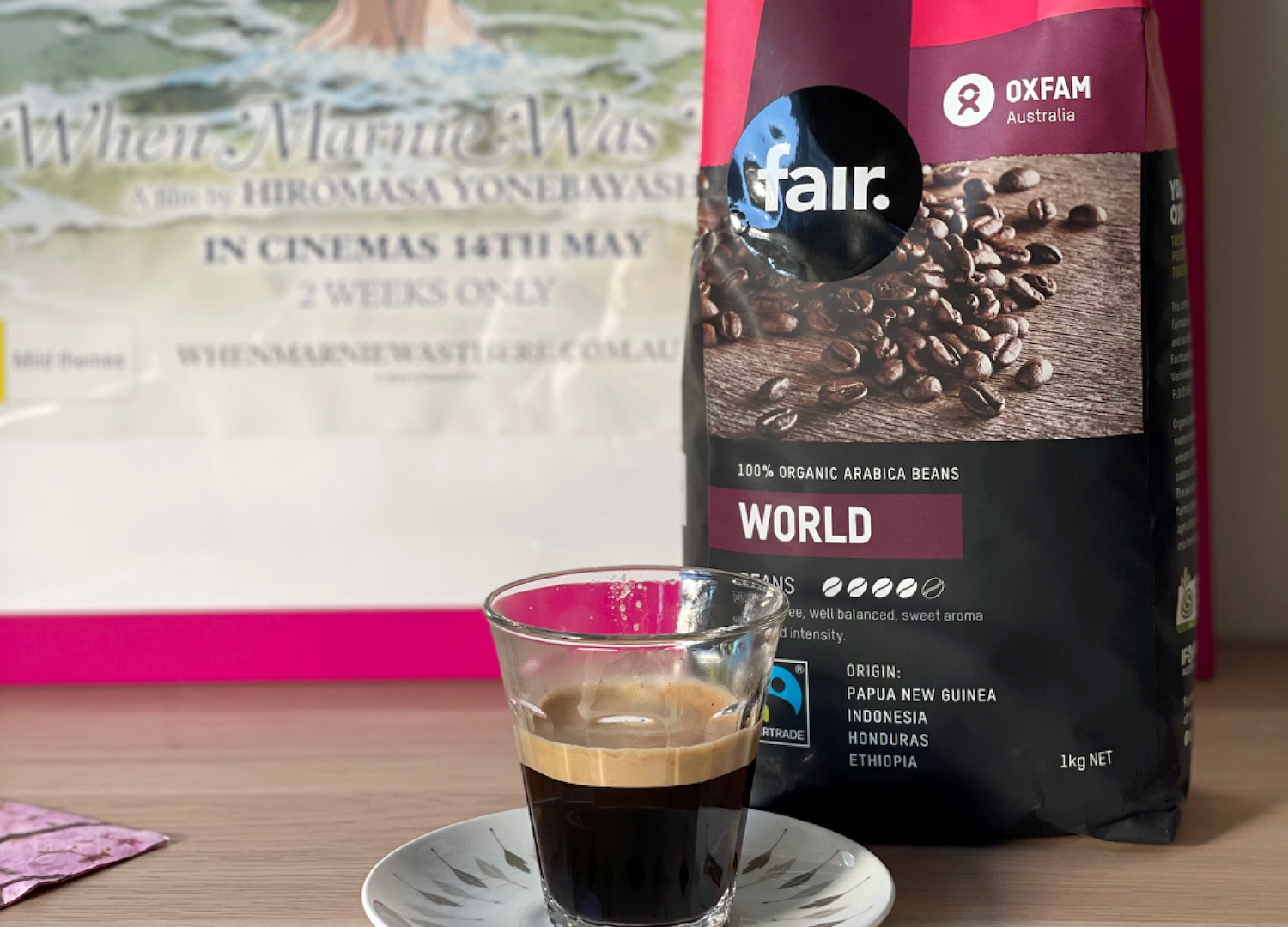
Oxfam Fair Coffee
With the goal of ending poverty one cup of coffee at a time, Oxfam Fair Coffee is all about paying farmers a fair wage for the raw materials, skills and techniques, plus culture and history, that go into every mug, not to mention the hard yakka that goes into growing a bountiful coffee crop. In a one-two punch at poverty, the money raised by coffee sales goes back to Oxfam Australia.
THIS ARTICLE HAS BEEN CREATED IN PARTNERSHIP WITH OUR FRIENDS AT FAIRTRADE AUSTRALIA & NZ.








“In the 1940’s, Norwegians made and wore red pointed hats with a tassel as a form of visual protest against Nazi occupation of their country. Within two years, the Nazis made these protest hats illegal and punishable by law to wear, make, or distribute. As purveyors of traditional craft, we felt it appropriate to revisit this design.”
Crafters have often been at the heart of many protest movements, often serving as a powerful means of political expression. @NeedleAndSkein, a yarn store in Minnesota, are helping to mobilise the craftivists of the world with a ‘Melt The Ice’ knitting pattern created by @Yarn_Cult (with a crochet pattern too), as a way of peaceful protest.
The proceeds from the $5 pattern will go to local immigrant aid organisations – or you can donate without buying the pattern.
Raise those needles, folks – art and craft can change the world. 🧶
Link in bio for the pattern.
Images: @Gather_Fiber @NeedleAndSkein @a2ina2 @KyraGiggles Sandi.204 @WhatTracyMakes AllieKnitsAway Auntabwi2
#MeltTheIce #Craftivism #Knitting #CraftForChange


TWO WEEKS TO GO! 🤩
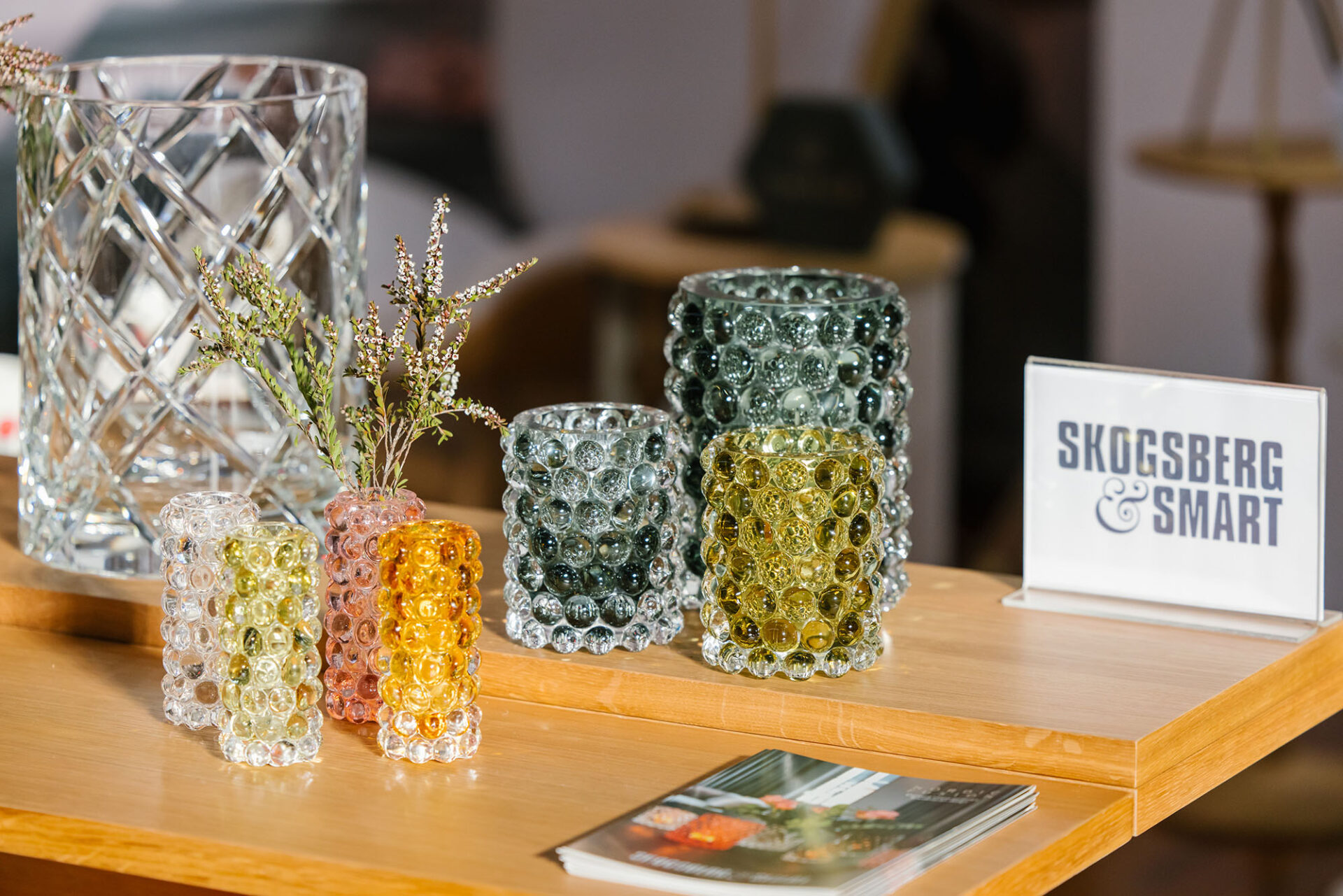
"The most important shift is moving from volume-led buying to value-led curation – choosing fewer, better products with strong ethics, considered production and meaningful stories. Retailers have real influence here: what you buy signals what you stand for. At Life Instyle, this means using the event to discover and invest in small-scale, planet-considerate brands that align with your values and your customer’s conscience. Consumers don’t need more things; they need better things, and retailers play a key role in selecting, contextualising, and championing why those products matter."
Only two more weeks until @Life_Instyle – Australia`s leading boutique retail trade show. If you own a store, don`t miss this event! Connect with designers, source exquisite – and mindful – products, and see firsthand why this is Australia’s go-to trade show for creatives and retailers alike. And it`s free! ✨️
Life Instyle – Sydney/Eora Country
14-17 February 2026
ICC, Darling Harbour
Photos: @Samsette
#LifeInstyle #SustainableShopping #SustainableShop #RetailTradeEvent

Calling all sewists! 📞
Have you made the Peppermint Waratah Wrap Dress yet? Call *1800 I NEED THIS NOW to get making!
This gorgeous green number was modelled (and made) by the fabulous Lisa of @Tricky.Pockets 🙌🏼
If you need a nudge, @ePrintOnline are offering Peppermint sewists a huge 🌟 30% off ALL A0 printing 🌟 when you purchase the Special Release Waratah Wrap Dress pattern – how generous is that?!
Head to the link in bio now 📞
*Not a real number in case that wasn`t clear 😂
#PeppermintWaratahWrapDress #PeppermintPatterns #SewingPattern #WrapDress #WrapDressPattern

8 Things to Know About January 26 - from @ClothingTheGaps:
Before you celebrate, take the time to learn the truth. January 26 is not a day of unity it’s a Day of Mourning and Survival for Aboriginal and Torres Strait Islander peoples.
It marks the beginning of invasion, dispossession, and ongoing colonial violence. It’s time for truth-telling, not whitewashed history.
Stand in solidarity. Learn. Reflect. Act.
✊🏽 Blog written by Yorta Yorta woman Taneshia Atkinson.
🔗 Link in bio of @ClothingTheGaps to read the full blog
#ChangeTheDate #InvasionDay #SurvivalDay #AlwaysWasAlwaysWillBe #ClothingTheGaps

As the world careens towards AI seeping into our feeds, finds and even friend-zones, it`s becoming increasingly hard to ignore.
We just wanted to say that here at Peppermint, we are choosing to not print or publish AI-generated art, photos, words, videos or content.
Merriam-Webster’s human editors chose `slop` as the 2025 Word of the Year – they define it as “digital content of low quality that is produced usually in quantity by means of artificial intelligence.” The problem is, as AI increases in quality, it`s becoming more and more difficult to ascertain what`s real and what`s not.
Let`s be clear here, AI absolutely has its place in science, in climate modelling, in medical breakthroughs, in many places... but not in replacing the work of artists, writers and creatives.
Can we guarantee that everything we publish is AI-free? Honestly, not really. We know we are not using it to create content, but we are also relying on the artists, makers and contributors we work with, as well as our advertisers, to supply imagery, artwork or words created by humans. AI features are also creeping into programs and apps too, making it difficult to navigate. But we will do our best to avoid it and make a stand for the artists and creatives who have had their work stolen and used to train AI machines, and those who are now losing work as they are replaced by this energy-sapping, environment-destroying magic wand.
Could using it help our productivity and bottom line? Sure. And as a small business in a difficult landscape, that`s a hard one to turn down. We know other publishers who use AI to write stories, create recipes, produce photo shoots... but this one is important to us.
`Touch grass` was also a Merriam-Webster Word of the Year. We`ll happily stick with that as a theme, thanks very much. 🌿

If your fingers are twitching for some crafting, take a peep at this massive list of marvellous makes that can be whipped up in a flash, put together by our Sewing Manager Laura. Ok yes, it was originally a roundup we created for easy Christmas gifts, but now it can be your blueprint for easy craft wins to go on your 2026 making must-do list!
If money and time are slim for you right now – as they are for many of us – these 22 projects will help you avoid the chaos and consumerism of the malls, scratch that creative itch and produce a fun me-made make that won’t break the bank.
Link in bio! 🪡🎨✂️
#PeppermintMagazine #MeMadeGifts #DIYs #EasyWins
